
Key takeaways
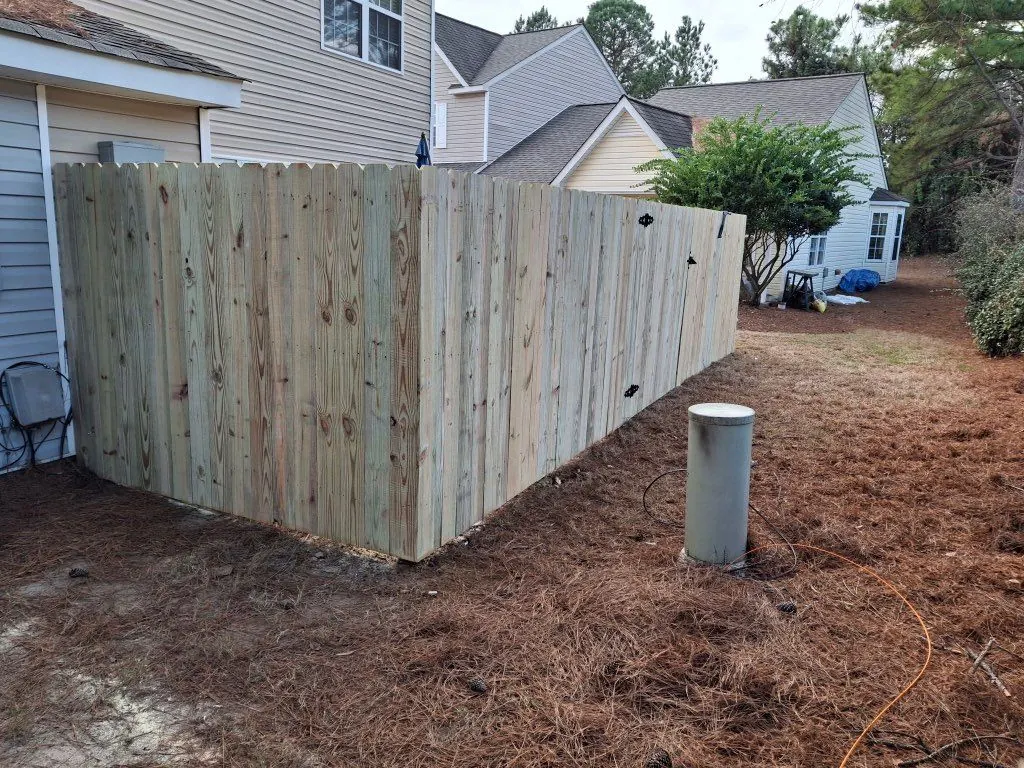
- Many residential fences are installed in one to a few days once materials are on site. Size, material and site conditions change that.
- HOA review, utility locates and scheduling often take longer than the install itself.
- Having your HOA guidelines, plat and decisions ready speeds everything up.
- Our own in-house crew does every install, so there is no waiting on a subcontractor’s schedule.
"How long will this take?" is one of the first questions homeowners ask. The honest answer: the build is usually the fastest part. What sets the overall timeline is everything before it, including the estimate, decisions, HOA review, utility marking and scheduling.
This guide walks through each stage of a typical Fences & Firepits project, what affects its length and what you can do to keep things moving.
The big picture
- Initial contactYou call Ron or request a free estimate online.
- On-site visit and measurementsWe walk the property, measure the fence line and talk through materials, gates and site conditions.
- Written estimateYou receive a clear written estimate with materials, height, style and footage.
- Scheduling and paperworkWe help with HOA paperwork if needed and request a utility locate.
- InstallationOur in-house crew builds your fence.
- Final walkthroughWe walk the finished fence with you and make sure every gate works.
You can read more about each step on our process page.
Stage 1: Estimate and decisions
After you reach out, we set a time for an on-site visit. We're available Monday through Saturday, 7 AM to 7 PM. At the visit, Ron or a team member measures the fence line, checks slopes and access, notes trees and existing fences and answers your questions. You then receive a written estimate.
The biggest variable here is you, and that's a good thing. Take the time you need to choose a material and style. If you want to speed things up, use the Fence Design Studio or the style quiz before the visit so you already have a direction.
Stage 2: HOA approval (if you have one)
For many Charlotte-area homeowners, this is the longest step. Architectural committees often meet on a set schedule and may take days or weeks to respond. Some approve quickly. Others ask for changes. We can't control or guarantee an HOA's timing or decision, but a complete application avoids back-and-forth. Our HOA approval guide explains what to submit.
Stage 3: Utility locates
Before any digging, underground utilities must be marked. We request the locate as part of scheduling. The utility companies need a few business days to mark their lines. Private lines, such as sprinklers, landscape lighting, pool plumbing or a line to a detached garage, usually aren't marked by the public service, so tell us about them.
Stage 4: Materials and scheduling
Once you've approved the estimate and any HOA approval is in hand, we put you on the schedule and get materials ready. Common materials are usually easy to source. Specific colors, heights or custom gates can take longer. Weather also plays a part. Heavy rain makes clay soil difficult to work and can push dates back a day or two.
Stage 5: Installation day
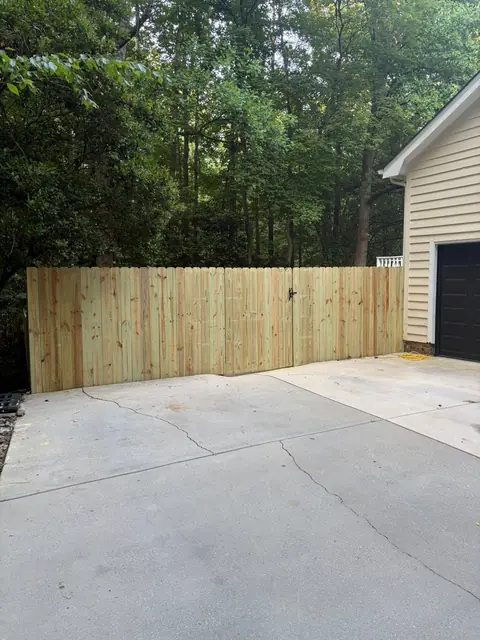
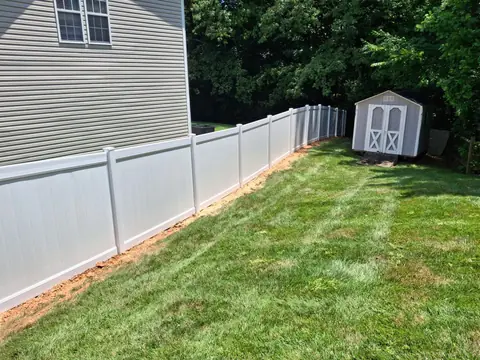
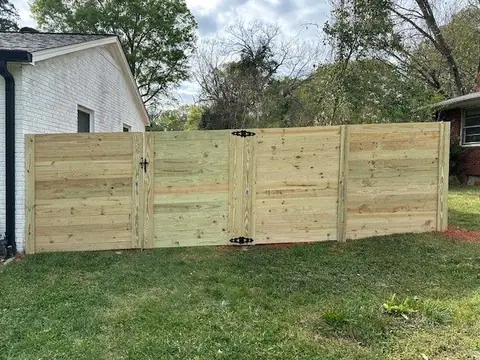
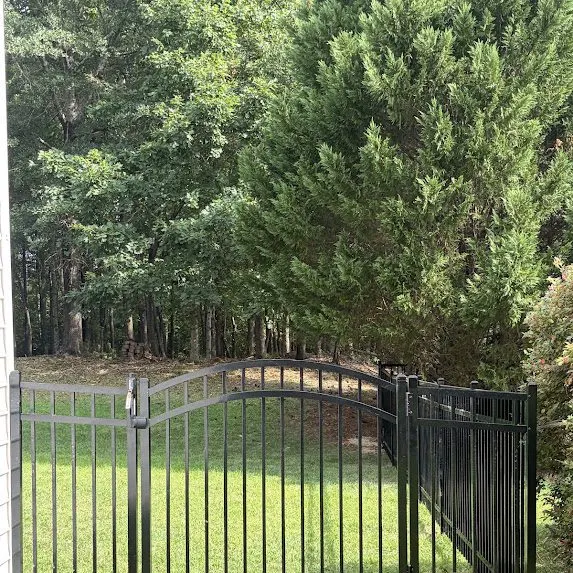
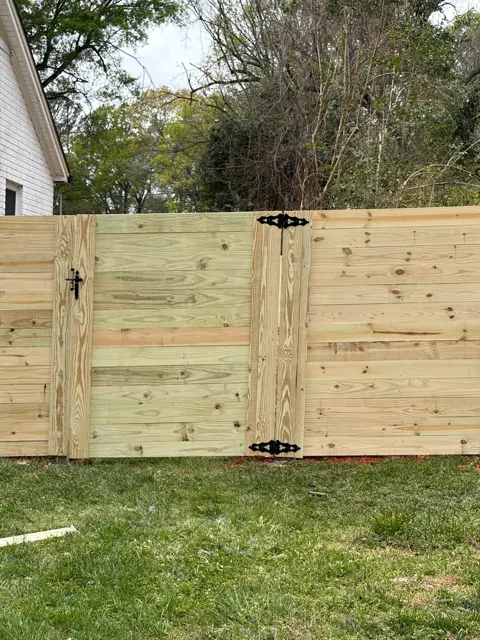
This is the part people picture, and it's often quicker than expected. Many typical residential fences are installed in one to a few days once materials are on site. Our full crew is six people, all Fences & Firepits employees. We don't hire subcontractors, so the people who show up are the people we've trained.
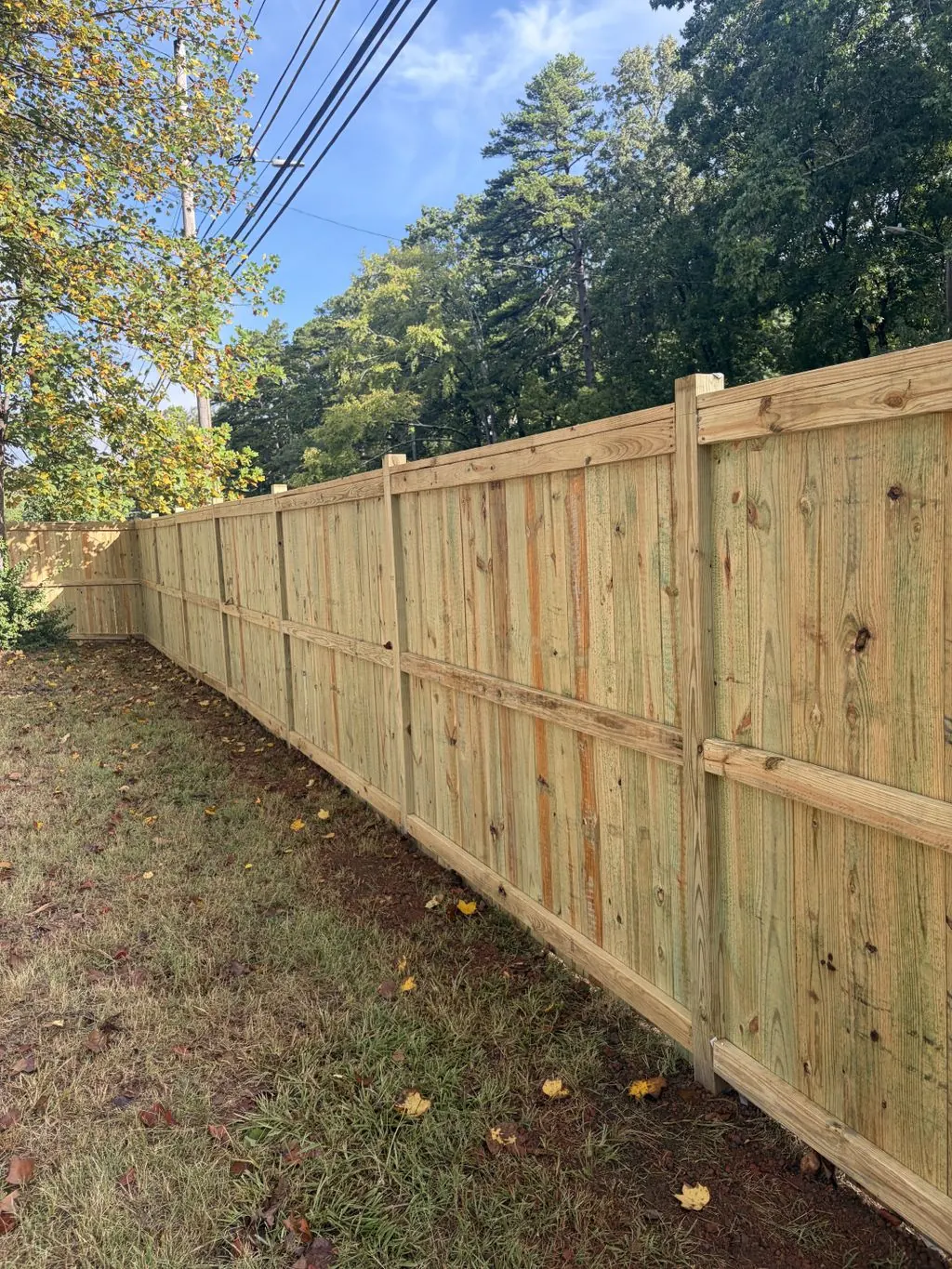
What affects install time:
| Factor | Why it matters |
|---|---|
| Total footage | More fence means more posts, more panels and more time. |
| Material and style | Board-on-board and horizontal wood take longer than standard privacy or panel systems. |
| Old fence removal | Tearing out and hauling away an existing fence adds time. |
| Slopes and terrain | Stepped sections and steep grades need more cutting and fitting. |
| Rock, roots and clay | Hard digging slows post setting. |
| Gates | Double, driveway and custom gates take extra setup and adjustment. |
| Access | Narrow side yards or no vehicle access mean more carrying. |
Stage 6: Final walkthrough
When the fence is complete, we walk it with you. We check that gates swing and latch correctly, the lines are straight and the site is cleaned up. If anything needs adjusting, we take care of it. Your installation is covered by our 2-year limited workmanship warranty.
How to keep your project on schedule
- Gather your HOA guidelines and plat before the estimate
- Decide on material, height and gate locations early
- Submit your HOA application as soon as you have the written estimate
- Tell us about private underground lines
- Clear the fence line of furniture, pots and stored items (see our prep guide)
- Make sure the crew can reach the yard and gates are unlocked on install day
- Keep pets inside while we work
Need a fence by a certain date?
If you have a deadline, such as a new puppy, a pool opening or a family event, tell us at the first call. We'll be upfront about whether the date is realistic given HOA review and the current schedule. Call Ron at (980) 339-2182 to talk it through.
Frequently asked questions
How long does it take to install a fence?
Many typical residential fences are installed in one to a few days once materials are on site. Larger projects, old fence removal, slopes, hard digging and custom gates can add time.
What takes the longest in a fence project?
Often it is the steps before installation, such as HOA review, utility marking and scheduling, rather than the build itself.
Does rain delay fence installation?
Heavy rain can delay digging and post setting, especially in clay soil. We reschedule when conditions would affect quality.
Do you use subcontractors?
No. Every Fences & Firepits installation is done by our own in-house employees.

About the author
Fences & Firepits team, reviewed by Ron Memallaj, owner of Fences & Firepits LLC. We're a licensed and insured fence company serving Charlotte and the surrounding communities since 2022. Every fence we build is installed by our own in-house crew. We don't hire subcontractors.