
Key takeaways
- Racked fences follow the ground. Stepped fences drop down in level sections.
- Aluminum and wood usually rack well on gentle to moderate slopes. Vinyl and some panel styles are usually stepped.
- Stepping leaves triangular gaps under each panel, so plan for pets and privacy.
- Gates on a slope need careful placement so they can swing open without hitting the ground.
Rolling lots are part of living around Charlotte. Many neighborhoods in Mint Hill, Weddington, Huntersville and Concord sit on land that drops toward a creek, a pond or a back tree line. A slope doesn't stop you from getting a great fence, but it does change how the fence is built and which materials make the most sense.
This guide explains the two main ways to fence a slope, which materials handle hills best and what to watch for with gaps, gates and drainage.
The two methods: racked and stepped
Racked (contoured)
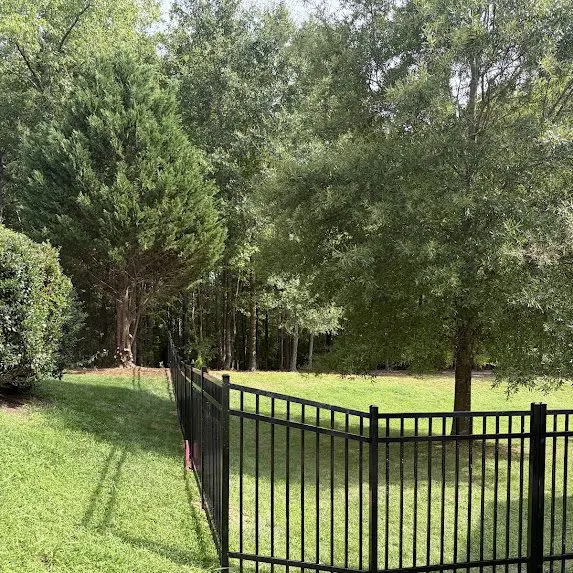
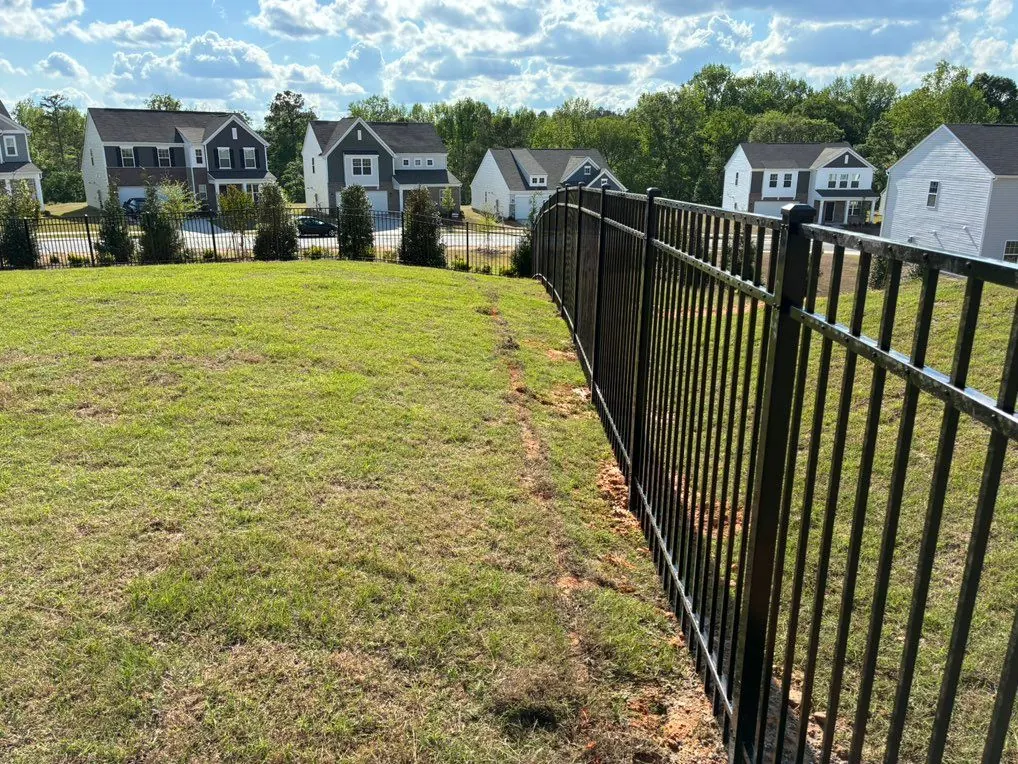
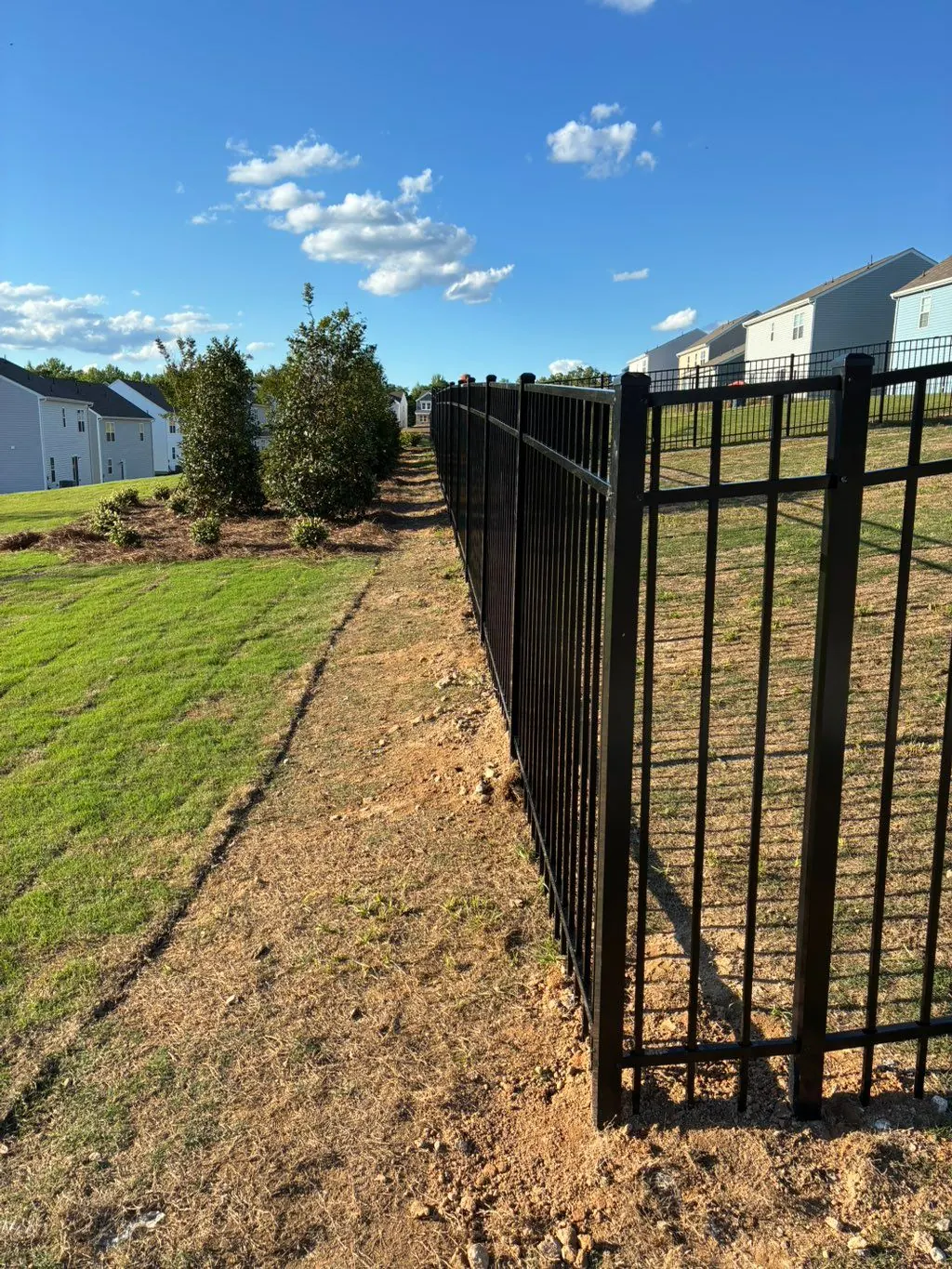
The rails are set parallel to the ground, so the fence follows the slope smoothly. The top line rises and falls with the yard, and the bottom stays a consistent distance from the ground.
Best for: gentle to moderate, steady slopes, a natural look and keeping the bottom gap small.
Stepped
Each section stays level, and the fence steps down at each post like a staircase. The top line looks like a series of level steps.
Best for: steeper slopes, rigid panel systems and HOAs that prefer level tops.
Neither method is "right" in every case. Many fences use both. A fence might be racked across a gentle part of the yard and stepped where the grade gets steep.
Which materials work best on a slope?
Aluminum
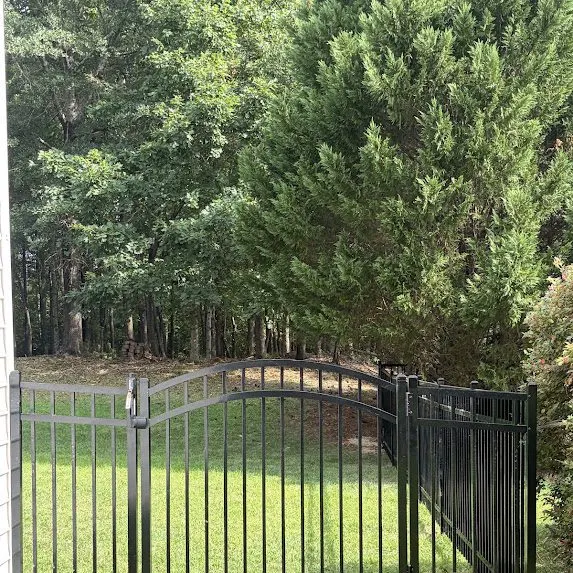
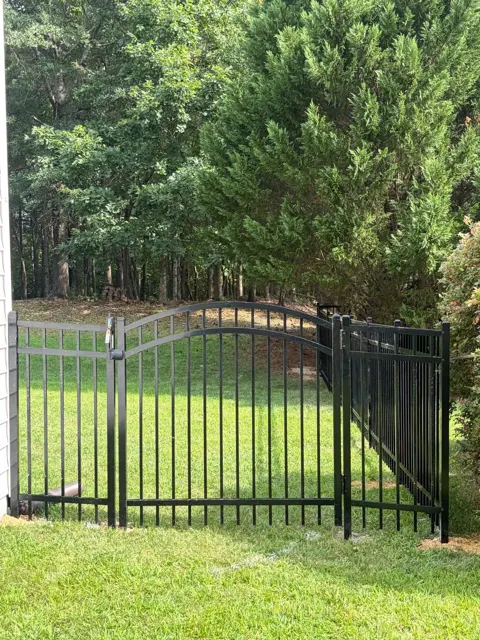
Ornamental aluminum is one of the most slope-friendly materials. Many aluminum panels can be racked to follow a grade, which keeps the bottom gap even and the fence line smooth. That's one reason aluminum is popular on sloped lots around ponds and wooded back lines in our area. We install aluminum in black and bronze, at 3, 4, 4.5, 5 and 6 ft. See our aluminum fencing page for styles.
Wood
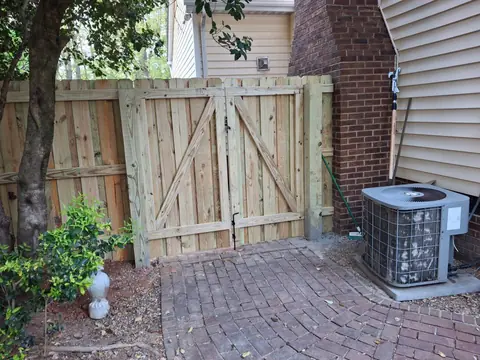
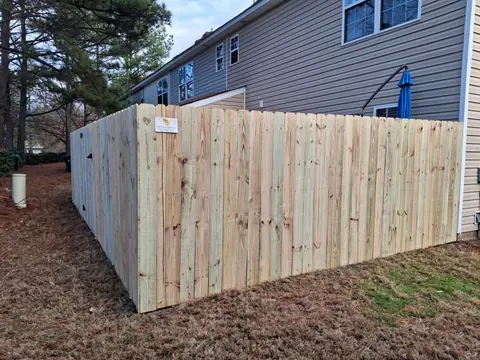
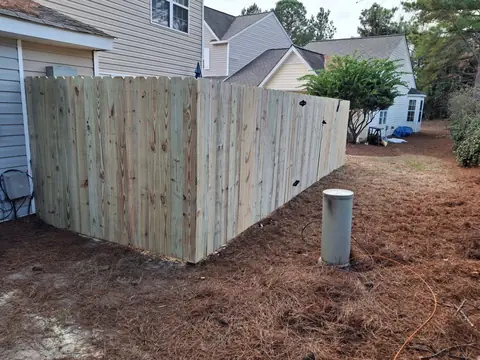
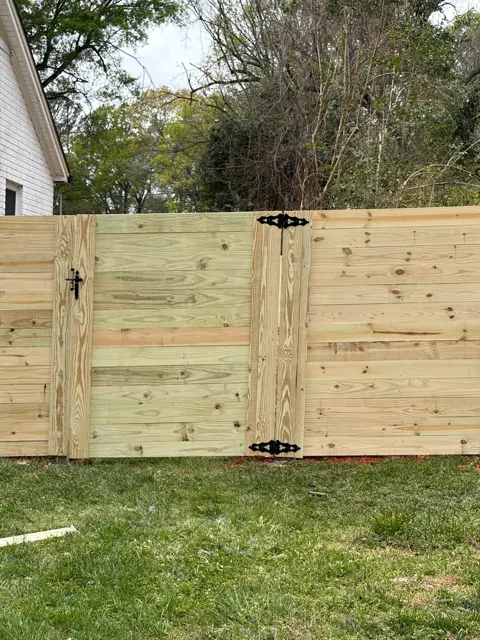
Wood is very flexible on slopes because it's built in place, board by board. Rails can be set to follow the ground, and boards can be cut to keep the bottom close to grade. On steeper or uneven ground, wood can also be stepped, or the bottom can be trimmed to follow the contour while the top stays level.
Vinyl
Most vinyl privacy panels are rigid and built to be level, so on a slope they're usually stepped. That leaves triangle-shaped gaps under the low end of each panel. On gentle slopes, posts and panels can sometimes be adjusted to keep gaps small, but expect stepping on anything significant.
Chain link
Chain link follows slopes easily because the mesh flexes with the grade. It's a practical choice for long runs, sloped back lines and pet containment. We install galvanized and black vinyl-coated chain link at 4, 5, 6 and 8 ft.
Split rail
Split rail and ranch rail fences are naturally forgiving on uneven ground, which is why they're often used along wooded or rolling property lines. Adding wire mesh can help keep pets in.
Handling gaps under a stepped fence
Every stepped section leaves a triangle of open space at its low end. For a privacy fence, that may not matter much. For a small dog, it can be an escape route. Common solutions include:
- Shorter sections on steeper ground, so each step is smaller.
- Grading or adding soil under the low end, when drainage allows.
- A rot board or bottom board on wood fences to close the gap.
- Racking instead of stepping on the parts of the yard where the material allows it.
Gates on a slope
Gates are the trickiest part of a sloped fence. A gate that swings downhill can drag on the ground or hit it before it opens fully. Some ways to plan around this:
- Put gates on the flattest part of the fence line when you can.
- Have the gate swing toward the downhill side so the ground falls away as it opens.
- Use a narrower gate or a double gate so each leaf has less ground to clear.
- Leave a little more clearance under the gate than under the fence.
Our gate planning guide covers widths and placement in more detail, and our custom gates page shows the gate types we build.
Drainage and erosion
Sloped yards move water. A solid privacy fence across the bottom of a hill can act like a small dam and trap water and debris during heavy storms. When we walk your property, we look at where water flows and talk about:
- Leaving a small gap at the bottom where water crosses the fence line
- Using a more open style, such as aluminum or shadowbox, in drainage paths
- Avoiding post locations in spots that stay soggy
Our area's red clay holds water and can shift as it wets and dries, so solid post setting matters. That's part of every install our in-house crew does.
How slopes affect your estimate
Slopes can add labor, because posts need careful setting, stepped sections take more cutting and fitting, and moving materials up and down a hill takes time. That's why our online calculator gives a preliminary range, and the final number comes from an on-site visit. When Ron walks your yard, he'll note grade changes and explain how they affect the build.
Planning your sloped-yard fence
- Sketch your fence line in Plan Your Fence to get a footage estimate.
- Note the steepest areas and where water runs during storms.
- Decide what matters most: smooth top line, small bottom gap, low upkeep or full privacy.
- Check your HOA for any preference on racked or stepped fences.
- Book a free estimate so we can look at the grade in person.
Frequently asked questions
What is the difference between a racked and a stepped fence?
A racked fence follows the slope with rails parallel to the ground. A stepped fence keeps each section level and drops down at each post like a staircase.
What is the best fence material for a sloped yard?
Aluminum, wood, chain link and split rail all handle slopes well. Aluminum and wood can often be racked to follow the ground. Vinyl privacy panels are usually stepped.
How do you fix gaps under a fence on a hill?
Options include shorter stepped sections, adding soil where drainage allows, a bottom board on wood fences, or racking the fence on parts of the slope where the material allows it.
Does a slope make a fence cost more?
It can, because posts take more care to set, stepped sections need more fitting and materials take longer to move. Your written estimate will reflect your actual grade.

About the author
Fences & Firepits team, reviewed by Ron Memallaj, owner of Fences & Firepits LLC. We're a licensed and insured fence company serving Charlotte and the surrounding communities since 2022. Every fence we build is installed by our own in-house crew. We don't hire subcontractors.