
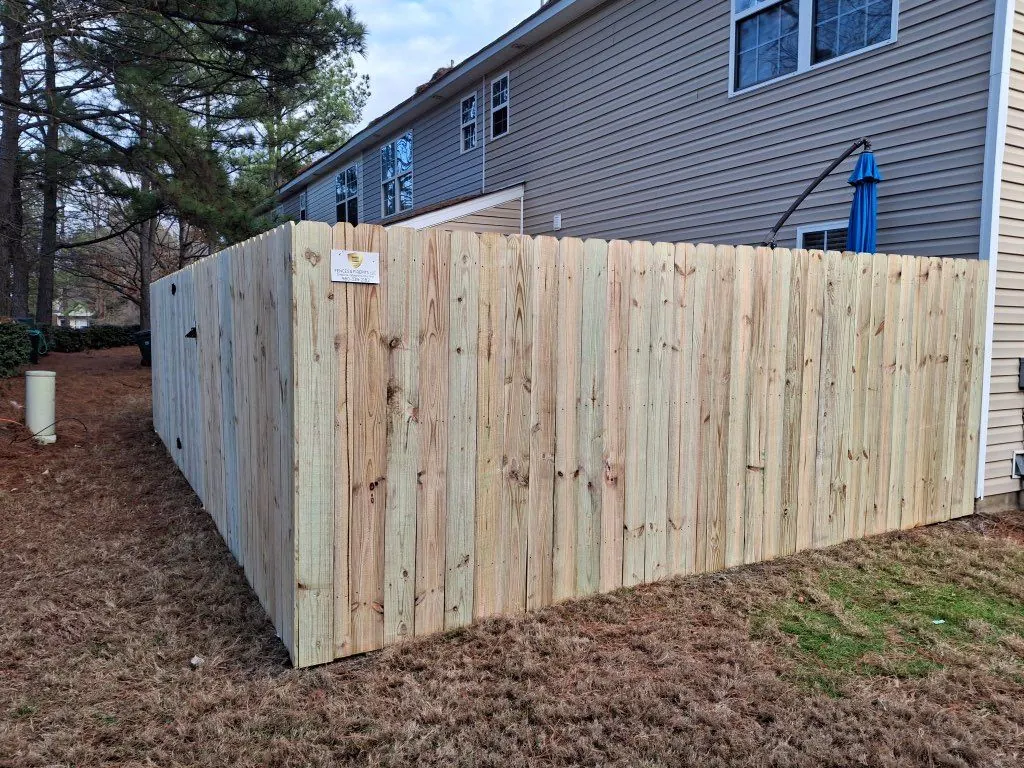
Key takeaways
- Wood (pressure-treated pine or cedar) and vinyl are the two main privacy materials we install. Both come in 6 ft heights, and wood is also available at 8 ft.
- Board-on-board gives the most complete privacy. Shadowbox looks good from both sides and lets some air through.
- Your HOA and your city decide height, style and color long before you do. Check first.
- The right fence depends on how much upkeep you want, how long you plan to stay and what you need to block.
Most fence calls we get in Charlotte start the same way: "We want some privacy in the backyard." It sounds simple, but "privacy" covers a lot. Some homeowners want to block a second-story window next door. Some want a dog to stop seeing every jogger on the greenway. Others just want the patio to feel like a room instead of a stage.
This guide explains the privacy fences we actually install, how they differ and what to consider before you pick one. It's written for homeowners in Charlotte, Matthews, Huntersville, Waxhaw, Concord and the other towns we serve, where HOAs, clay soil and sloped lots all play a part.
Start with what you are trying to block
Before you compare materials, walk your yard and write down the three or four things you want the fence to do. A clear list keeps you from overbuying or underbuying.
- Sight lines at ground level. Neighbors' patios, a busy street, a cut-through path. A standard 6 ft privacy fence handles most of these.
- Views from above. A two-story house next door can see over almost any fence. Height helps a bit, but plantings, a pergola or a well-placed screen often help more.
- Pets. Dogs that react to what they see calm down behind a solid fence. Diggers and jumpers need extra attention at the bottom and top. Our guide to fences for large dogs covers this in detail.
- Noise. A solid fence softens noise a little but won't stop it. If road noise is the main problem, expect only a modest improvement.
Wood privacy fences
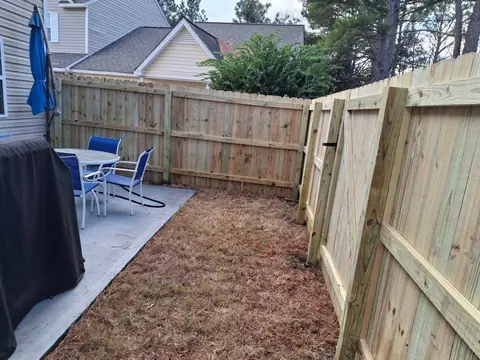
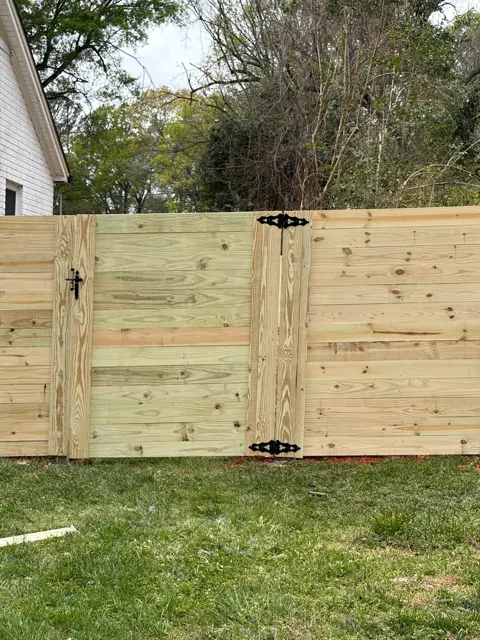
Wood is still the most common privacy fence in the Charlotte area, and for good reason. It looks warm and natural, it suits almost every home style and it's the easiest material to customize. We install wood in pressure-treated pine and cedar, at 3, 4, 6 and 8 ft heights.
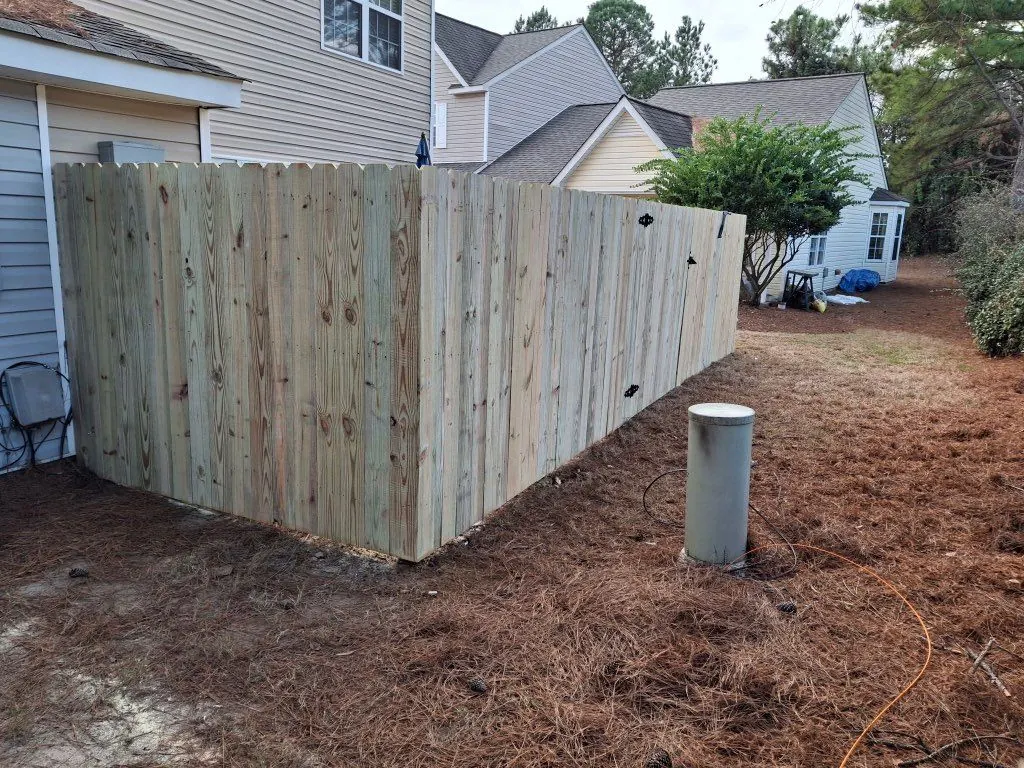
Pressure-treated pine
Pine is treated to resist rot and insects, which matters in our humid summers and clay soil that holds moisture. It starts out pale green or tan and weathers to a soft silver-gray unless you stain it. It's the go-to choice for homeowners who want a solid, good-looking privacy fence without paying for premium lumber.
Cedar
Cedar resists decay and insects naturally, and many people like its color and grain. It's lighter than pine and tends to stay straighter. If you plan to stain the fence and want it to look like a finished part of the house, cedar is worth a look.
Wood privacy styles we build
- Standard privacy (dog-ear): boards set edge to edge with the classic clipped top. It's clean, familiar and HOA-friendly.
- Board-on-board: overlapping boards on alternating sides, so there are no gaps even after the wood shrinks. We compare it with standard privacy in this side-by-side guide.
- Shadowbox: boards alternate on each side of the rail and look the same from both sides. It gives privacy from most angles and lets air through. See what a shadowbox fence is.
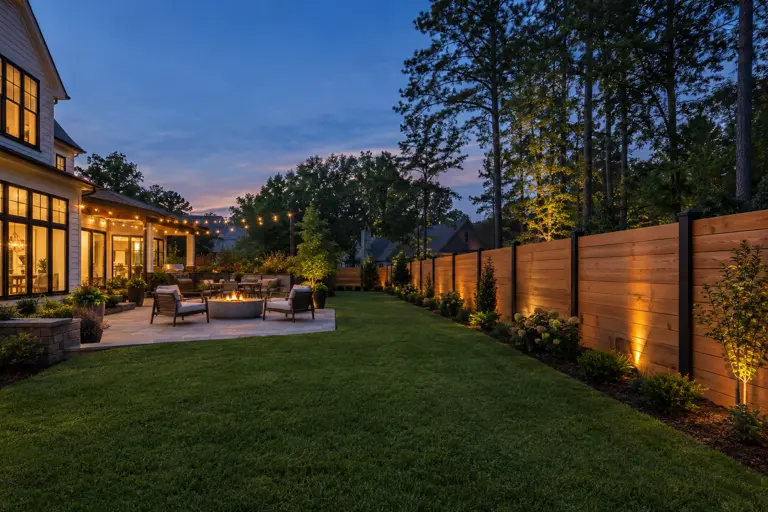
- Horizontal: boards run sideways for a modern look that pairs well with newer homes and outdoor living spaces.
- Stockade: pointed tops and a traditional look.
- Lattice-top: a solid fence with a decorative lattice band on top, which softens a tall fence line.
Vinyl privacy fences
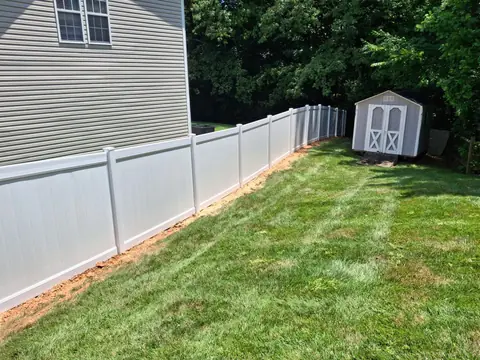
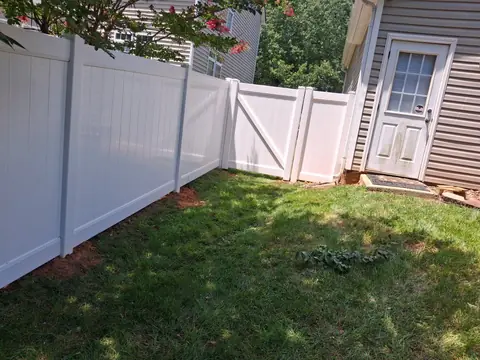
Vinyl is the low-maintenance choice. It doesn't need stain or paint, it won't rot and it cleans up with a garden hose. We install vinyl in white, tan and gray, at 3, 4, 5 and 6 ft heights.
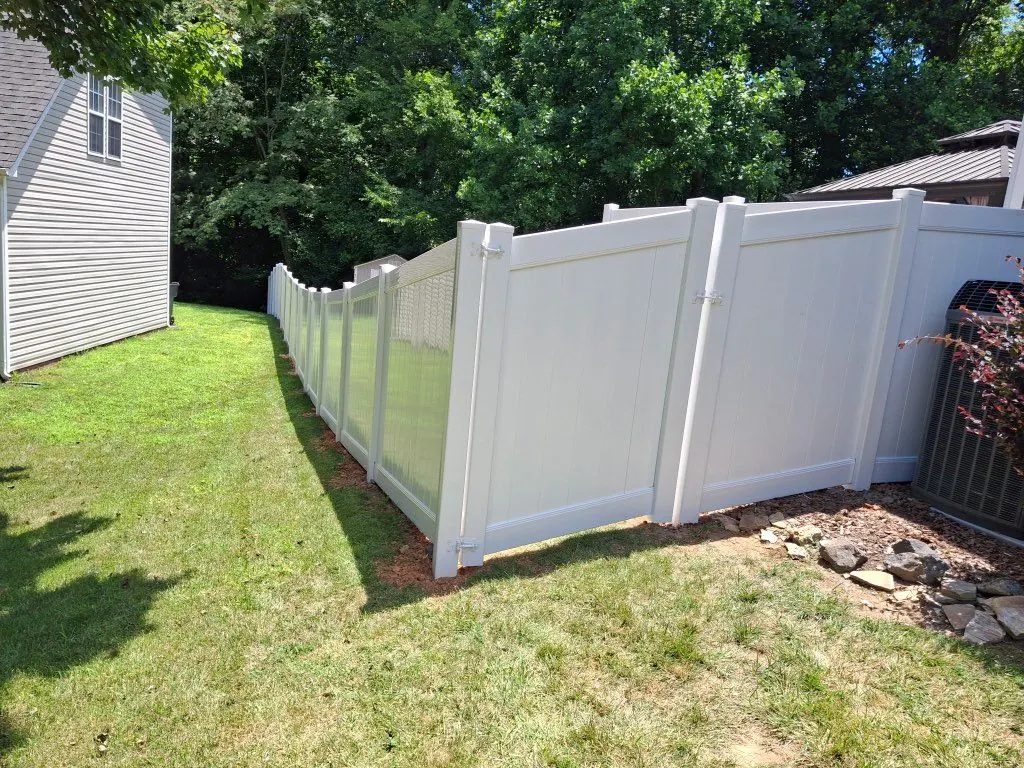
Vinyl privacy panels are solid, so you get full privacy from day one. Many Charlotte-area HOAs approve white or tan vinyl, especially in newer neighborhoods. Vinyl also works well beside a pool, since it handles splashing and sun.
There are trade-offs. Vinyl comes in set panel styles, so it's less customizable than wood. On steep slopes, panels usually step down the hill instead of following the ground. We explain why in our guide to fencing sloped yards.
Wood vs vinyl at a glance
| Factor | Wood (pine or cedar) | Vinyl |
|---|---|---|
| Privacy heights we install | 6 ft and 8 ft (also 3 and 4 ft) | 6 ft (also 3, 4 and 5 ft) |
| Look | Natural, warm, can be stained | Clean, uniform, white, tan or gray |
| Upkeep | Periodic cleaning and staining or sealing | Occasional washing |
| Style options | Many: dog-ear, board-on-board, shadowbox, horizontal, lattice-top | Set panel styles, including lattice-top |
| Slopes | Can be racked to follow gentle slopes | Usually stepped |
Want a deeper comparison? Our material comparison center covers wood, vinyl, aluminum and chain link side by side.
How tall should a privacy fence be?
For most backyards, 6 ft is the standard privacy height. It blocks the view of an average adult standing in the next yard, and it's the height most HOAs and local rules expect for backyard privacy. Wood is also available at 8 ft, which can help on lots that sit lower than the neighbors' or next to a busy road. Whether 8 ft is allowed depends on your city or town and your HOA. Always confirm before you commit.
Front-yard fences are usually limited to lower heights. If your project wraps from the backyard toward the front of the house, expect the rules to change at the front corner of the home.
Check the rules first
In much of the Charlotte area, the HOA decides your style and color before you do. Many associations want a specific board style, require the "good side" to face out, or limit vinyl colors. Cities and towns set their own height and setback rules, too.
We help homeowners put together HOA paperwork with a site plan and product details as part of our normal process. Our HOA fence approval resource center has a checklist and spec sheet you can download. We can't promise any HOA will approve a design, since that's always the association's decision, but a complete, clear application gives you the best chance.
Plan for gates, slopes and trees
A privacy fence is only as good as its weakest spot. Three things cause most surprises:
- Gates. Think about mowers, wheelbarrows, trash cans and maybe a trailer or boat. Our gate planning guide walks through placement and width.
- Slopes. On sloped lots, how the fence follows the ground affects both privacy and looks. Gaps under stepped panels may need attention if you have a small dog.
- Trees and roots. We plan post locations around large roots and talk with you about trees near the line before we dig.
How to choose: a simple decision path
- Want the lowest upkeep? Choose vinyl.
- Want a natural look or plan to stain? Choose wood. Cedar if appearance matters most, pressure-treated pine if value matters most.
- Need total privacy with no gaps? Choose board-on-board wood or solid vinyl panels.
- Want it to look good from both sides? Shadowbox wood is a neighbor-friendly choice.
- Modern home or outdoor living space? Horizontal wood is worth a look.
Still not sure? Take the two-minute fence style quiz, or build your fence in the Fence Design Studio and see it in 3D before you decide.
What it costs and how to get a real number
Price depends on material, height, style, total footage, gates and site conditions such as slopes, old fence removal and access. Our fence cost calculator gives you a preliminary range in about a minute, and our Charlotte pricing page lists our published starting rates. Your final price always comes from a written estimate after Ron or a team member has walked your property.
Every fence we build is installed by our own employees. We don't hire subcontractors. Fences & Firepits is licensed and insured, and your installation is backed by our 2-year limited workmanship warranty.
Frequently asked questions
What is the most private type of fence?
Board-on-board wood and solid vinyl privacy panels give the most complete privacy, because there are no gaps between boards even as wood shrinks over time.
Is wood or vinyl better for a privacy fence in Charlotte?
Both work well. Vinyl needs the least upkeep and comes in white, tan and gray. Wood looks natural, can be stained, offers more styles and is available at 8 ft. The better choice depends on your upkeep preference, budget and HOA rules.
Can I build an 8 ft privacy fence?
We install wood privacy fences at 8 ft, but whether 8 ft is allowed depends on your city or town and your HOA. Confirm the rules for your address before you commit.
Do you help with HOA approval?
Yes. We help prepare HOA paperwork, including a site plan and product details. Approval is always the association’s decision, so we can’t guarantee it, but a complete application helps.

About the author
Fences & Firepits team, reviewed by Ron Memallaj, owner of Fences & Firepits LLC. We're a licensed and insured fence company serving Charlotte and the surrounding communities since 2022. Every fence we build is installed by our own in-house crew. We don't hire subcontractors.