
Key takeaways
- Pressure-treated pine is the value choice: strong, treated for rot and insects, and the most common wood fence in the Charlotte area.
- Cedar resists decay naturally, tends to stay straighter and has a warm color and grain many homeowners love.
- Both benefit from stain or sealer in our humid climate, and both need posts set correctly to last.
- Many homeowners combine them: cedar where it is seen most, pine along back and side lines.
When homeowners decide on a wood fence, the next question is almost always the same: cedar or pressure-treated pine? Both are excellent fence woods, and we install both across Charlotte, Huntersville, Concord, Waxhaw and the surrounding communities. But they look different, age differently and suit different goals.
This guide compares the two side by side in plain English: how they look, how they hold up in our climate, how they take stain, what upkeep they need and how they compare on budget. By the end, you should know which one fits your yard.
The quick answer
Choose pressure-treated pine if you want a strong, good-looking privacy fence at the best value, especially for a large backyard. Choose cedar if appearance matters most, you plan to stain the fence to match the house, or you want a wood that tends to stay straighter over time. If you are torn, you can use cedar on the sections people see most and pine everywhere else.
What is pressure-treated pine?
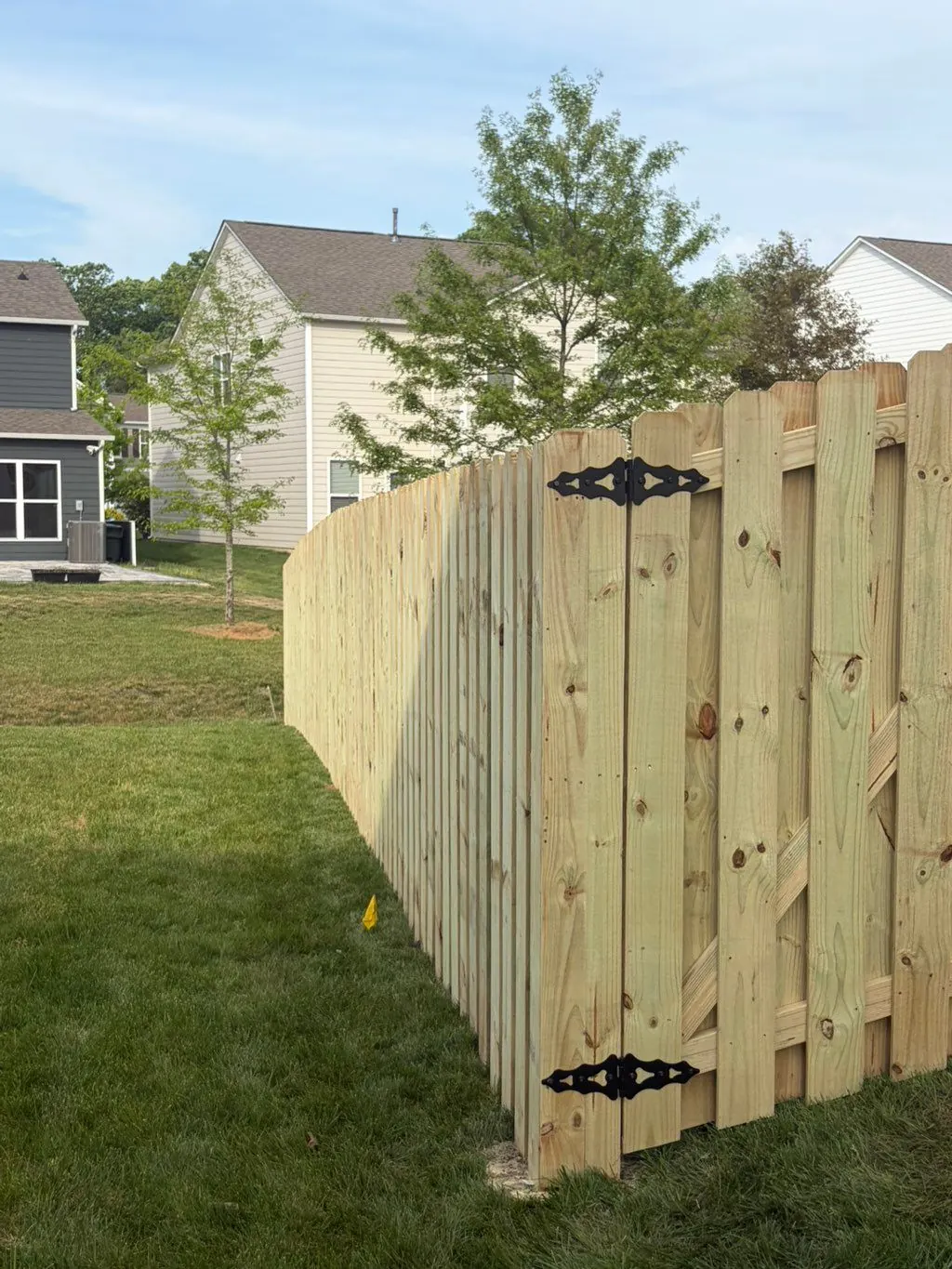
Pressure-treated pine is Southern yellow pine that has been treated under pressure with preservatives that help it resist rot, fungus and insects. That treatment is what makes it suitable for outdoor use in a humid climate like ours, where wood spends a lot of time damp.
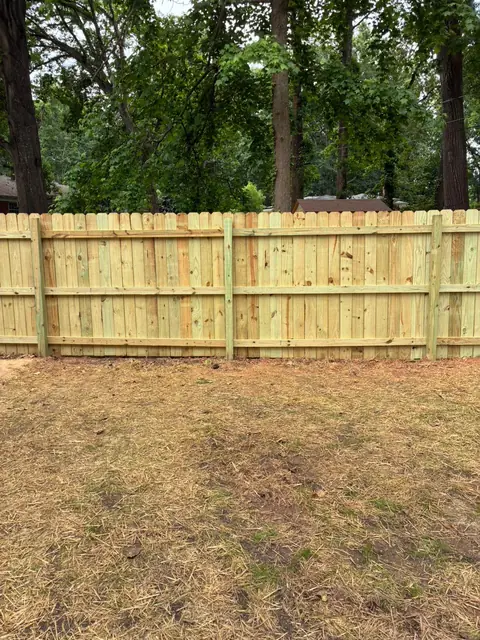
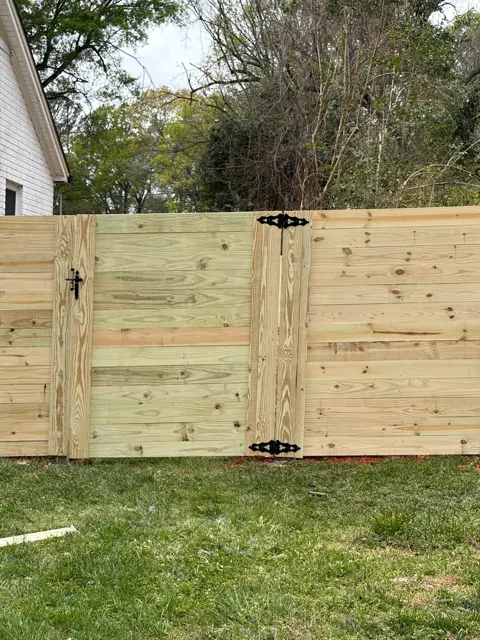
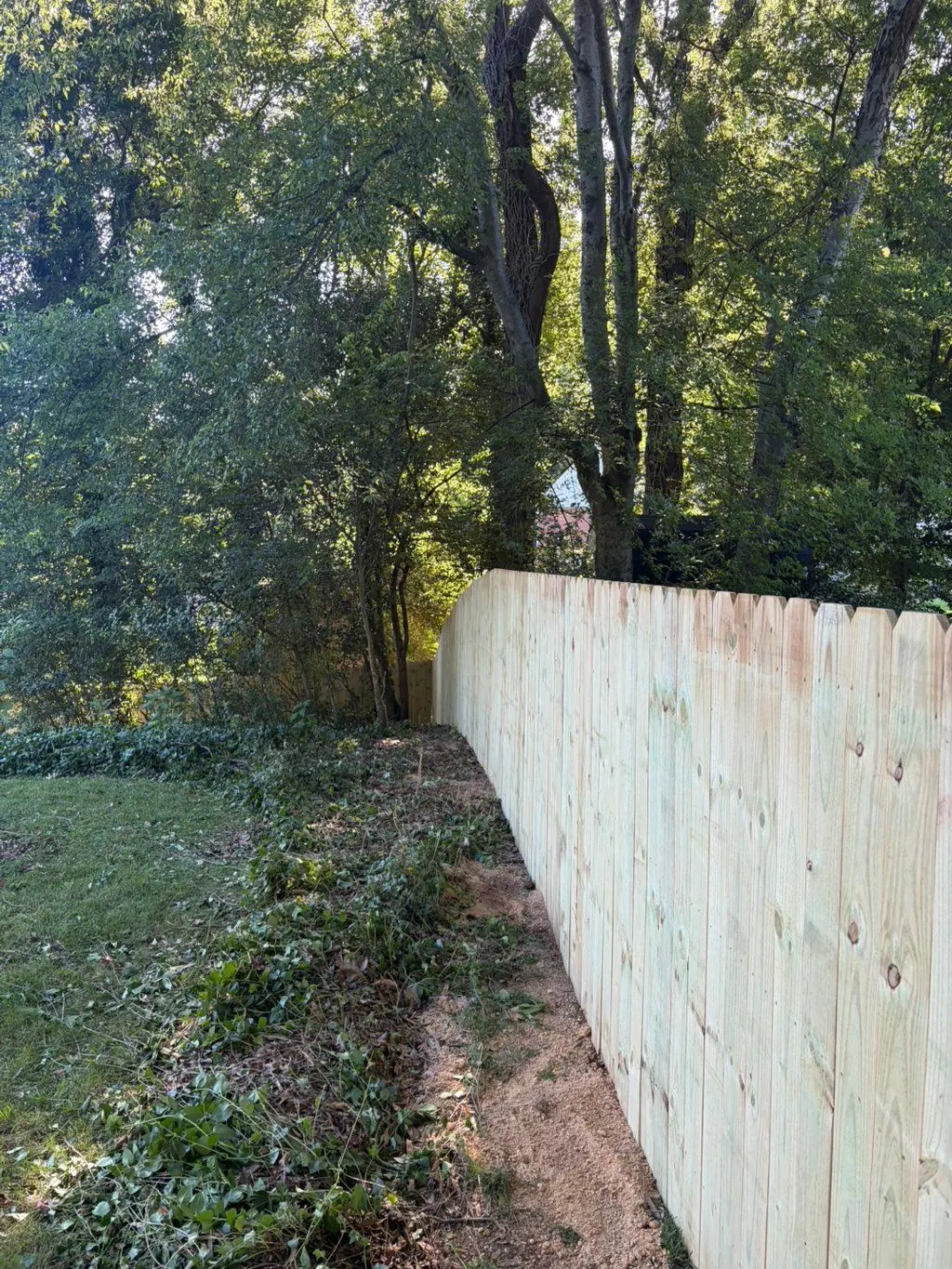
New pressure-treated lumber often has a pale green or tan tint and can feel heavy and wet because of the treatment. As it dries over the first weeks and months, it lightens. Left unfinished, it weathers to a soft silver-gray.
Strengths of pressure-treated pine
- Value: it is the most economical way to build a full wood privacy fence.
- Strength: pine is dense and strong, which suits posts and rails.
- Treated for rot and insects: important in Charlotte's humidity and moisture-holding red clay.
- Widely available: easy to match for future repairs.
Things to know about pine
- Boards can shrink, twist or cup slightly as they dry, which is one reason board-on-board styles are popular.
- It usually needs to dry out before it takes stain well.
- Its look is clean and simple rather than richly grained.
What is cedar?
Cedar is a naturally decay-resistant softwood. Its natural oils help it resist rot and insects without chemical treatment. It is lighter than pine, has a reddish to honey color when new and shows an attractive grain. Like pine, it weathers to gray if left unfinished.
Strengths of cedar
- Natural beauty: warm color and grain that looks great stained or sealed.
- Stability: cedar tends to stay straighter and is less prone to warping and checking than pine.
- Naturally decay-resistant: without added chemical treatment.
- Lightweight: easier on gates and hinges.
Things to know about cedar
- It costs more than pressure-treated pine.
- It is softer and dents more easily.
- Posts in ground contact deserve extra thought, which we cover below.
Side-by-side comparison
| Pressure-treated pine | Cedar | |
|---|---|---|
| Look when new | Pale green or tan, simple grain | Reddish to honey tones, rich grain |
| Weathered look | Silver-gray | Silver-gray |
| Rot and insect resistance | From pressure treatment | Natural oils |
| Stability | Can shrink, twist or cup as it dries | Tends to stay straighter |
| Hardness | Harder, dents less | Softer, dents more easily |
| Staining | Let it dry first | Takes stain well |
| Budget | Lower starting cost | Higher starting cost |
| Best for | Large backyards, value privacy | Showpiece fences, stained finishes |
How each wood holds up in Charlotte weather
Our region has long, humid summers, heavy summer storms, occasional ice and dense red clay that holds water. All of that is hard on wood. The biggest threat to any wood fence here is constant moisture, especially at the base of posts and boards.
Both woods handle our climate well when they are built correctly and maintained. A few things matter more than the species itself:
- How the posts are set. We set posts in concrete at a depth matched to the fence height and soil so they stay firm when clay swells and shrinks.
- Keeping wood off the soil. Boards should not sit in dirt or mulch, where they stay wet.
- Sprinklers. A fence that gets sprayed every morning will age much faster.
- Finish. Stain or sealer slows moisture absorption and UV graying.
Staining and finishing
Stain is optional, but it is the single best thing you can do to keep either wood looking good longer. It also lets you choose the final color instead of letting the fence weather to gray.
Staining pressure-treated pine
New pressure-treated lumber holds moisture from the treatment process, so it usually needs time to dry before stain will soak in. A simple test: sprinkle water on the boards. If it beads up, the wood is not ready. If it soaks in, it is. We explain timing in detail in when to stain a new wood fence.
Staining cedar
Cedar generally takes stain sooner and shows off its grain beautifully with a semi-transparent stain. Many homeowners pick a cedar-tone stain to keep that warm color for years.
Leaving it natural
If you like the silver-gray look, you can leave either wood unfinished. It will still perform, but it will weather faster and may show more checking and color variation.
Styles: does the wood change what you can build?
Both woods work for every wood style we build: standard dog-ear privacy, board-on-board, shadowbox, horizontal, stockade, picket and split rail. A few notes:
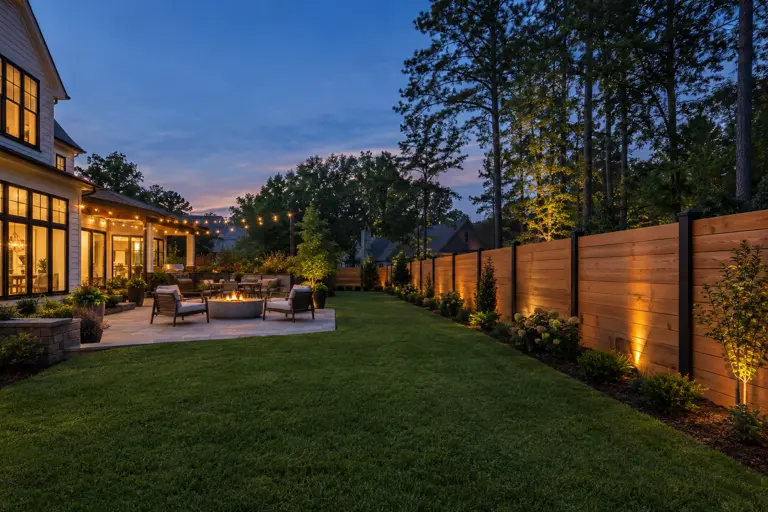
- Horizontal fences show every board edge, so cedar's straightness and grain are especially attractive. See horizontal fence design ideas.
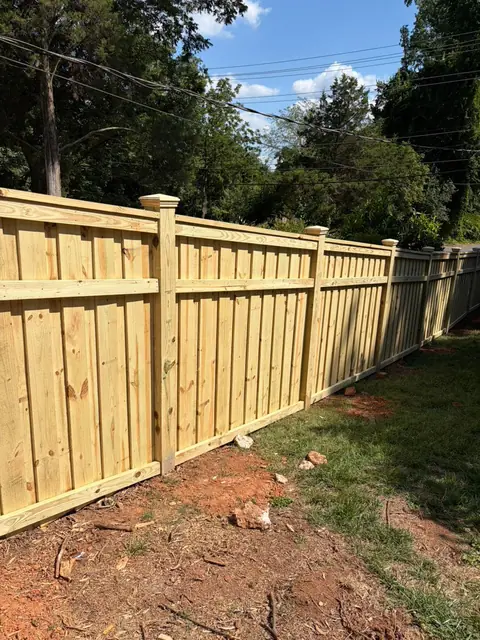
- Board-on-board hides gaps as boards shrink, which makes it a great match for pine. Compare styles in board-on-board vs. standard privacy.
- Large privacy fences on big lots often favor pine for budget.
- 8 ft privacy is available in wood where your town and HOA allow it.
Budget: how they compare
Pressure-treated pine has the lower starting cost, which is why it is the most common wood fence in the Charlotte area. Cedar costs more for materials. Height, style, total footage, gates and site conditions all affect the final price for either wood. You can see our published starting rates on the fence pricing page and get a preliminary range in the cost calculator. For an exact price, ask Ron to quote both woods at your free on-site estimate.
Mixing cedar and pine on one property
You do not have to pick just one. A popular approach is to use cedar where the fence is most visible, such as along the patio, facing the street or around an outdoor living area, and pressure-treated pine along the back and side lines. Stained in the same color, the two can look very close from a distance.
Questions to ask about any wood fence quote
Whichever wood you lean toward, the details of how the fence is built matter as much as the species. When you compare quotes, ask each contractor:
- Which wood will be used for the posts, rails and boards, and are the posts rated for ground contact?
- How deep are posts set, and are they set in concrete?
- What post spacing and rail count will be used for this height and style?
- What fasteners are used, and are they galvanized or coated to resist rust?
- How will the fence handle slopes: stepped or following the grade?
- How are gate posts and gate frames built?
- Is old fence removal included?
- Who builds the fence: an in-house crew or subcontractors?
- Is the company licensed and insured, and what workmanship warranty is included?
Clear answers to these questions tell you far more about how long your fence will last than the price per foot alone. Our guide on how to choose a fence contractor in Charlotte goes deeper.
HOA considerations
Some HOAs specify wood species, stain colors or which side of the fence faces out. Check your covenants before you choose, and include the species and finish in your architectural request. We help prepare paperwork, but approval is always up to your HOA. Our HOA approval checklist can help.
Common myths about cedar and pine
"Cedar never needs maintenance."
Cedar resists decay naturally, but it still weathers, grays and benefits from cleaning and stain. Left completely alone in a shady, damp spot, any wood will eventually show wear.
"Pressure-treated pine always warps."
Pine can move as it dries, but good construction keeps that in check. Proper post spacing, solid rails, quality fasteners and styles like board-on-board all help a pine fence stay straight and private.
"Green wood means it is wet or low quality."
The green tint on new pressure-treated lumber comes from the treatment. It fades as the wood dries and weathers, and it disappears under stain.
"You can stain any new fence right away."
Cedar can often be finished sooner, but new pressure-treated pine usually needs time to dry before stain soaks in. Staining too early can leave a blotchy finish that peels.
Gates in cedar and pine
Gates are the hardest-working part of any fence. They carry their own weight on hinges, swing every day and catch the wind. Cedar's lighter weight is easier on hinges and gate posts, which is one reason some homeowners choose cedar for gates even when the rest of the fence is pine. Either way, a well-built gate needs a properly sized gate post set in concrete, a sturdy frame with diagonal bracing and hardware rated for the gate's size. Walk gates are typically 4 or 5 ft wide, and double gates for mowers, trailers or equipment run from 8 to 12 ft. Our custom gates page covers the options.
A year-by-year care plan for either wood
- First months: let new pine dry out, check that sprinklers are not hitting the fence and keep mulch off the bottom boards.
- When the wood is ready: apply your first coat of stain or sealer.
- Every spring: walk the fence, push on posts, check gate hinges and latches, and rinse off dirt and pollen.
- Every few years: clean and re-apply stain or sealer as the finish fades. Shady, damp sections may need attention sooner than sunny ones.
- Any time: replace cracked or loose boards promptly so small problems stay small.
Which should you choose?
- Best value for a big yard: pressure-treated pine, ideally board-on-board for lasting privacy.
- Best looks and a stained finish: cedar.
- Modern horizontal fence: cedar, for straight lines and grain.
- Best of both: cedar where it is seen, pine where it is not.
Still deciding? Explore styles on our wood fencing page, compare wood with other materials in wood vs. vinyl, or call Ron at (980) 339-2182. Every fence we build is installed by our own in-house crew, never subcontractors. We are licensed and insured, and installation is backed by our 2-year workmanship warranty.
Frequently asked questions
Which lasts longer, cedar or pressure-treated pine?
Both can last for many years in the Charlotte area when posts are set correctly, wood is kept off the soil and the fence is stained or sealed. Construction and upkeep matter more than species.
Is cedar worth the extra cost?
If appearance, a stained finish or straighter boards matter most to you, many homeowners find it worth it. For large privacy fences focused on value, pressure-treated pine is the popular choice.
Can I stain pressure-treated pine right away?
Usually not. It needs to dry first. If water beads on the surface, wait. If it soaks in, the wood is ready for stain.
Do you build fences with cedar boards and treated posts?
Yes, this combination is common. Ask about it during your estimate.
Does cedar turn gray?
Yes. Unfinished cedar weathers to silver-gray. A cedar-tone stain keeps its warm color longer.

About the author
Fences & Firepits team, reviewed by Ron Memallaj, owner of Fences & Firepits LLC. We're a licensed and insured fence company in Charlotte, NC, serving the city and surrounding communities since 2022. Every fence we build is installed by our own in-house crew. We don't hire subcontractors.