
Key takeaways
- Standard privacy sets boards edge to edge. Board-on-board overlaps them on alternating sides.
- As wood dries, standard privacy can develop small gaps. Board-on-board stays fully closed.
- Board-on-board uses more boards, so it generally costs more.
- Board-on-board looks finished from both sides, which can help with neighbors and HOAs.
When homeowners decide on a wood privacy fence, the next question is usually about style. The two most common choices we install around Charlotte are standard privacy (often with dog-ear tops) and board-on-board. From the street they can look similar. Up close, and a year or two later, the difference is clear.
How each style is built
Standard privacy
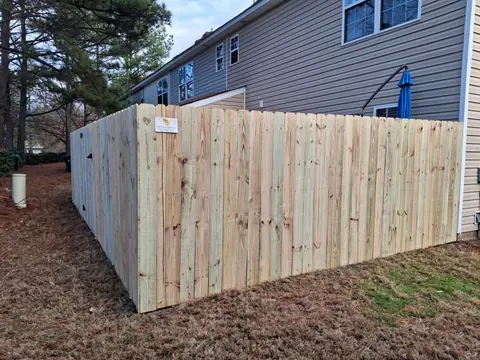
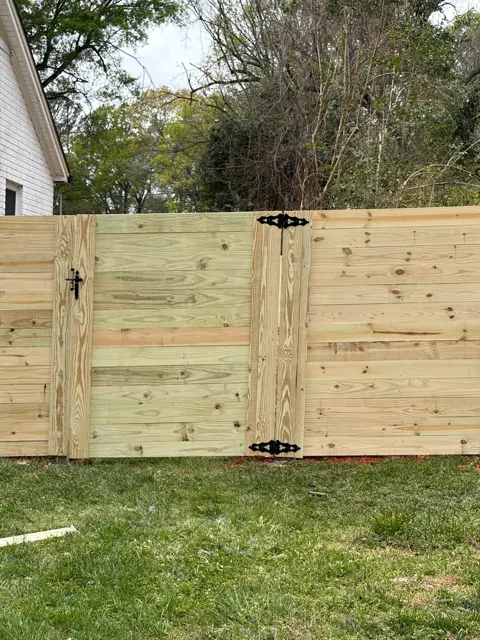
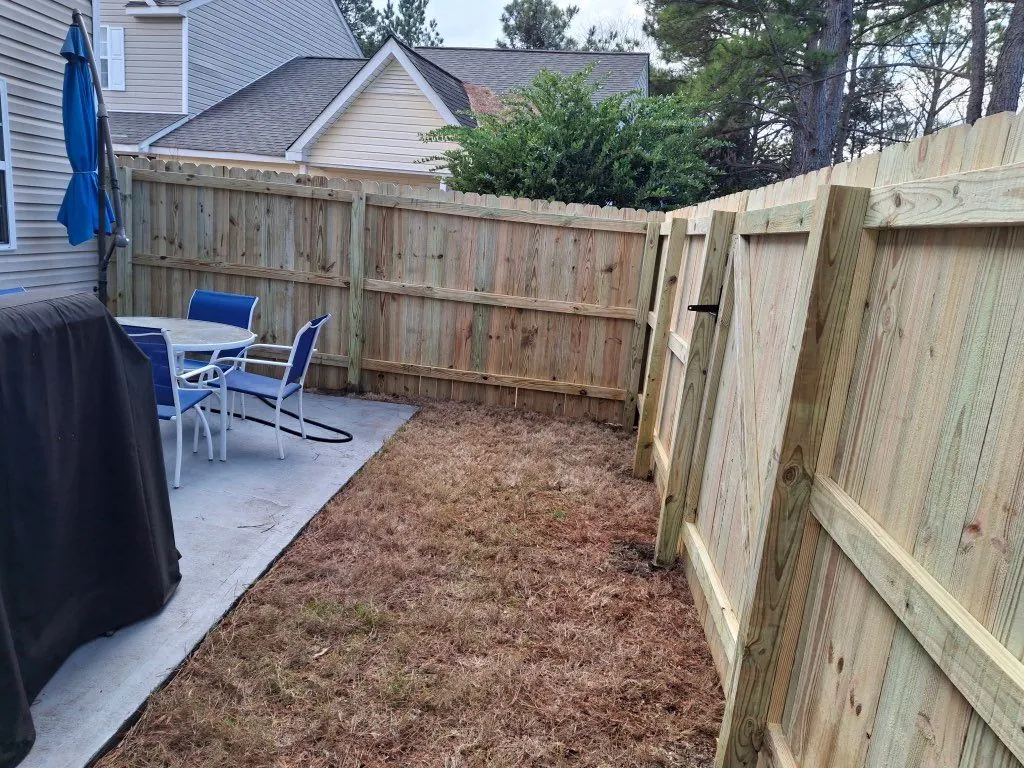
Boards (pickets) are attached side by side on one face of the horizontal rails, edge to edge. The rails and posts are visible from the back side. Dog-ear tops, with clipped corners, are the classic look.
Board-on-board
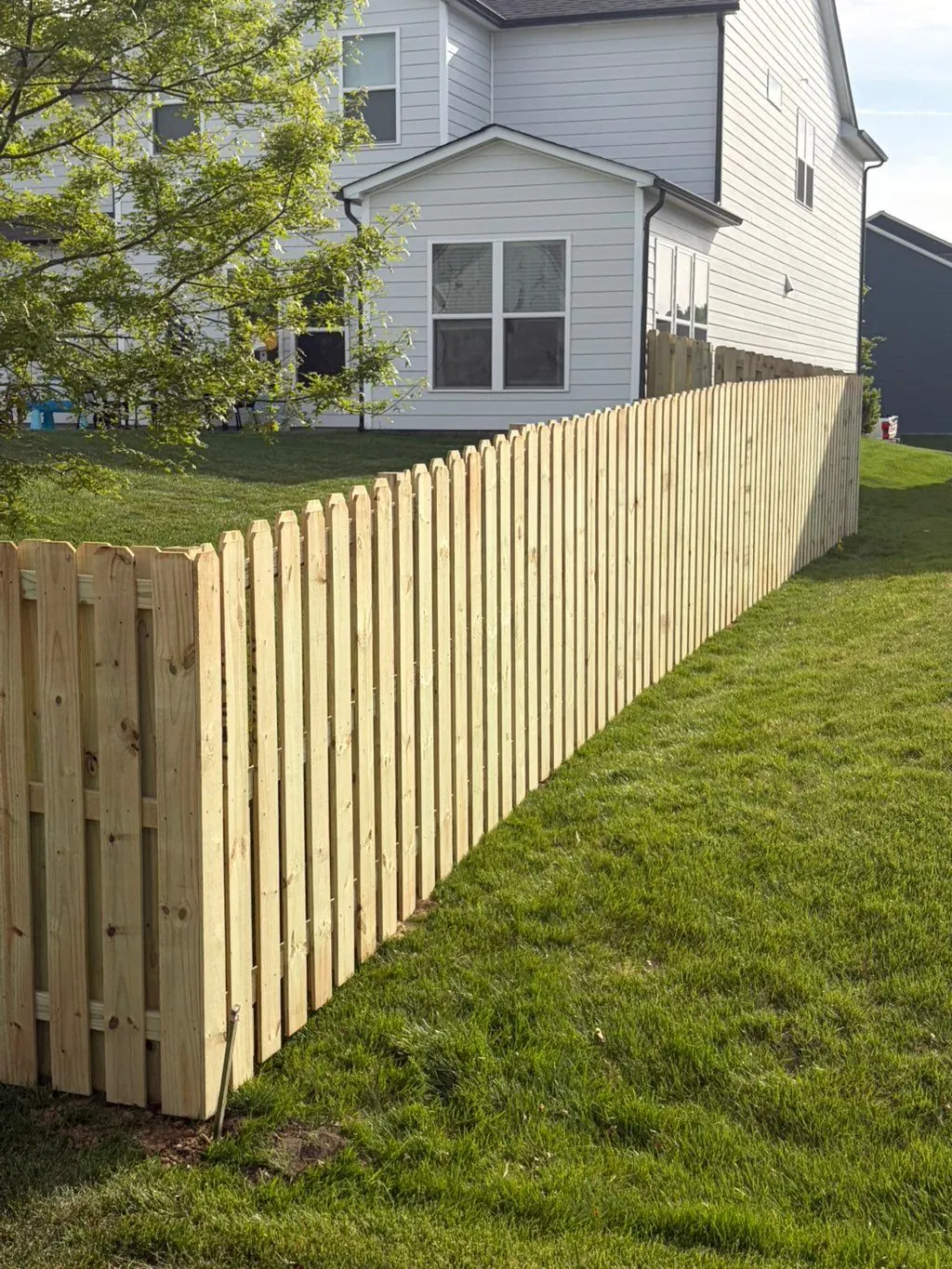
One layer of boards is attached with small spaces between them, then a second layer covers the spaces from the other side or the same side, overlapping each edge. The overlap means there's no straight-through gap.
There's also a close cousin, the shadowbox fence, where boards alternate on opposite sides of the rail with more space between them. It looks the same from both sides and lets air through. Read our shadowbox guide for details.
Privacy: board-on-board wins over time
New pressure-treated boards contain moisture. As they dry in our summer heat, they shrink a little in width. On a standard privacy fence, that shrinkage can open thin gaps between boards, enough to see light and some movement through the fence.
Board-on-board overlaps each edge, so even after the boards shrink, there's no direct line of sight. If total privacy is the goal, for a hot tub, a patio facing a neighbor's deck or a reactive dog, board-on-board is the safer bet.
Looks: which side faces your neighbor?
A standard privacy fence has a finished side (smooth boards) and a structural side (posts and rails). Many HOAs require the finished side to face out, which means you look at the rails from your yard. Some homeowners don't mind. Others find it bothers them every time they're on the patio.
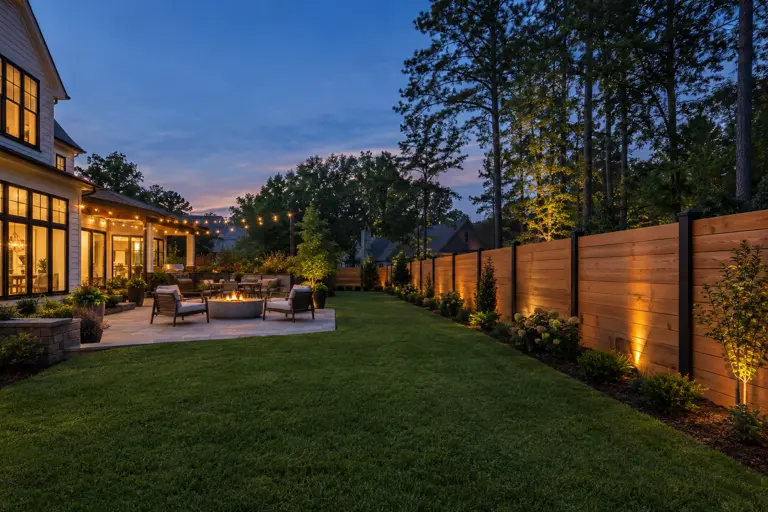
Board-on-board looks more finished from both sides, depending on how it's built, and has a richer, more textured look. On homes where the fence is a big part of the backyard view, that extra depth is a real upgrade.
Side-by-side comparison
| Factor | Standard privacy | Board-on-board |
|---|---|---|
| Privacy on day one | Full | Full |
| Privacy after wood dries | Small gaps can appear | Stays fully closed |
| Look | Clean, classic, familiar | Layered, textured, more custom |
| Both sides finished | No, rails show on one side | Looks finished from both sides |
| Lumber used | Less | More, due to the overlap |
| Wind | Solid face | Solid face |
| Cost | Lower | Higher |
Cost: why board-on-board costs more
Board-on-board uses noticeably more boards per foot because of the overlap, and installing two layers takes more labor. That's why it costs more than standard privacy at the same height and length. Our fence cost calculator gives you a preliminary range by material, and your written estimate will spell out the exact style.
Wind and weather
Both styles create a solid face that catches wind. Good post depth, solid footings and the right post spacing matter more than the board style. Our in-house crew sets every post with that in mind, and our area's clay soil is part of the plan. If your fence line is very exposed, such as an open lot or a hilltop, ask about shadowbox. It still gives strong privacy while letting some air pass through.
Upkeep
Upkeep is similar for both. Each benefits from occasional cleaning and a stain or sealer to slow weathering. Board-on-board has more surface area and overlapping edges, so staining takes a bit longer. Our fence maintenance guide explains what to do and when.
HOA fit
Many Charlotte-area HOAs allow both styles, and some specify one. Read your association's fence guidelines first. If they require the finished side to face out, board-on-board can give you a nicer view from inside your own yard. Our HOA approval guide walks through the process.
Which should you choose?
Choose standard privacy if:
- You want a classic, clean look at a lower cost
- A small gap or two as the wood dries won't bother you
- Your HOA specifies dog-ear privacy
Choose board-on-board if:
- You want privacy that stays complete for the life of the fence
- You'll see both sides of the fence and want them to look finished
- The fence is a big part of your backyard design
Want to see the difference before you decide? Build both in the Fence Design Studio, or look at real Fences & Firepits installs in our project gallery.
Frequently asked questions
Is board-on-board more private than a regular privacy fence?
Over time, yes. Both are fully private when new, but as wood dries and shrinks, standard privacy fences can develop small gaps. Board-on-board overlaps each edge so it stays closed.
Why does board-on-board cost more?
It uses more boards per foot because of the overlap, and installing two layers takes more labor.
Which side of a privacy fence faces the neighbor?
Many HOAs require the finished side to face out toward neighbors and the street. Board-on-board looks more finished from both sides, which helps if you will see the back of the fence from your yard.
Is shadowbox the same as board-on-board?
No. Shadowbox alternates boards on opposite sides of the rail with space between them, so it looks the same from both sides and lets air through. Board-on-board overlaps boards for a closed face.

About the author
Fences & Firepits team, reviewed by Ron Memallaj, owner of Fences & Firepits LLC. We're a licensed and insured fence company serving Charlotte and the surrounding communities since 2022. Every fence we build is installed by our own in-house crew. We don't hire subcontractors.