
Key takeaways
- Wood needs the most care: cleaning plus a stain or sealer to slow weathering.
- Vinyl and aluminum mostly need an occasional wash and a look at gates and hardware.
- Keep sprinklers, mulch, soil and vines off the bottom of any fence.
- Check gates twice a year. They take the most wear.
A well-built fence should look good for years, but every material does better with a little care. Our climate is tough on outdoor structures. Long, humid summers, heavy storms, pollen season and red clay that holds moisture all take their toll.
This guide covers simple routines for each material we install: wood, vinyl, aluminum and chain link. It ends with a seasonal checklist you can save.
The universal rules
A few habits help every fence, whatever the material:
- Aim sprinklers away from the fence. Constant wetting stains vinyl, weathers wood faster and leaves mineral spots.
- Keep soil and mulch off the bottom. Wood rots fastest where it touches damp ground, and mulch piled against any fence traps moisture.
- Cut back vines and shrubs. Ivy and vines hold moisture, add weight and pull on boards and pickets.
- Watch the trees. Dead limbs over the fence line are the most common cause of storm damage.
- Don't lean heavy things on it. Fences aren't designed to hold ladders, firewood stacks or heavy planters.
- Check gates. Gates take the most use and are the first thing to need adjustment.
Wood fences
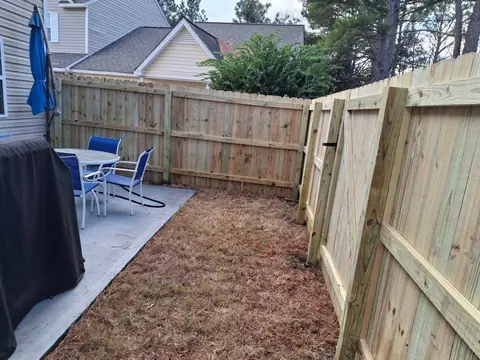
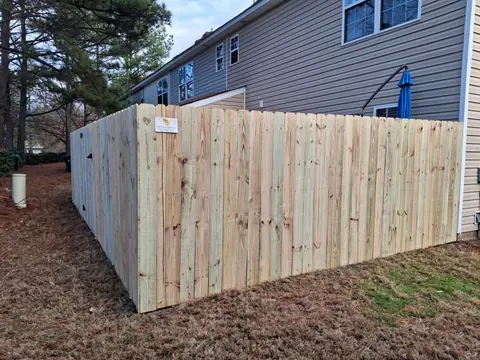
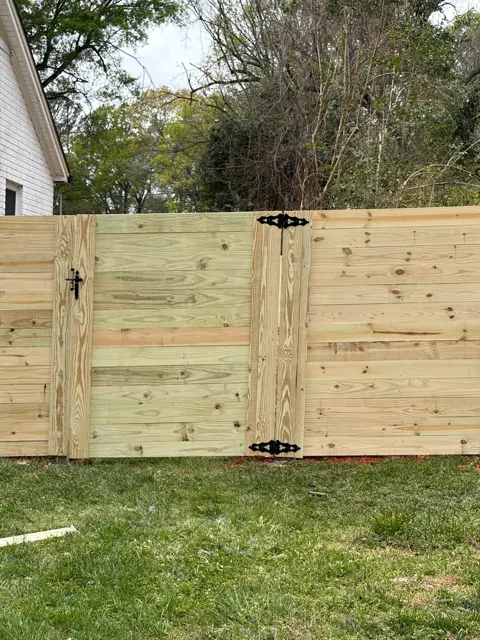
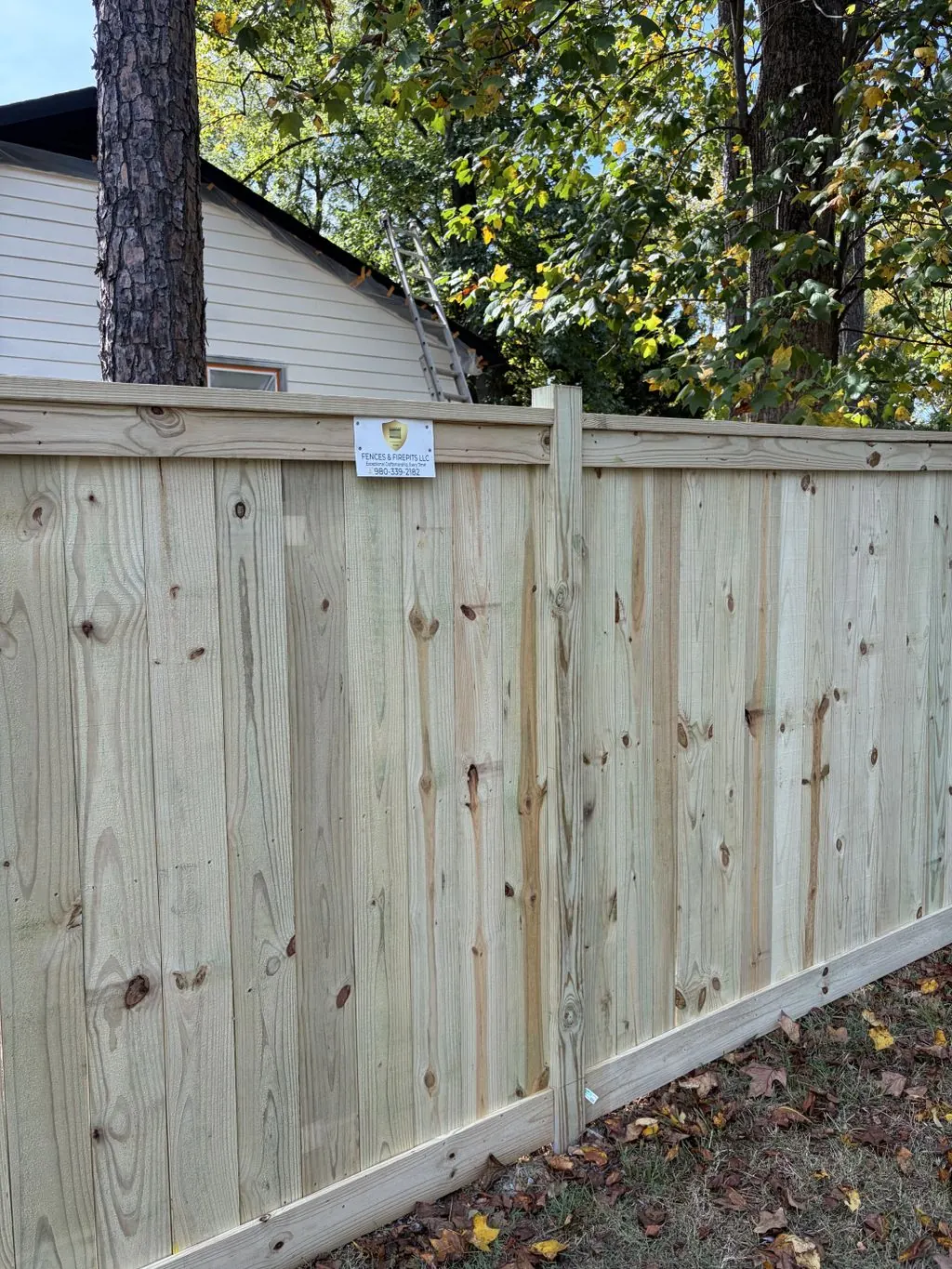
Wood is beautiful and customizable, and it's the material that benefits most from care. We install pressure-treated pine and cedar.
Let new wood dry before staining
New pressure-treated lumber is wet when it's installed. Stain or sealer won't soak in well until the wood dries. A common test is to sprinkle a few drops of water on a board. If it beads up, the wood isn't ready. If it soaks in, it's time to stain. Always follow the stain manufacturer's instructions for timing.
Clean, then protect
- Clean once a year, or before staining, with a garden hose and a soft brush and a wood cleaner if needed. If you use a pressure washer, keep it on a low setting and hold it at a distance. Too much pressure can damage the surface.
- Stain or seal on the schedule recommended by the product you choose. A semi-transparent or solid stain adds color and UV protection. A clear sealer slows moisture but lets the wood weather to gray.
- Spot-check for loose boards, popped nails or screws and any soft spots near the ground.
Expect natural movement
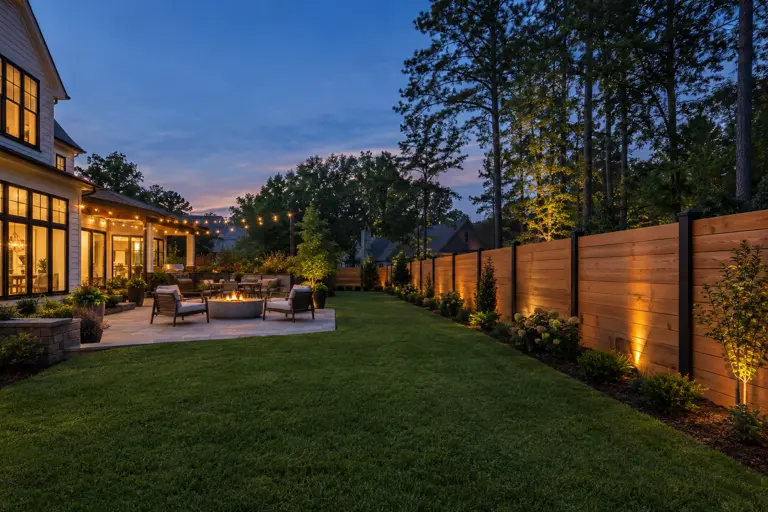
Wood moves with the seasons. Small checks (cracks along the grain), slight cupping and color change are normal and usually aren't structural. Board-on-board styles hide shrinkage gaps better than standard privacy. Read our comparison for details.
Vinyl fences
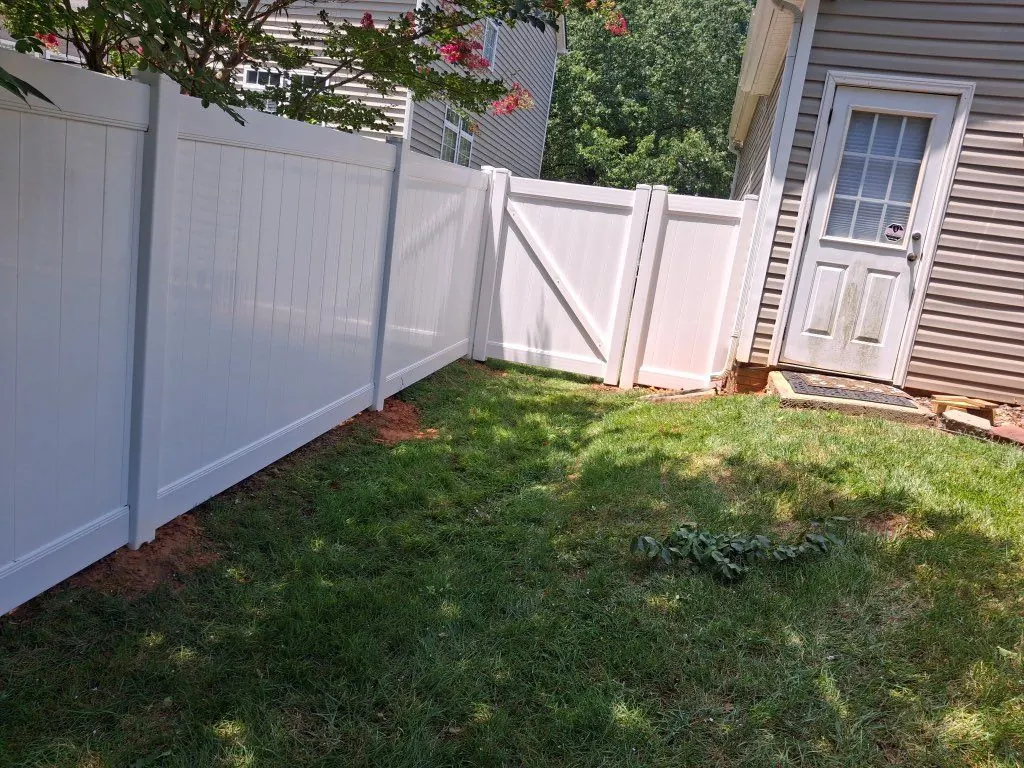
Vinyl is the easiest material to live with. We install it in white, tan and gray. It won't rot and never needs paint, but it does get dirty, especially on the shady, north-facing side and during pollen season.
- Rinse a few times a year with a garden hose.
- Wash with mild soap and water and a soft brush or cloth for grime.
- Treat green or black spots (mildew or algae) with a cleaner made for vinyl. Test any product in a hidden spot first.
- Avoid abrasive pads, harsh solvents and high-pressure spray close to the surface, which can scuff or dull the finish.
- Check post caps, gate hinges and latches once or twice a year.
Aluminum fences
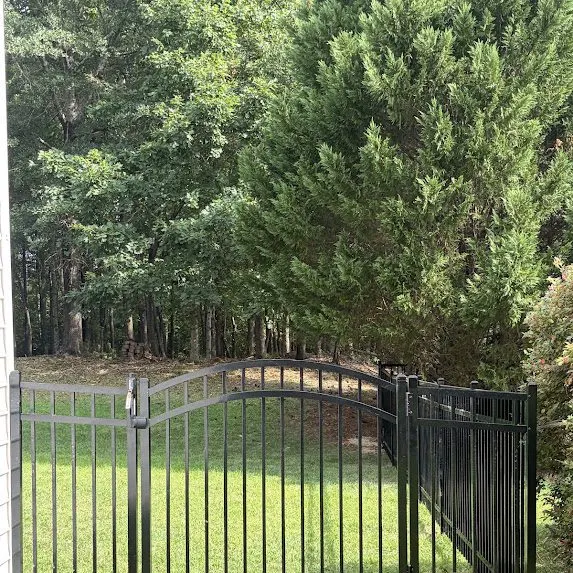
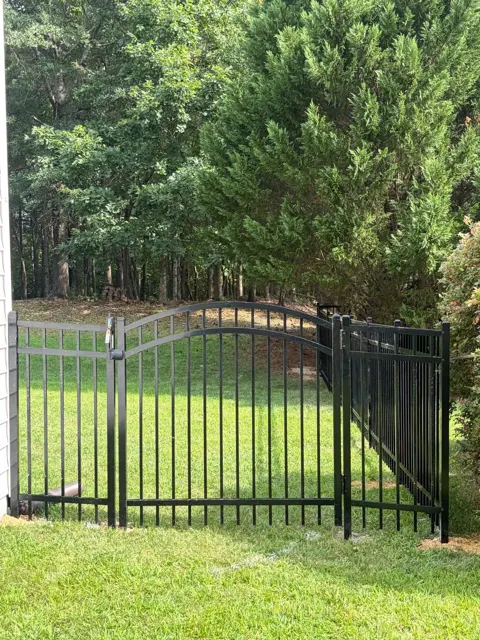
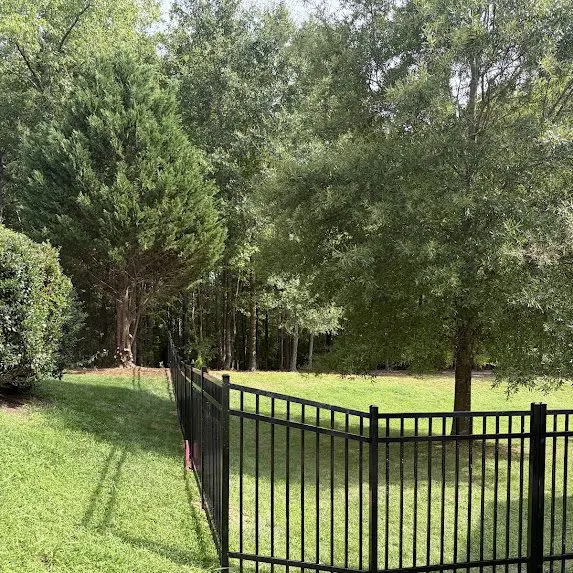
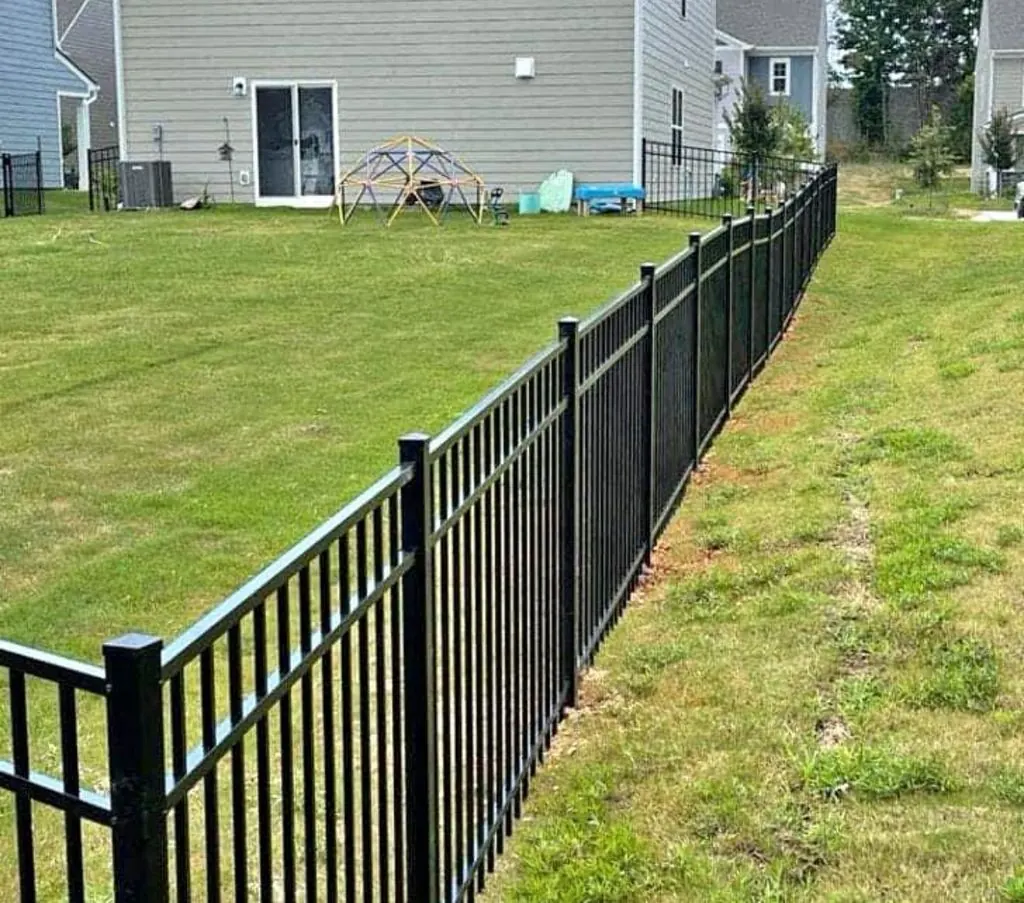
Ornamental aluminum, which we install in black and bronze, is built for low upkeep. It doesn't rust the way steel does, and a powder-coated finish protects it.
- Rinse with a hose and wipe with mild soap and water as needed.
- Touch up any chips or scratches in the coating with touch-up paint matched to the finish.
- Check gate hinges, latches and any self-closing hardware, which matters most around pools.
- Keep sprinklers and fertilizer off the posts where you can.
Chain link fences
Galvanized and black vinyl-coated chain link are tough and practical. Care is simple:
- Pull vines and weeds out of the mesh before they get woody.
- Check tension. Sagging fabric or bent top rails usually come from falling limbs or something leaning on the fence.
- Inspect gates and tighten hinge and latch hardware.
- Rinse vinyl-coated chain link to keep the color fresh.
Gates: the part that needs the most attention
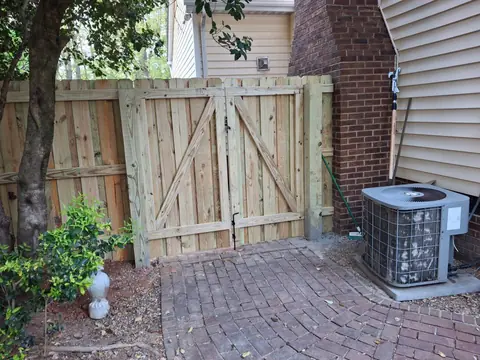
A gate is the only moving part of a fence, and it gets used every day. Twice a year:
- Open and close the gate several times. Does it swing freely and latch on its own?
- Look for sagging. Does the latch side drop or drag?
- Tighten loose hinge screws or bolts.
- Lubricate hinges and latches with a product suited to outdoor hardware.
- For pool gates, confirm self-closing and self-latching hardware works every time.
If a gate sags or won't latch, call us. Small adjustments early prevent bigger repairs later. See our gates page for the types we build.
Seasonal checklist
| Season | What to do |
|---|---|
| Spring | Rinse off pollen. Check for winter storm damage. Cut back new vine growth. Aim sprinklers away from the fence. |
| Summer | Good weather window for cleaning and staining wood (follow product temperature guidance). Check gates after heavy use. |
| Fall | Clear leaves piled against the bottom. Trim dead limbs over the fence line before winter storms. Inspect gates and hardware. |
| Winter | Walk the fence after ice or wind storms. Note anything to fix in spring. |
When to call a pro
Call us if you see a leaning post, broken rails, a gate that won't stay aligned, storm damage or rot at the base of wood posts. If your fence was installed by Fences & Firepits, check our 2-year limited workmanship warranty first. If you're considering replacing an older fence, our material comparison can help you decide how much upkeep you want next time.
Frequently asked questions
How often should I stain a wood fence?
Follow the schedule recommended by the stain or sealer you choose. Wood in full sun and frequent rain usually needs attention more often. Clean the fence before each application.
When can I stain a new pressure-treated fence?
Wait until the wood has dried. Sprinkle water on a board: if it beads, wait; if it soaks in, the wood is ready. Always follow the product’s directions.
How do I clean a vinyl fence?
Rinse with a garden hose, then wash with mild soap and water and a soft brush. Use a vinyl-safe cleaner for mildew, and avoid abrasive pads and harsh solvents.
Do aluminum fences rust?
Aluminum does not rust the way steel does, and powder coating protects the finish. Touch up chips and check gate hardware periodically.

About the author
Fences & Firepits team, reviewed by Ron Memallaj, owner of Fences & Firepits LLC. We're a licensed and insured fence company serving Charlotte and the surrounding communities since 2022. Every fence we build is installed by our own in-house crew. We don't hire subcontractors.