
Key takeaways
- Pool barrier rules typically cover height, gaps, climbability and self-closing, self-latching gates.
- Exact requirements depend on your jurisdiction. Confirm them with your local permit office before you build.
- Aluminum and vinyl are popular pool fence materials. Aluminum keeps the view open.
- Gates matter most. Plan their swing direction, latch height and closing hardware carefully.
A pool fence isn't just a backyard upgrade. It's a safety barrier, and in most places it's a legal requirement. If you're adding a pool, replacing an old fence around one or buying a home with a pool, the fence deserves careful planning.
This guide explains what pool barrier rules usually cover, how to confirm the rules for your address, which materials work best and how we approach pool fence installation in the Charlotte area.
What pool barrier rules typically cover
While exact numbers vary, residential pool barrier rules generally address the same handful of things:
- Minimum height of the barrier, measured from the ground on the outside.
- Gaps at the bottom, meaning how much space is allowed between the fence and the ground.
- Openings in the fence, meaning how far apart pickets or other openings can be so a child can't squeeze through.
- Climbability, meaning how horizontal rails and decorative elements are spaced so they don't act like a ladder.
- Gates, which typically need to be self-closing and self-latching, open away from the pool and have the latch out of a small child's reach.
- Doors and walls of the house when the house forms part of the barrier, which may need alarms or other protections.
Ask your permit office for the specific numbers that apply to your project, and ask whether a permit and inspection are required. Your pool builder may also have this information.
Best materials for pool fencing
Aluminum: the most popular choice
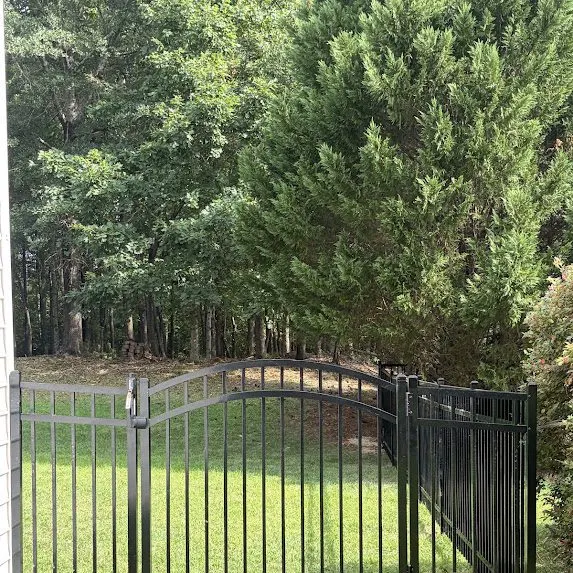
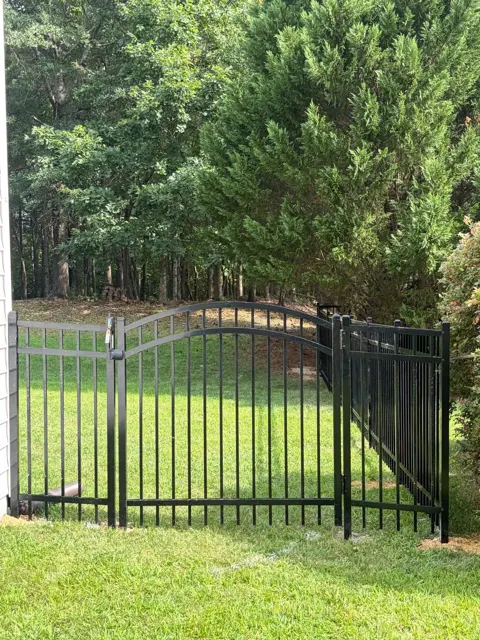
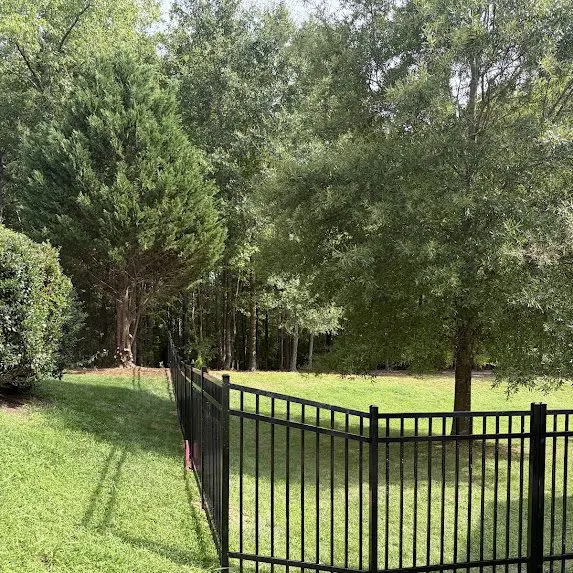
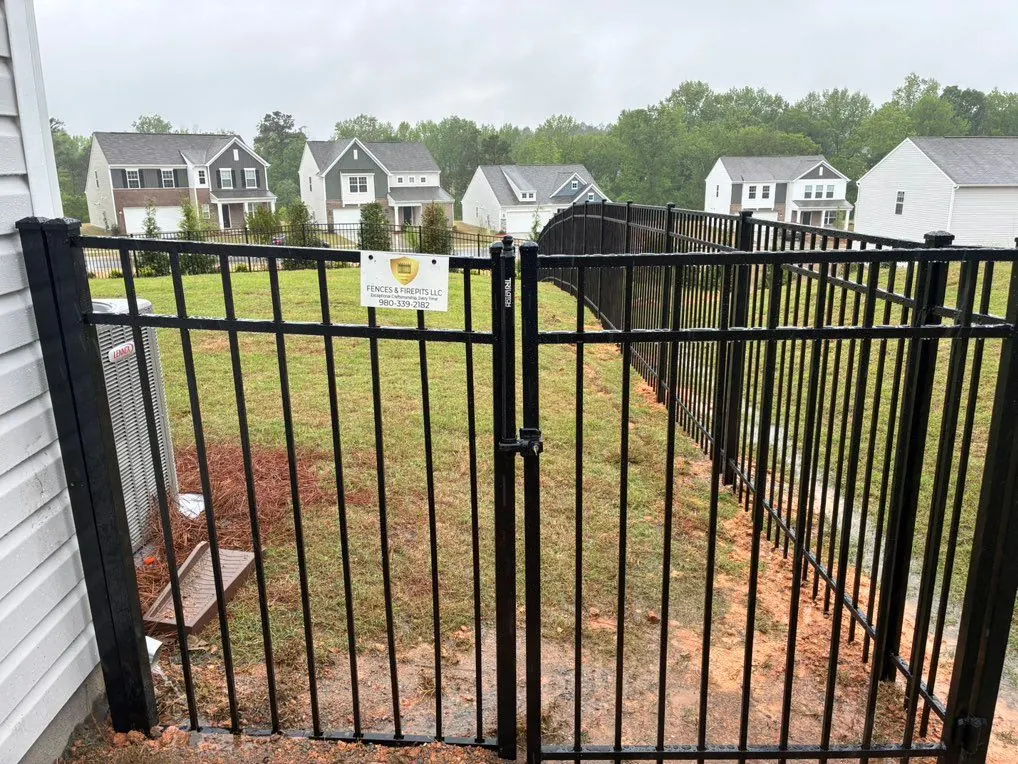
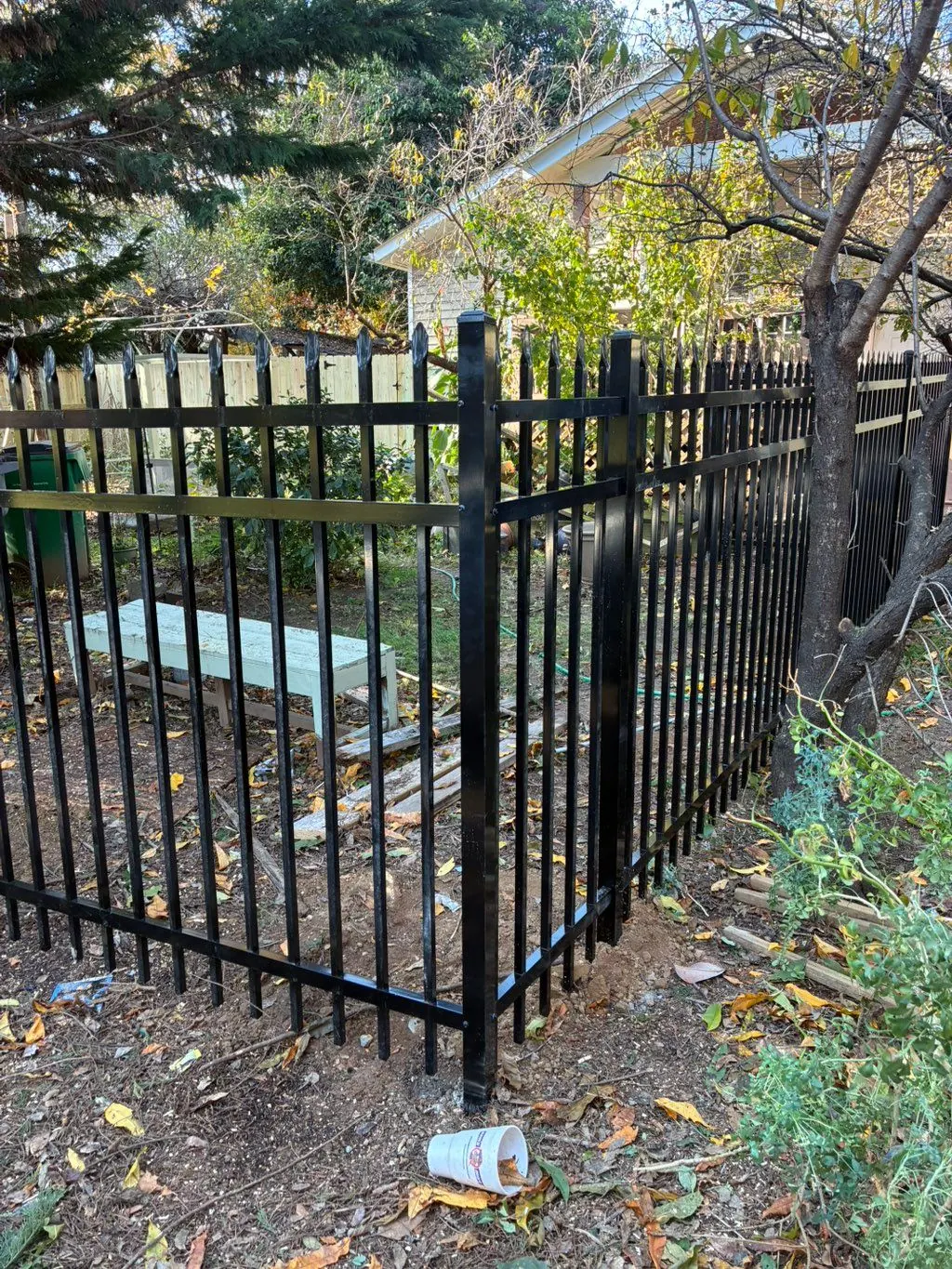
Ornamental aluminum is the most common pool fence we're asked about, and for good reason. It doesn't rust the way steel does, handles splashing and sun and keeps sight lines open so you can see the pool from the house. We install aluminum in black and bronze, at heights of 3, 4, 4.5, 5 and 6 ft. Picket spacing and rail layout matter for pool use, so we'll help you choose a style suited to a pool barrier.
Vinyl: privacy around the pool
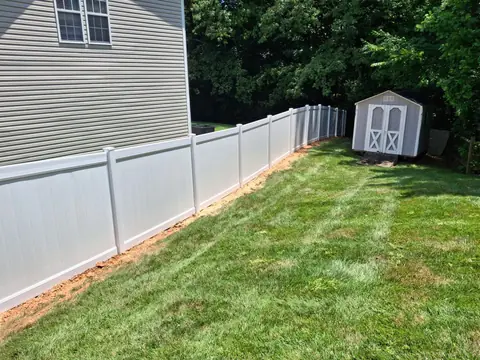
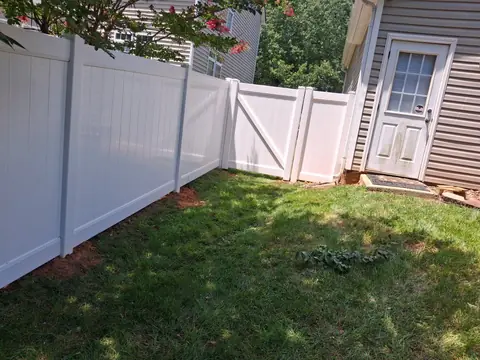
If you want privacy while you swim, vinyl privacy panels are a good choice. Vinyl handles water and sun and doesn't need paint. We install it in white, tan and gray, up to 6 ft. The trade-off is that you can't see the pool through a solid fence, which some families prefer to avoid.
Wood
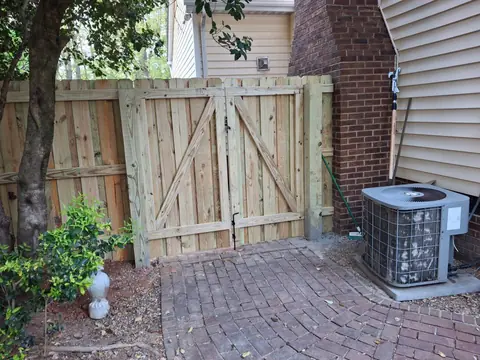
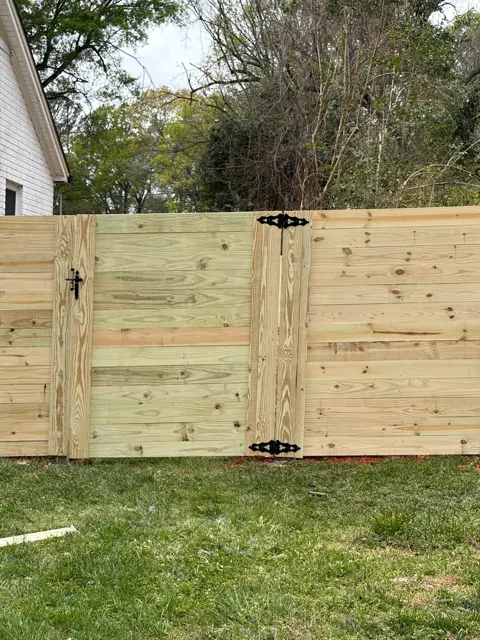
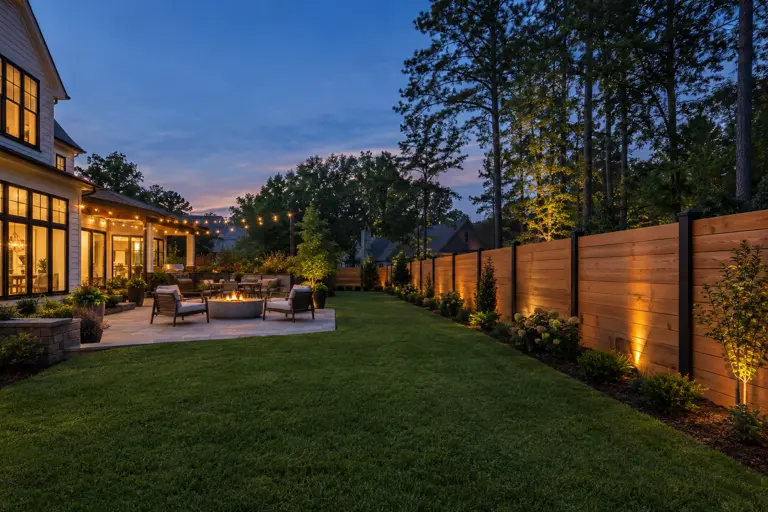
Wood privacy fences can serve as a pool barrier when built to meet the requirements, but they need more upkeep in a wet, sunny pool environment. Horizontal-rail styles also need attention to climbability.
Chain link
Chain link is sometimes used around pools, especially on the back or side lines, but mesh size and climbability need to meet the barrier rules for your area.
| Material | View of pool | Privacy | Upkeep near water |
|---|---|---|---|
| Aluminum | Open | Low | Low |
| Vinyl privacy | Blocked | High | Low |
| Wood privacy | Blocked | High | Higher |
| Chain link | Open | Low | Low |
Pool gates: get these right
The gate is the most important part of a pool fence, and the part most likely to fail if it's not maintained. Plan for:
- Self-closing hinges that pull the gate shut from any open position.
- Self-latching hardware that catches every time the gate closes.
- Latch height that's out of reach of small children, as required in your area.
- Swing direction, which typically must open away from the pool.
- Location where adults can see it, away from things kids can climb on.
Test pool gates often, at least monthly during swim season. Hinges and latches can drift as posts settle or after heavy use. See our maintenance guide for gate care tips.
Things that can undermine a pool barrier
Even a well-built fence can be compromised. Walk your pool fence regularly and look for:
- Patio furniture, grills, coolers or planters near the outside of the fence that a child could climb
- Trees or shrubs with low limbs that hang over the fence
- Soil erosion or settling that widens the gap at the bottom
- Gates propped open or latches tied back
- Damaged pickets or loose panels
HOAs and pool fences
Many Charlotte-area HOAs, especially in neighborhoods around golf courses or lakes, prefer or require black aluminum near pools to keep views open. Read your guidelines before choosing a material, and submit your application with the pool barrier details included. Our HOA approval guide explains the process. We help with the paperwork, but approval is the HOA's call.
Coordinating with your pool builder
If you're building a new pool, coordinate early. The pool contractor may need temporary access for equipment, and the permanent fence may need to be complete before a final inspection. Ask your pool builder and permit office about the sequence. We're happy to talk timing with you before you sign anything.
Planning your pool fence
- Call your local permit office and get the current barrier requirements in writing.
- Check your HOA guidelines for allowed materials and colors.
- Choose a material: aluminum for open views, vinyl for privacy.
- Plan gate locations, swing direction and hardware.
- Book a free on-site estimate. We'll measure, check the grade and talk through the details.
Fences & Firepits is licensed and insured, and every fence we build is installed by our own employees. We don't hire subcontractors. Learn more on our pool fence page, or call Ron at (980) 339-2182.
Frequently asked questions
How tall does a pool fence need to be in North Carolina?
Height requirements are set by the building code adopted in your jurisdiction and enforced locally. Confirm the current requirement for your address with your local permit or inspections office before you build.
What is the best fence for a pool?
Aluminum is the most popular choice because it handles water and sun and keeps the pool visible from the house. Vinyl is a good option if you want privacy.
Do pool gates have to be self-closing?
Pool barrier rules typically require gates to be self-closing and self-latching and to open away from the pool. Confirm the exact requirements with your local permit office.
Can you guarantee my pool fence will pass inspection?
We build to the requirements you confirm with your permit office, but inspection and approval are up to your local authority. We recommend getting the current requirements in writing before installation.

About the author
Fences & Firepits team, reviewed by Ron Memallaj, owner of Fences & Firepits LLC. We're a licensed and insured fence company serving Charlotte and the surrounding communities since 2022. Every fence we build is installed by our own in-house crew. We don't hire subcontractors.