Key takeaways
- Aluminum gives the ornamental look of wrought iron without rust and is much lighter.
- Wrought iron is heavier and stronger, but it needs periodic painting to keep rust away.
- Aluminum panels can often be racked to follow gentle slopes; steeper grades are stepped.
- For pools, front yards and view lots, black powder-coated aluminum is the material we install.
If you picture a classic black ornamental fence with spear-top pickets, you are probably picturing wrought iron. The wrought iron vs. aluminum fence question comes up often in Charlotte, because the two look similar from the street but live very differently in a humid Southern climate. This guide compares them honestly so you can decide which ornamental fence fits your home, your yard and how much maintenance you want.
A quick note on terms: many fences called wrought iron today are actually steel. Traditional wrought iron and steel ornamental fences share the same basic traits: they are heavy, strong and made of iron-based metal that can rust when the finish is damaged. In this article, "wrought iron" means iron and steel ornamental fencing in general.
The short answer
For most homeowners, powder-coated aluminum delivers the look people want from wrought iron with far less upkeep. It will not rust the way steel does, it is much lighter, it is easier to install on slopes and the powder-coat finish does not need painting. Wrought iron is the choice when maximum strength and mass matter more than maintenance, or when you are matching existing historic ironwork.
Looks: closer than you might think
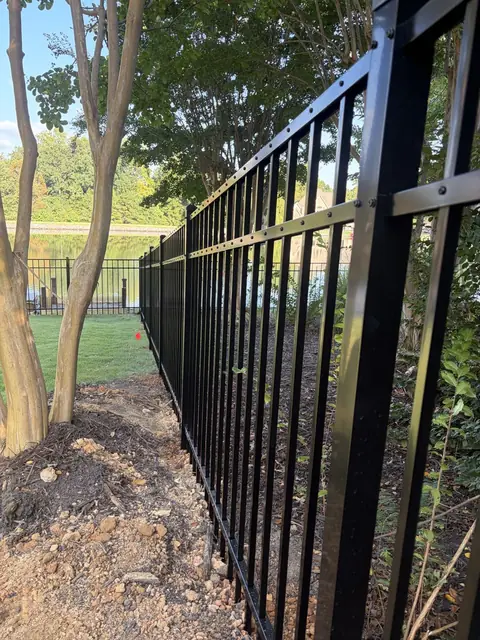
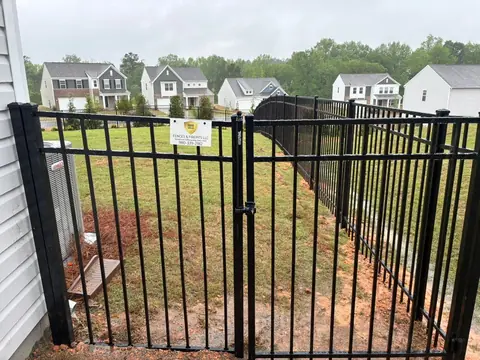
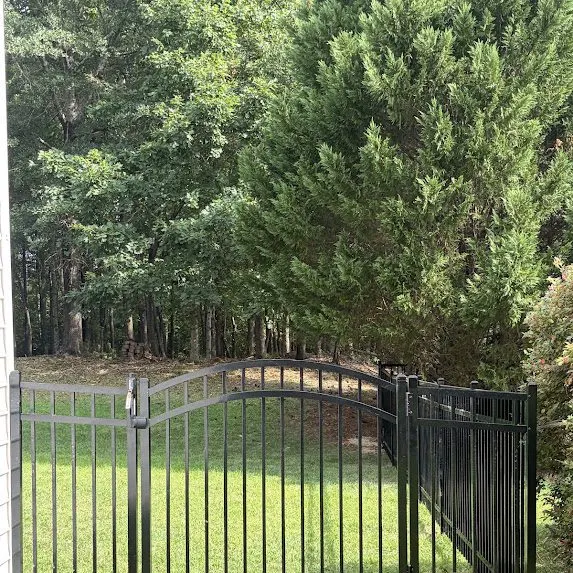
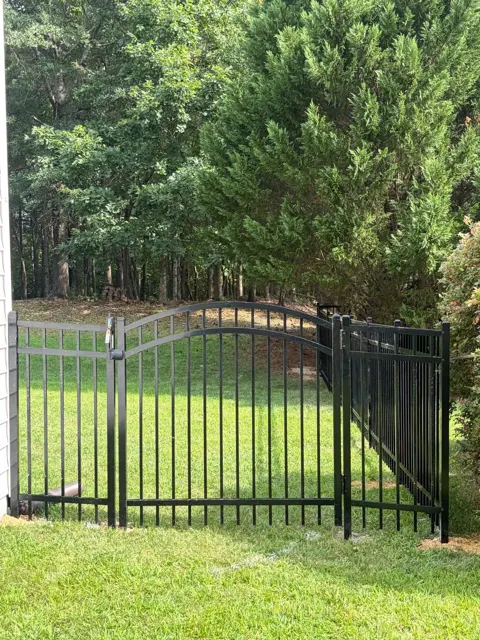
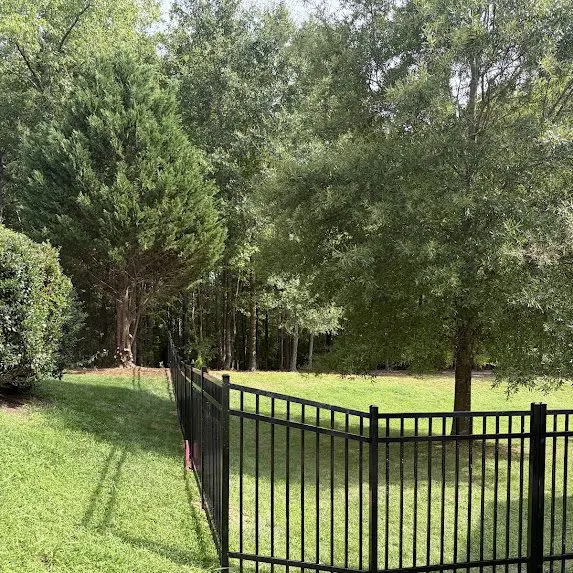
From the curb, a black aluminum fence and a black iron fence share the same vocabulary: vertical pickets, horizontal rails and decorative tops. Aluminum comes in several styles:
- Flat-top: pickets finish flush with the top rail for a clean, modern profile.
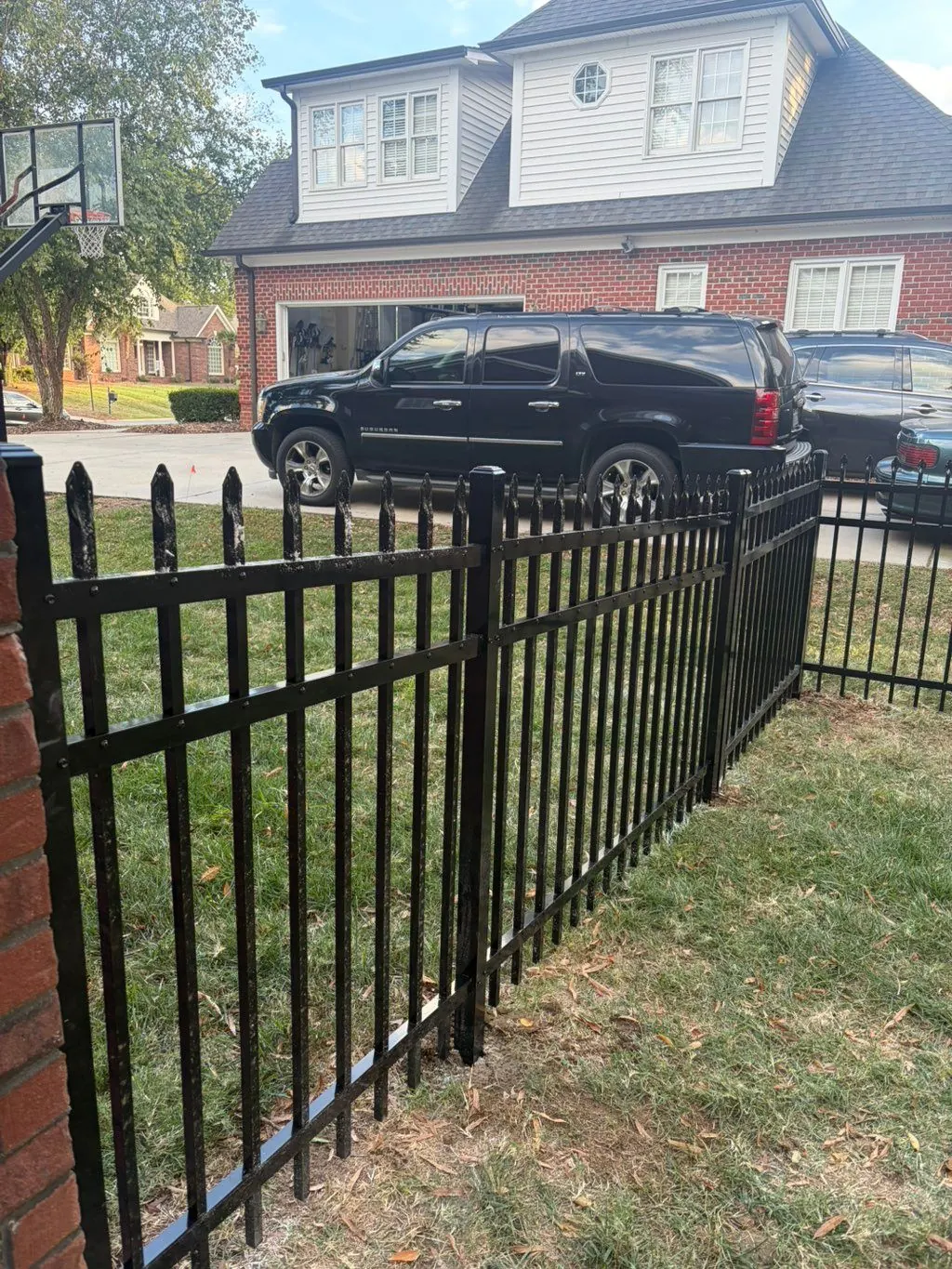
- Spear-top: pickets extend above the top rail with decorative finials for a traditional estate look.
- Three-rail: a third rail adds visual weight and an ornamental appearance.
- Flush-bottom: the bottom rail sits at the base of the pickets for a tidy line along the ground.
- Puppy picket: extra pickets at the bottom close the gaps for small dogs.
Hand-forged iron can offer heavier pickets and custom scrollwork, which is part of its appeal on historic homes. For a typical Charlotte-area front yard, pool or backyard, aluminum styles cover the look most homeowners are after. See every option in our aluminum fence styles guide.
Rust and maintenance in the Carolina climate
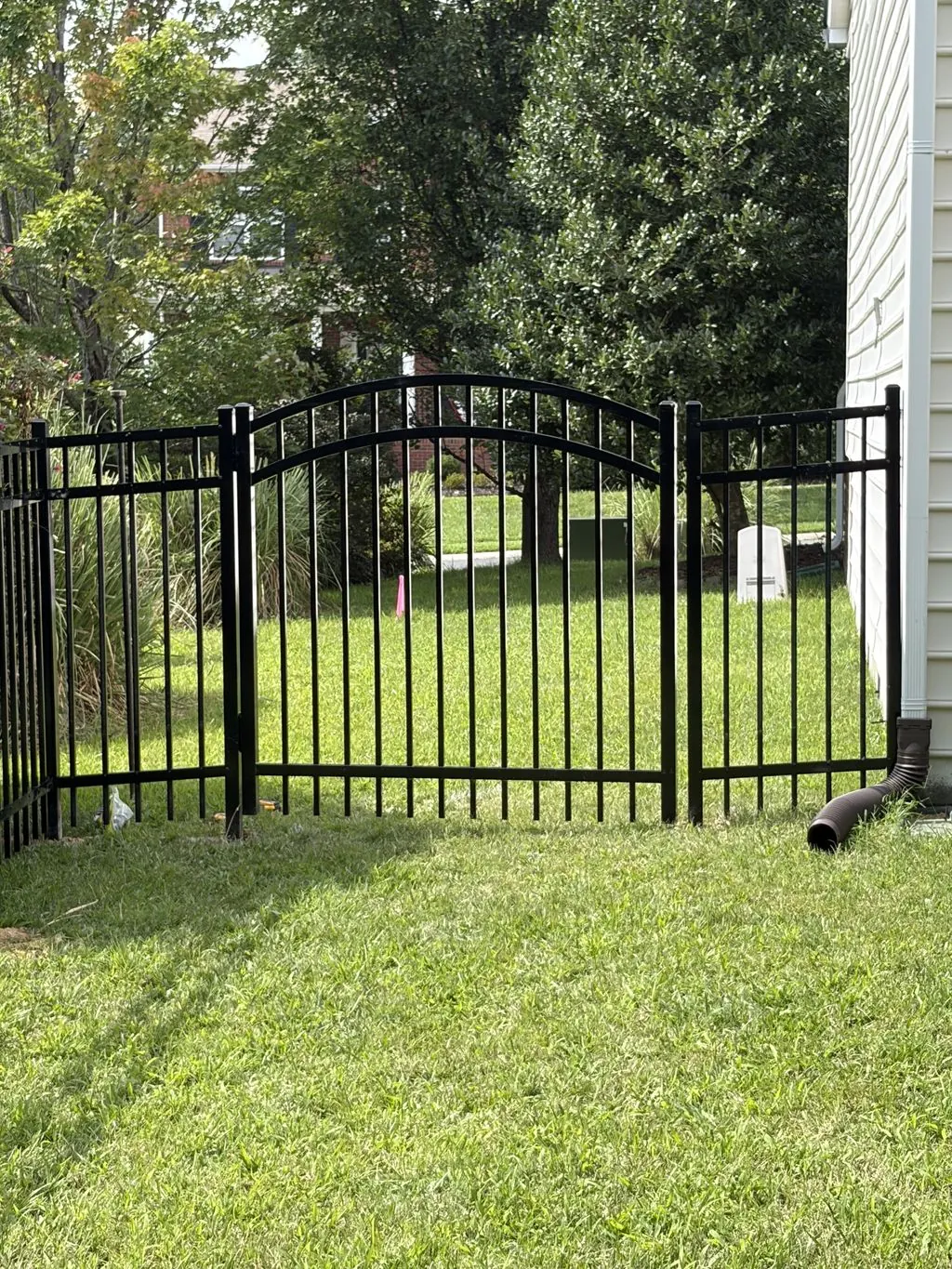
This is where the two materials separate. Charlotte summers are hot and humid, and spring and summer storms keep fences wet. Iron and steel rust when moisture reaches bare metal, so an iron fence needs to be inspected, touched up and repainted periodically, especially at welds, scratches and the base of posts.
Aluminum does not rust the way steel does, and the powder-coat finish protects the surface. Maintenance is usually an occasional rinse with a hose. For homeowners who want an ornamental fence they do not have to think about, that difference matters every year the fence stands. Our fence maintenance guide covers aluminum care in detail.
Weight, strength and installation
Wrought iron is heavier and stronger. That mass is a real advantage where security or impact resistance is the top priority. It also makes iron harder to handle, more demanding on posts and gate hardware and slower to install.
Aluminum is much lighter. It is strong enough for most residential uses, including pool barriers and containing most dogs, and the lighter weight is easier on gate hinges over time. For very large or active dogs, choose a height your dog cannot clear. Our large dog fence guide can help.
Sloped yards
Many Charlotte-area lots slope. Many aluminum panels can be racked to follow a gentle slope so the fence stays parallel to the ground, and steeper grades are stepped. We plan this on site so the bottom gap stays consistent. Learn more in our guide to fencing a sloped yard.
Wrought iron vs. aluminum at a glance
| Aluminum | Wrought iron / steel | |
|---|---|---|
| Look | Classic black ornamental, several styles | Classic black ornamental, heavier pickets and custom scrollwork possible |
| Rust | Does not rust the way steel does | Rusts if the finish is damaged |
| Maintenance | Very low, occasional rinse | Periodic inspection, touch-up and painting |
| Weight | Much lighter | Heavy |
| Strength | Strong enough for most homes, pools and pets | Stronger, better where security is the priority |
| Slopes | Many panels rack on gentle slopes | Typically custom fabricated or stepped |
| Pools | Popular pool barrier material | Possible, but needs ongoing rust care near water |
Best uses for an aluminum fence
Pool fences
Aluminum is one of the most popular pool fence materials because it keeps the pool visible, resists corrosion and works with self-closing, self-latching gate hardware. Pool barrier requirements are set by local code, so we plan the fence around them. See our pool fence installation page and pool fence guide.
Front yards and curb appeal
A black aluminum fence frames a home without hiding it. Many HOAs approve black aluminum for front and side yards. Our front yard fence ideas show how it fits different home styles.
Lake, golf course and wooded lots
When the view is part of the property's value, an open aluminum fence defines the yard without blocking it. This is common in lake communities around Cornelius and Davidson and on wooded lots throughout south Charlotte.
When wrought iron still makes sense
- You are restoring or matching historic ironwork on an older home.
- Security and impact resistance are the top priorities.
- You want heavy custom scrollwork that standard panels do not offer.
- You are comfortable with a regular painting and rust-care schedule.
HOA considerations
Many Charlotte-area architectural committees specify black ornamental metal for pools, front yards and lots that face common areas. Some name aluminum specifically. Check your covenants for approved materials, colors, heights and styles before choosing. Our HOA fence approval guide explains what committees typically ask for, and we provide the material, style, height, color and layout details most applications need. Approval is your HOA's decision.
Our recommendation
Black is the standard aluminum color we install, and black powder-coated aluminum is the ornamental metal fence we build for Charlotte-area homes. If you are weighing wrought iron vs. aluminum, Ron can walk your property, look at slopes, gates and views and show you how an aluminum fence would look. Explore our aluminum fence installation page, compare aluminum vs. vinyl, or call Ron at (980) 339-2182 for a free on-site estimate.
Frequently asked questions
Is aluminum fencing as good as wrought iron?
For most homes, yes. Aluminum gives the same ornamental look without rust and with far less maintenance. Wrought iron is heavier and stronger, which matters most where security is the top priority.
Does an aluminum fence rust?
Aluminum does not rust the way steel does, and the powder-coat finish protects the surface.
Do you install wrought iron fences?
We install black powder-coated aluminum ornamental fencing, which gives the look of wrought iron without rust. Ask Ron if you have a specific iron project in mind.
Which is better for a pool, aluminum or wrought iron?
Aluminum is one of the most popular pool fence materials because it keeps the pool visible, resists corrosion and works with self-closing, self-latching gate hardware. Pool barrier rules are set by local code.
Can an aluminum fence go on a slope?
Yes. Many aluminum panels can be racked to follow a gentle slope, and steeper grades are stepped. We plan it during the on-site estimate.
Is aluminum strong enough for dogs?
For most dogs, yes. Choose a height your dog cannot clear and add puppy pickets for small breeds.
What color aluminum fence do you install?
Black is the standard color we install. Ask us about other finishes.
About the author
Fences & Firepits team, reviewed by Ron Memallaj, owner of Fences & Firepits LLC. We're a licensed and insured fence company in Charlotte, NC, serving the city and surrounding communities since 2022. Every fence we build is installed by our own in-house crew. We don't hire subcontractors.