
Key takeaways
- We install chain link in galvanized and black vinyl-coated finishes, at 4, 5, 6 and 8 ft.
- Galvanized is the most budget-friendly. Black vinyl-coated blends into landscaping and looks more finished.
- Both are durable, see-through and great for containing dogs.
- Some HOAs restrict chain link or allow only black. Check your covenants first.
Chain link has a reputation as the plain, utilitarian fence, and in its classic silver form it certainly is practical. But chain link has quietly become much more attractive over the years. Black vinyl-coated chain link, in particular, has turned a budget fence into something many homeowners are happy to see from their back porch.
If you are considering chain link for a backyard, a dog run, a side yard or a business property anywhere around Charlotte, the first big decision is the finish: classic galvanized or black vinyl-coated. This guide explains the differences, where each one shines and the questions to ask before you choose.
Why chain link is still a smart choice
Chain link has stayed popular for decades for good reasons:
- Value: it is one of the most budget-friendly ways to fence a large area.
- Durability: galvanized steel and vinyl coatings stand up well to weather.
- Low maintenance: no painting, staining or sealing.
- Visibility: you can see through it, which keeps yards feeling open and lets you keep an eye on kids and pets.
- Pet containment: the tight woven mesh holds most dogs well.
- Fast installation: chain link usually goes in quickly compared to other materials.
- Handles slopes: the flexible fabric follows uneven ground better than rigid panels.
It is not a privacy fence, though. If blocking views is your goal, look at wood or vinyl instead.
What is galvanized chain link?
Galvanized chain link is the classic silver fence most people picture. The steel wire and framework are coated in zinc, which protects the steel from rust. It is bright and metallic when new and gradually dulls to a softer gray over time.
Strengths of galvanized
- Lowest cost: it is the most affordable chain link option.
- Proven durability: the zinc coating has protected chain link fences for generations.
- Practical look: ideal where function matters more than appearance, such as utility areas, back property lines and many commercial sites.
Drawbacks of galvanized
- Industrial appearance: the silver finish stands out against green lawns and trees.
- HOA restrictions: many communities do not allow galvanized chain link, especially where it is visible from the street.
- Reflective when new: the bright finish can catch the sun until it weathers.
What is black vinyl-coated chain link?
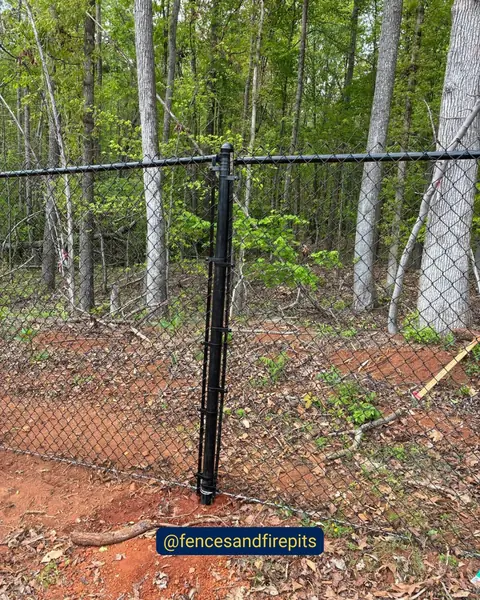
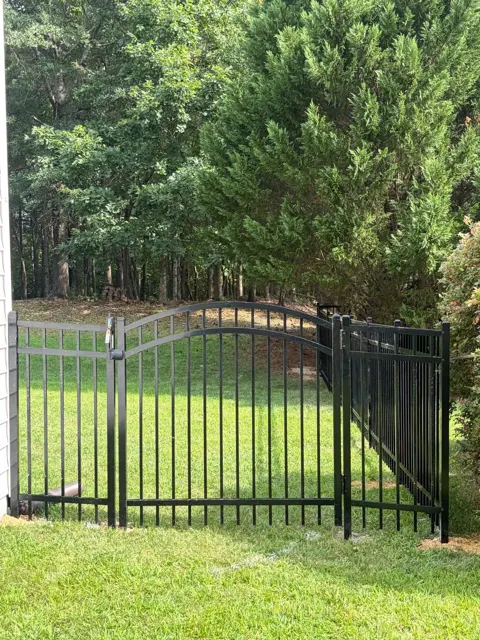
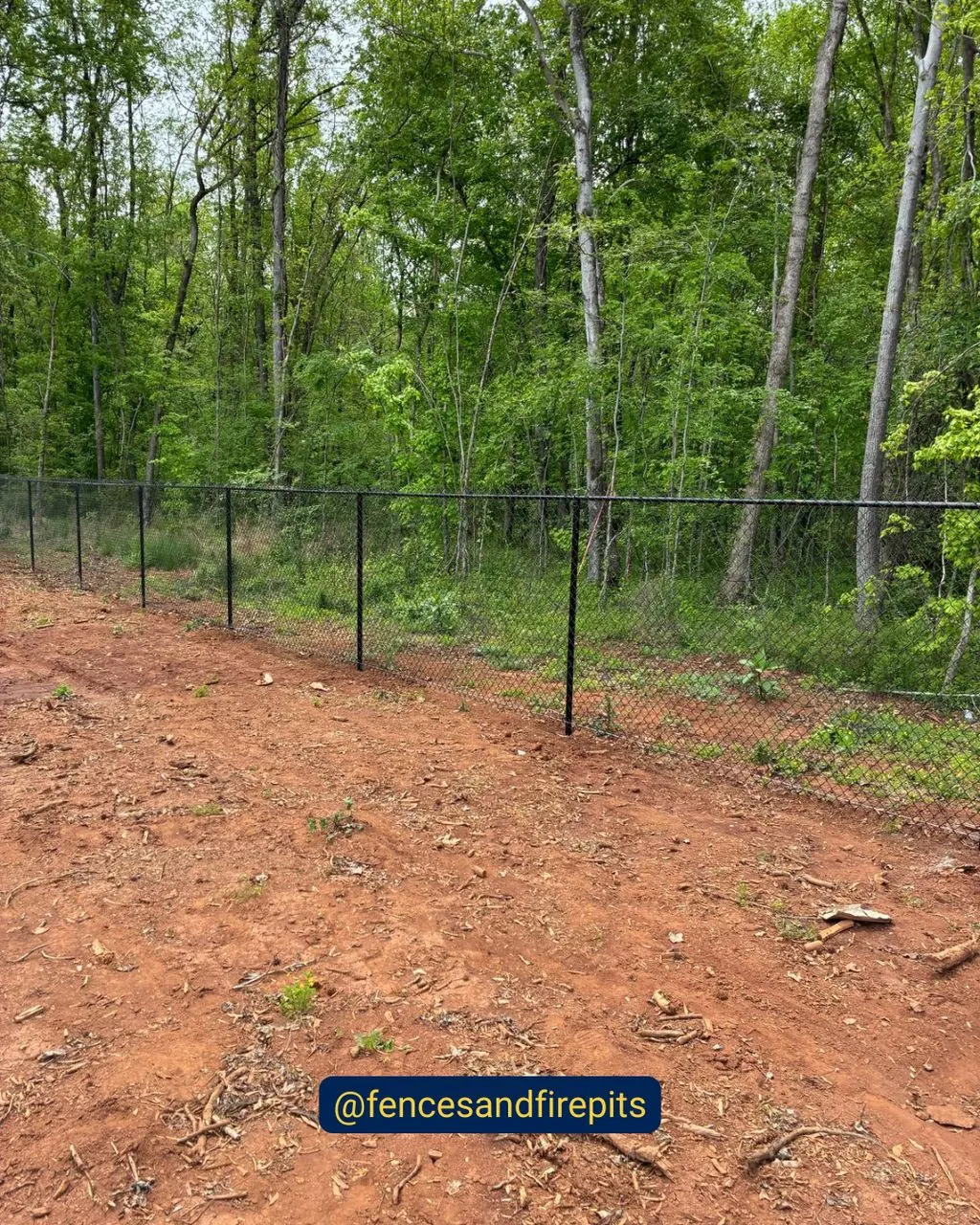
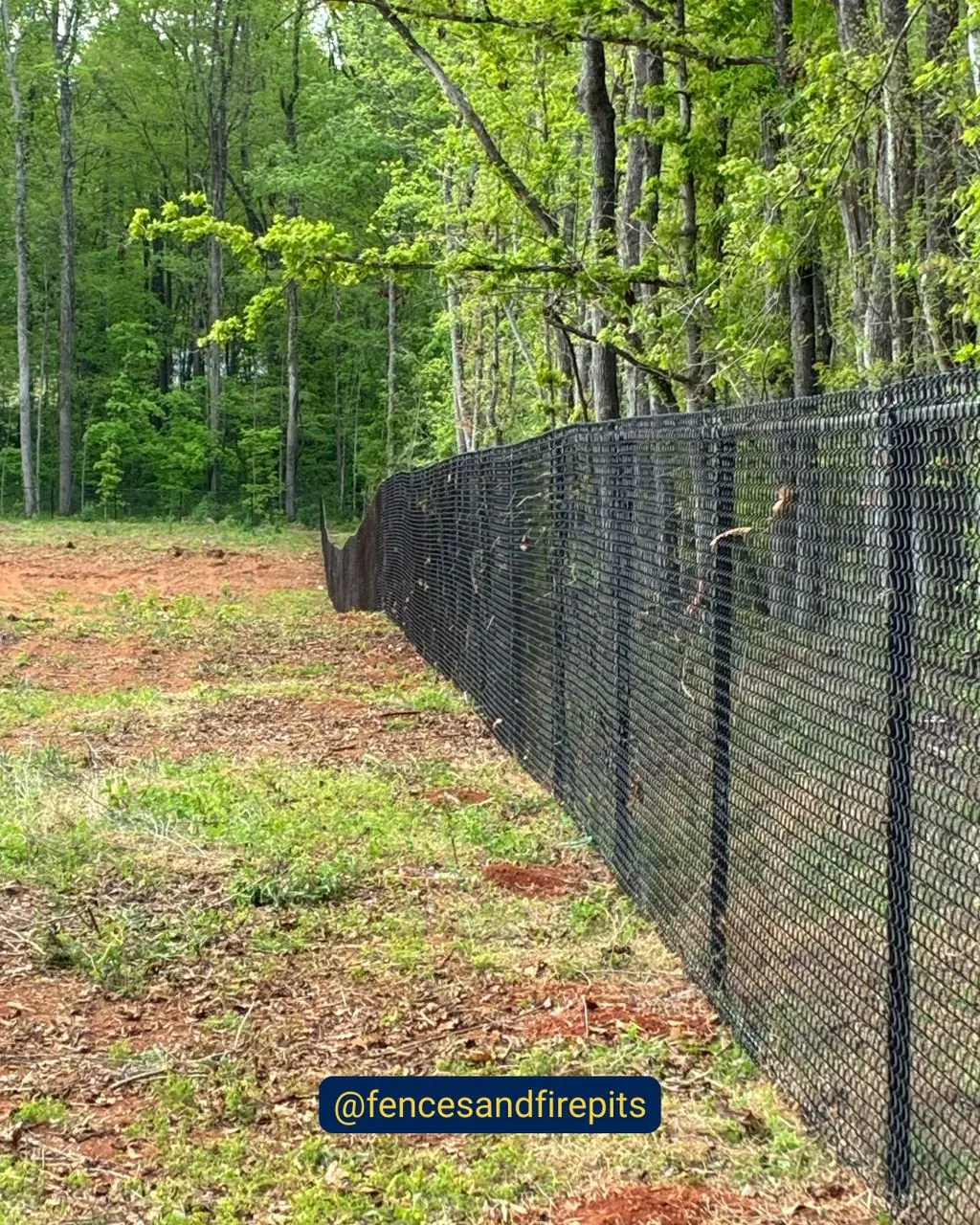
Black vinyl-coated chain link starts with galvanized steel and adds a bonded black vinyl coating over the wire. The framework, including posts, rails and fittings, is typically finished in black to match. The result is a fence that looks much more finished and blends into its surroundings.
Strengths of black vinyl-coated
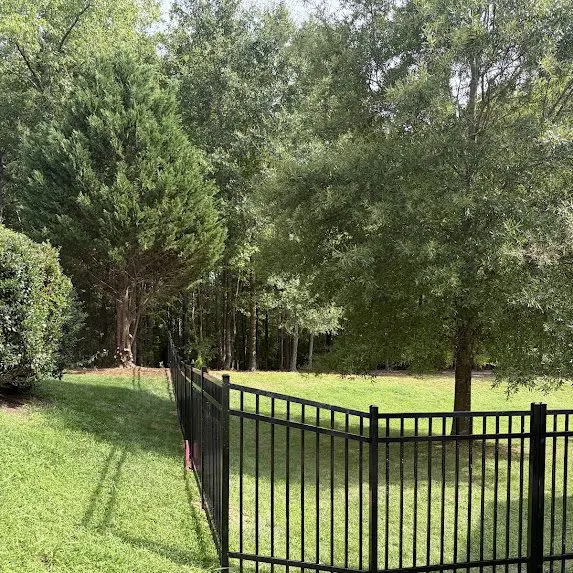
- Blends in: black recedes visually, so the fence almost disappears against trees, shrubs and lawns. From a distance, you notice the yard, not the fence.
- Extra protection: the vinyl coating adds a layer over the galvanized steel.
- More HOA friendly: some communities that ban galvanized chain link allow black vinyl-coated. Always confirm with your HOA.
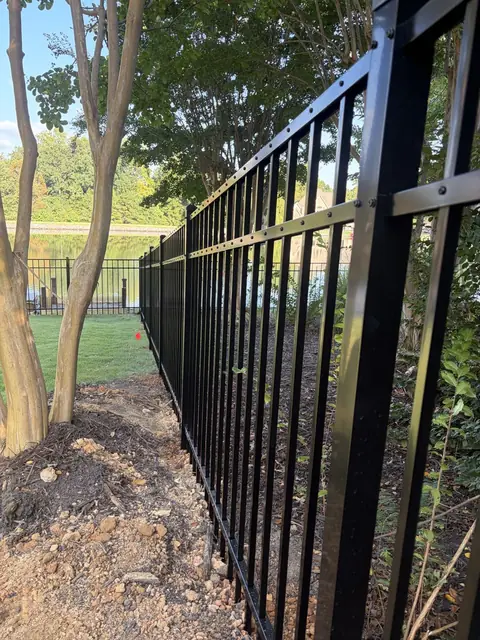
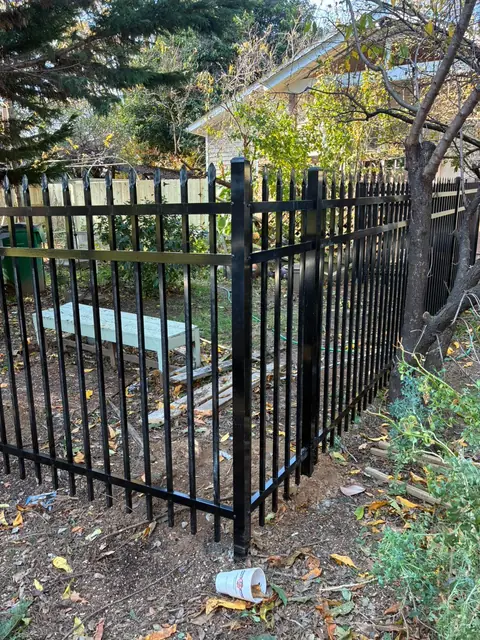
- Pairs with other black fencing: it looks natural next to black aluminum, which lets you mix materials on one property.
- Softer to the touch: the coating is smoother than bare wire.
Drawbacks of black vinyl-coated
- Higher cost: it costs more than galvanized, though usually less than aluminum, vinyl privacy or wood privacy.
- Coating can be scratched: deep scratches or damage from equipment can expose the metal underneath.
Side-by-side comparison
| Factor | Galvanized | Black vinyl-coated |
|---|---|---|
| Look | Silver, industrial | Black, blends into landscaping |
| Relative cost | Lowest | Moderate |
| Rust protection | Zinc coating | Zinc plus vinyl coating |
| HOA acceptance | Often restricted | More often allowed, varies |
| Maintenance | Very low | Very low |
| Privacy | None | None |
| Pet containment | Excellent | Excellent |
| Best for | Utility areas, budget projects, many commercial sites | Residential backyards, visible areas, mixed-material layouts |
Choosing a height
We install chain link at 4, 5, 6 and 8 ft. A few general guidelines:
- 4 ft: common for residential yards, small and medium dogs and defining spaces.
- 5 ft: a good middle ground for larger dogs and a bit more security.
- 6 ft: for athletic dogs, climbers and jumpers, and stronger security.
- 8 ft: usually for commercial, industrial and security applications.
Your town and HOA may limit height, especially in front yards. We confirm allowable heights during your estimate. Our fence height guide explains what typically drives those rules.
Chain link for dogs
Chain link is one of the best values for dog owners. The woven mesh is hard to squeeze through, and the fabric is tough enough to handle a dog jumping up against it. A few tips:
- Match the height to the dog. Athletic breeds that jump or climb often need 5 or 6 ft.
- Stop diggers. Keep the bottom of the fabric close to the ground, and ask about options to discourage digging along the fence line.
- Think about reactivity. Because chain link is see-through, dogs that bark at everything passing by may do better behind a solid privacy fence, at least on the sides that face a street or a neighbor's dog.
- Use secure latches. Self-closing gates help prevent escapes when someone forgets to close them.
See our large dog fence guide and small dog and puppy guide for more.
Chain link for businesses
Chain link is the workhorse of commercial fencing. It secures storage yards, equipment areas, parking lots, utility enclosures and perimeters at a reasonable cost per foot. Galvanized is common where function comes first, while black vinyl-coated is popular at customer-facing sites where appearance matters. Taller heights and heavier framework are available for security applications. Learn more on our commercial fencing page and in our commercial fence guide.
Mixing chain link with other fence types
You do not have to use one material for your whole property. Some popular combinations:
- Aluminum in front, black chain link in back: the front gets an upscale ornamental look, while the back and sides use black chain link to manage budget. Because both are black, the transition looks intentional.
- Privacy on one side, chain link elsewhere: put wood or vinyl privacy along the side facing a busy street or a close neighbor, and chain link along the wooded back line.
- Chain link dog run inside a larger yard: a dedicated area for dogs while the rest of the yard stays open.
Compare more options in chain link vs. aluminum.
Can you add privacy to chain link?
Chain link is see-through by design. Some homeowners add privacy slats or plant hedges and climbing vines along the fence over time. If privacy is important from the start, a dedicated privacy fence usually gives a better long-term result. Talk with Ron about where privacy really matters on your property. Often a privacy section along one side plus chain link elsewhere gives you what you need without fencing the entire yard in privacy material.
Gates for chain link
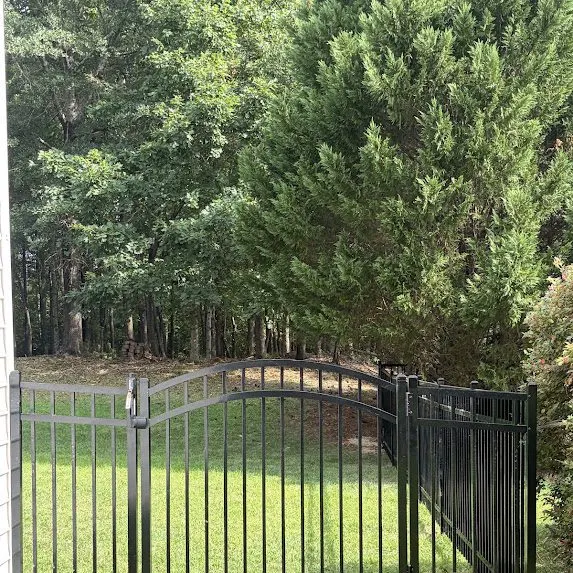
Chain link gates are available as single walk gates at 4 or 5 ft wide, double gates from 8 to 12 ft for mowers and equipment, and wide driveway gates from 12 to 16 ft. Black vinyl-coated gates match black fence lines. Latch options include gravity latches, lockable latches and self-closing pool latches. See our custom gates page and gate planning guide.
Installing chain link in Charlotte's red clay
Chain link relies on sturdy terminal posts at corners, ends and gates to keep the fabric tight. Those posts carry tension, so they need solid footings. Charlotte's dense red clay holds posts well when they are set properly but can be hard to dig and slow to drain. Our in-house crew sets posts for the soil conditions on your property. Read more in our red clay fence post guide.
Caring for chain link
- Walk the fence line a couple of times a year and look for loose ties, bent fabric or leaning posts.
- Keep vines and weeds from weaving through the mesh. They add weight and trap moisture.
- Rinse off dirt and pollen as needed.
- On black vinyl-coated fences, avoid hitting the fence with string trimmers, which can nick the coating.
- Check gate hinges and latches each season and adjust if a gate starts to drag.
HOA considerations
Chain link is one of the most restricted materials in HOA covenants around Charlotte. Some communities ban it entirely, some allow only black vinyl-coated, and some allow it only in backyards or where it is not visible from the street. Read your covenants carefully and submit an architectural request with the material, color, height and a site plan. We help prepare paperwork, but approval is always up to your HOA. See our HOA approval checklist.
How to decide
- Lowest cost and function first? Galvanized.
- Visible from the house or street? Black vinyl-coated.
- HOA neighborhood? Check covenants. Black vinyl-coated is more often allowed.
- Pairing with black aluminum? Black vinyl-coated.
- Need privacy? Consider wood or vinyl privacy for at least part of the property.
Chain link myths
- "Chain link always looks cheap." Black vinyl-coated chain link with matching black posts looks clean and finished, and from a distance it nearly disappears into the landscape.
- "Chain link rusts quickly." Properly galvanized and coated chain link is built to resist rust for many years. Problems usually start where coatings are damaged.
- "Dogs can climb any chain link fence." Some determined climbers can, but the right height and good supervision stop most dogs.
- "Chain link cannot go on a slope." The flexible fabric actually follows uneven ground better than many rigid panel systems.
Thinking about the long term
A fence is a long-term part of your property, so it is worth thinking past installation day. Ask yourself how the fence will look in five or ten years, whether you are likely to sell, and whether your needs might change. A young family with a dog may want simple containment now, but in a few years might want more privacy for a hot tub or patio. Choosing black vinyl-coated chain link for the back and leaving room in the budget to add a privacy section later is a common, flexible approach.
Also consider resale. Buyers in many Charlotte-area neighborhoods expect a finished look. A black fence that blends into the landscaping tends to appeal to more people than bright silver chain link across the backyard, though both offer the practical benefit of a fenced yard, which many buyers with kids and pets look for. Our guide to fences and home value covers this in more detail.
Questions to ask during your estimate
- What height do you recommend for my dog or my goals?
- How will the fence follow the slope in my yard?
- Where should gates go, and how wide should they be?
- Does my HOA allow chain link, and in which color?
- How will you handle old fence removal, if there is one?
- What does your workmanship warranty cover?
Ron answers all of these during a free on-site estimate. Check published starting rates on the pricing page, run a preliminary range in the cost calculator, or learn more about chain link installation. Fences & Firepits is licensed and insured, every installer is on our own payroll with no subcontractors, and our work is backed by a 2-year workmanship warranty. Call Ron at (980) 339-2182.
Frequently asked questions
Is black chain link more expensive than galvanized?
Yes. Black vinyl-coated chain link costs more than galvanized because of the added coating and matching black framework, but it is usually less than aluminum or privacy fencing.
Does black vinyl-coated chain link rust?
The steel is galvanized and then coated in vinyl, which gives two layers of protection. Deep scratches that expose metal should be touched up.
Will my HOA allow chain link?
It depends on your covenants. Some HOAs ban chain link, some allow only black vinyl-coated and some allow it only in backyards. Check before you apply.
Is chain link good for dogs?
Yes. The woven mesh contains most dogs well. Choose a taller height for jumpers and keep the bottom close to the ground for diggers.
What heights do you install chain link in?
We install chain link at 4, 5, 6 and 8 ft. Local rules and HOAs may limit height.

About the author
Fences & Firepits team, reviewed by Ron Memallaj, owner of Fences & Firepits LLC. We're a licensed and insured fence company in Charlotte, NC, serving the city and surrounding communities since 2022. Every fence we build is installed by our own in-house crew. We don't hire subcontractors.