
Key takeaways
- For small dogs, gaps matter more than height. Close spacing at the bottom of the fence is key.
- Puppy picket aluminum, solid privacy fences and chain link all work well for small breeds.
- Gates are the most common escape point. Use self-closing latches and keep gaps tight.
- Plan for diggers and remember that puppies grow.
When people think about dog fences, they often picture a big dog clearing a short fence in one leap. With small dogs and puppies, the problem is usually the opposite. A Yorkie, Chihuahua, dachshund, toy poodle or young puppy rarely jumps over a fence. Instead, they slip through gaps, squeeze under gates and dig beneath the bottom rail.
That means the best fence for a small dog is not always the tallest one. It is the one with the right spacing, a tight bottom and gates that close every time. This guide explains what to look for and which fence styles work best for small dogs and puppies in Charlotte-area yards.
How small dogs escape
- Through gaps: between pickets, between boards, between the fence and the house and beside gate posts.
- Under the fence: through gaps at the bottom, especially on slopes where stepped panels leave triangles of open space.
- Under or around gates: gates often have the largest gaps on the fence.
- Digging: terriers and dachshunds were literally bred to dig.
- Open gates: the most common escape of all is a gate someone forgot to close.
- Climbing: some small dogs climb fences with horizontal rails they can use as steps.
The right fence addresses all of these.
Gaps matter more than height
For a small dog, a 4 ft fence is usually tall enough to prevent jumping. What matters more is the size of the openings. If your dog can fit its head through a gap, it can often get its body through too. Puppies are even more flexible.
Look closely at:
- The space between pickets or boards
- The gap between the bottom of the fence and the ground
- The gap between gates and posts
- Where the fence meets the house, a garage or a neighbor's fence
Best fence styles for small dogs
Aluminum with puppy pickets
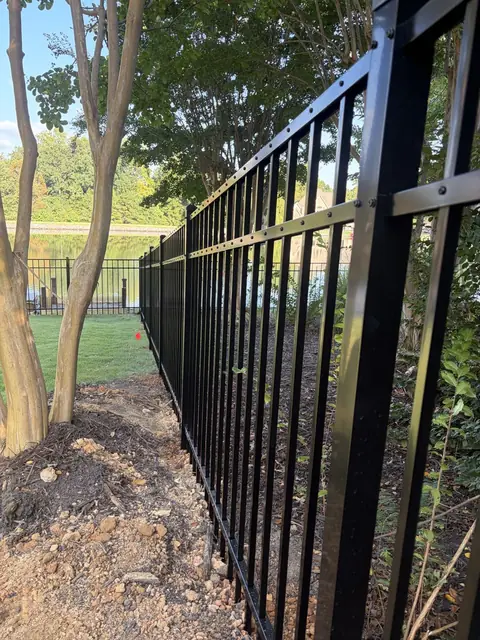
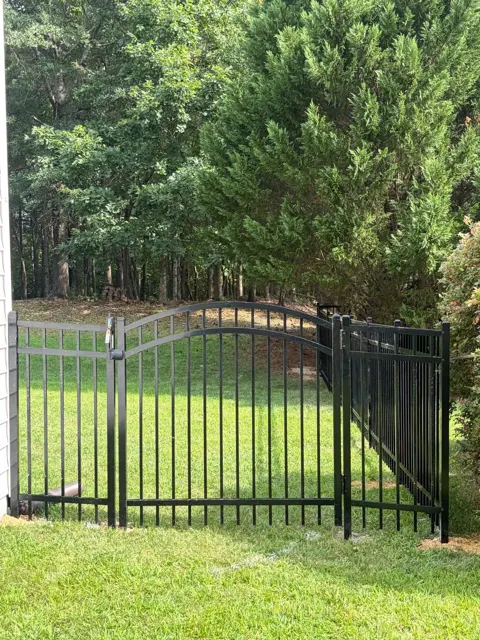
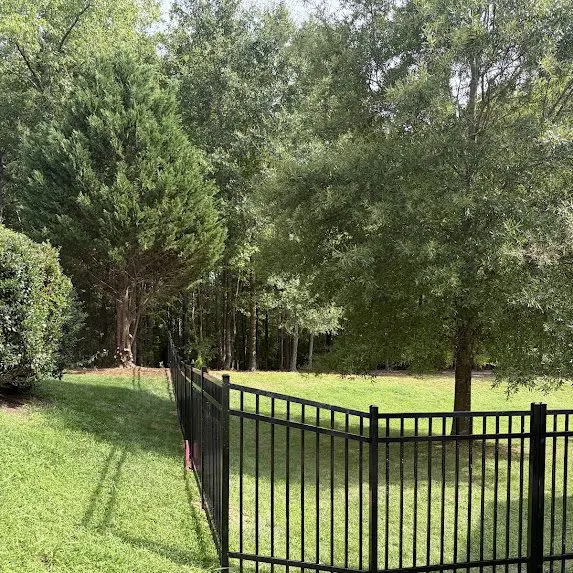
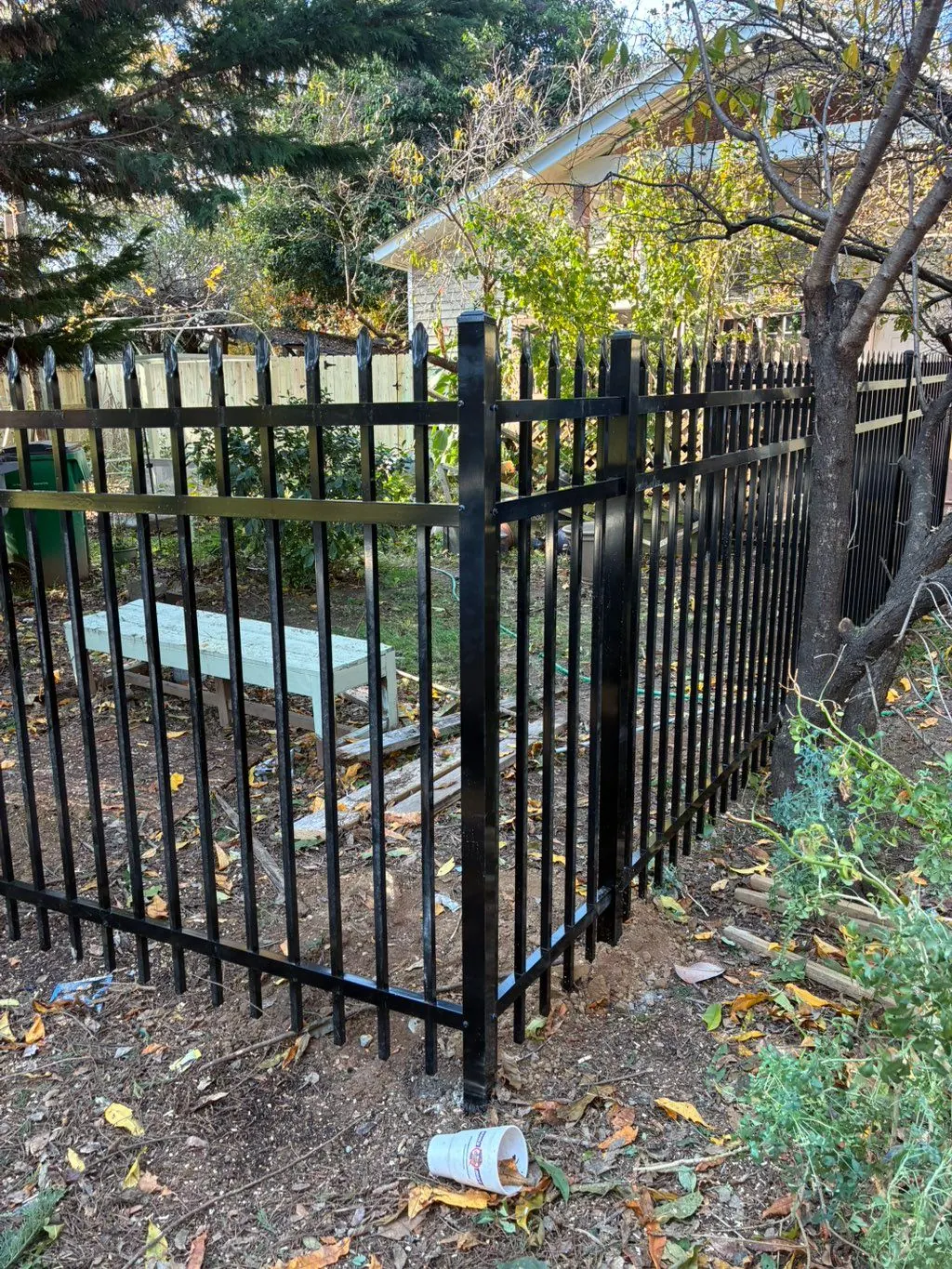
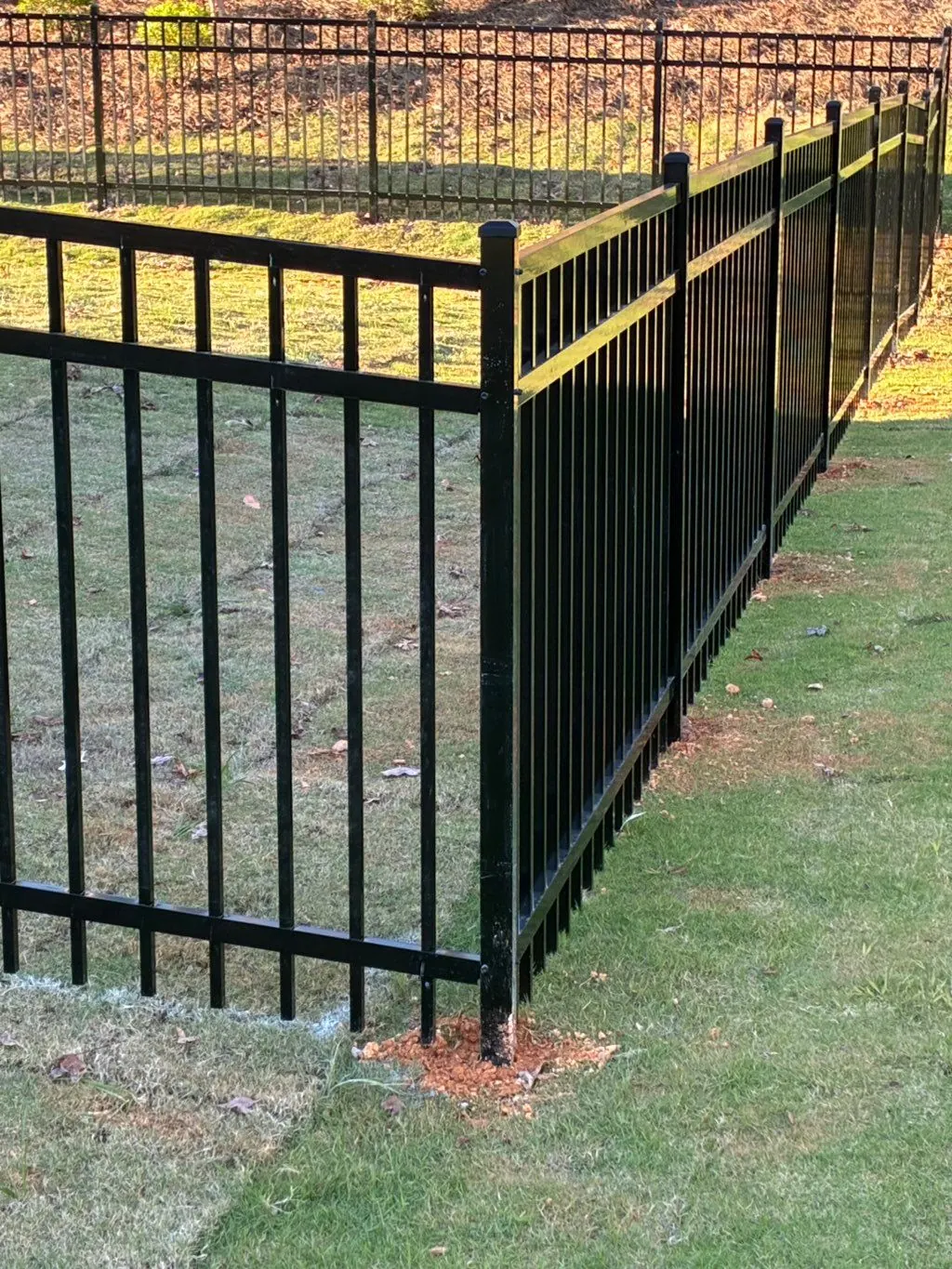
Standard aluminum fences are spaced for an open look, which can let small dogs squeeze through. Puppy picket panels add extra pickets along the lower part of the fence, closing the gaps where small dogs would escape while keeping the elegant open look above. This is one of the most popular solutions for small dogs in HOA neighborhoods where black aluminum is favored. See our aluminum styles guide and aluminum fencing page.
Solid privacy fences
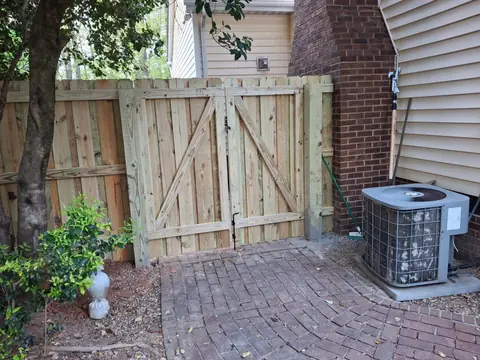
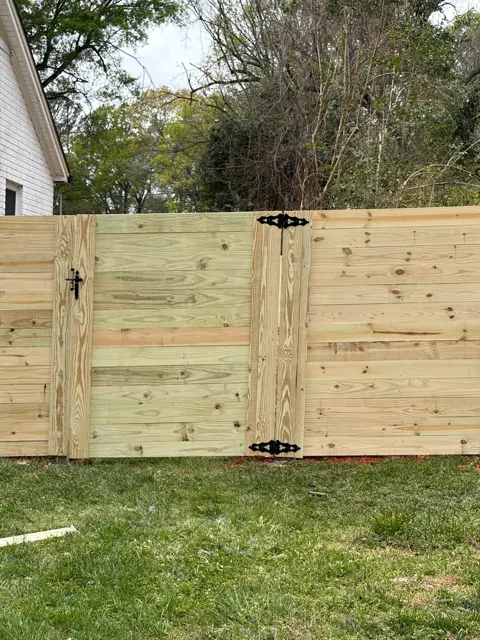
Wood or vinyl privacy fences have no gaps between boards, so small dogs cannot squeeze through. They also block views of passing people, squirrels and other dogs, which helps reduce barking and fence running in reactive dogs. Board-on-board and full privacy vinyl are especially secure. See our privacy fence guide.
Chain link
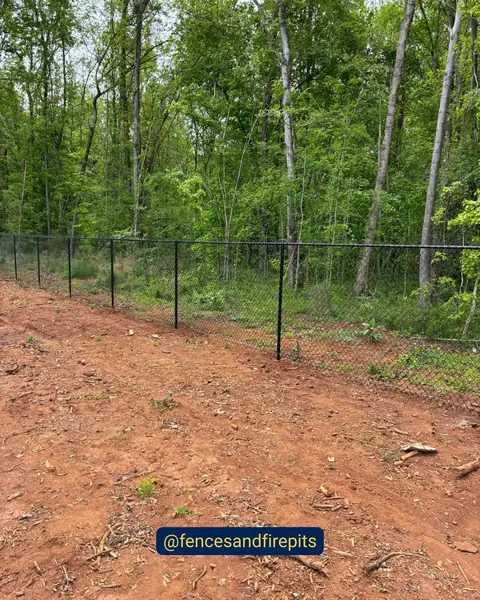
Chain link's woven mesh is too small for most dogs to get through, and it is very budget friendly for larger yards. Black vinyl-coated chain link blends into landscaping. Keep the bottom close to the ground to prevent squeezing under. See black vs. galvanized chain link.
Picket fences
Picket fences can work for calm small dogs if the picket spacing is tight enough. Check the spacing carefully before choosing a picket style for a tiny dog or puppy.
Split rail with wire mesh
Split rail on its own is far too open for small dogs, but adding wire mesh to the inside can make it work on larger rural lots. See our split rail guide.
Comparison for small dogs
| Style | Stops squeezing through | Blocks views | Notes |
|---|---|---|---|
| Puppy picket aluminum | Yes, at the bottom | No | Elegant and often HOA friendly |
| Wood privacy | Yes | Yes | Great for reactive dogs |
| Vinyl privacy | Yes | Yes | Low maintenance |
| Chain link | Yes | No | Budget friendly for large areas |
| Picket | Depends on spacing | No | Check gaps carefully |
| Split rail with mesh | With mesh | No | Rural and large lots |
Choosing a height
Most small dogs are contained by a 4 ft fence. Some athletic small breeds, like Jack Russell terriers, can jump surprisingly high, and some dogs climb. If your dog is a jumper or climber, consider a taller fence where local rules allow, and avoid styles with horizontal rails on the inside that can act as steps. Our fence height guide explains what controls fence height in your area.
Gates: the most common escape point
Even the best fence fails if the gate is left open or has gaps. For small dogs:
- Self-closing hinges and latches: gates swing shut and latch on their own, even when someone forgets.
- Tight gaps: keep the space under and beside the gate as small as practical.
- Lockable latches: prevent visitors, delivery drivers or service workers from leaving the gate open by mistake.
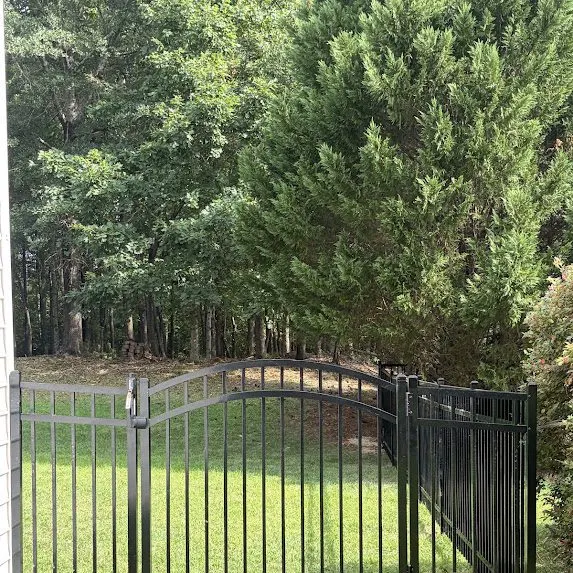
- Matching puppy pickets: on aluminum fences, gates should have the same bottom spacing as the panels.
- Fewer gates: every gate is a potential escape point. Plan only the gates you need. See how many gates a fence needs.
We offer gravity latches, lockable latches and self-closing pool latches. Ask Ron which combination makes sense for your dog.
Stopping diggers
If your small dog digs, a few approaches help:
- Keep the bottom tight: minimize the gap under the fence.
- Buried wire apron: wire mesh laid along the inside of the fence line, buried just under the surface, discourages digging.
- Concrete mow strip: a hard strip along the fence line makes digging impossible there.
- Rocks or pavers: placed along problem spots.
- Supervision and enrichment: many dogs dig out of boredom. Toys, play and a designated digging spot can help.
Slopes and small dogs
On sloped yards, fence panels that step down the hill can leave triangular gaps underneath. A small dog can slip right through. Solutions include racking panels to follow the slope, filling gaps with soil or stone, or choosing a material like chain link that follows uneven ground. Ron checks the slope during your estimate and plans for gaps. See our sloped yard guide.
Where the fence meets the house
The connection between the fence and the house is a common weak spot. Downspouts, AC units, steps and uneven siding can leave openings. Make sure the fence ties in tightly, and consider placing a gate here rather than leaving a gap.
Puppies grow
A fence built for an 8 week old puppy needs to work for the adult dog too. If you are getting a puppy of a breed that will grow large, plan the fence height for the adult dog and the gap size for the puppy. Puppy picket aluminum, privacy and chain link all handle both. Our large dog guide covers bigger breeds.
Small dogs and wildlife
In some parts of the Charlotte area, especially wooded lots in Mint Hill, Waxhaw, Weddington and Harrisburg, hawks, owls, foxes and coyotes are a concern for small pets. A fence helps keep small dogs from wandering into danger, but no fence makes a yard completely predator-proof. Supervise small dogs outside, especially at dawn and dusk.
Cats
Puppy picket aluminum and tight privacy fences also help with cats, though cats that climb can get over most fences. Talk with your veterinarian about the best outdoor arrangements for cats.
HOA considerations
Many HOAs favor black aluminum, which pairs perfectly with puppy pickets. Some restrict chain link or limit privacy fences to backyards. Check your covenants and include the style, height and color in your architectural request. We help prepare paperwork, but approval is always up to your HOA. See our HOA approval checklist.
Small breeds and what they need
- Chihuahuas and toy breeds: the tightest gaps of all. Puppy picket aluminum, privacy or chain link with a tight bottom.
- Dachshunds and terriers: natural diggers. Plan for a tight bottom and consider a buried apron.
- Jack Russells and rat terriers: surprising jumpers and climbers. Consider extra height and avoid climbable rails on the inside.
- Shih Tzus, Maltese and similar: usually calm, but still small enough to squeeze through standard gaps.
- Mixed-breed puppies: plan for the adult size, which may be larger than expected.
Training and the new fence
A new fence is a big change for a dog. Walk the fence line with your dog on a leash the first few days so it learns the new boundary. Supervise early outings, and check for any gaps your dog discovers that you did not expect. Reward calm behavior near the fence, especially for dogs that tend to run the fence line.
Common mistakes
- Choosing standard aluminum spacing for a tiny dog
- Forgetting the gaps under gates
- Ignoring triangles under stepped panels on slopes
- Leaving gaps where the fence meets the house
- Planning for the puppy but not the adult dog
- Using gravity latches where self-closing gates would be safer
Thinking about the whole household
A fence for a small dog often does double duty. Families with young children appreciate the same features: tight spacing, self-closing gates and a secure boundary. If you have a pool, the fence may also need to meet pool barrier requirements, which include their own spacing and latch rules. And if you work from home and let the dog out many times a day, convenience matters, so place gates where you actually walk. Thinking about everyone who uses the yard helps you choose a fence that works for years. See our pool fence requirements guide if a pool is part of the picture.
Dog runs and smaller enclosures
Not every home needs to fence the entire yard for a small dog. Some families create a smaller fenced area right off the back door, so the dog can go out quickly and safely, while the rest of the yard stays open. This can save money and works well for older dogs and puppies still being house trained. Chain link and puppy picket aluminum are both popular for these smaller enclosures.
Daily habits that prevent escapes
- Check that gates are latched each time you come in from the yard.
- Walk the fence line once a month to look for new gaps or digging spots.
- Tell landscapers, pool service and visitors that a small dog lives there and gates must stay closed.
- Keep patio furniture, planters and woodpiles away from the fence so they cannot be used as launch pads.
- Make sure your dog wears an ID tag and is microchipped, just in case.
Keep your small dog safe at home
Ron has helped many Charlotte-area families choose the right fence for small dogs and puppies. During your free on-site estimate, he will look at your yard, slopes and gates and recommend a fence that fits your dog and your property. Fences & Firepits is licensed and insured, every installer is on our own payroll with no subcontractors, and our work is backed by a 2-year workmanship warranty. Try designs in the Fence Design Studio, see starting rates on the pricing page or call Ron at (980) 339-2182.
Frequently asked questions
What is the best fence for a small dog?
Puppy picket aluminum, solid wood or vinyl privacy and chain link all work well. The key is tight spacing at the bottom and secure gates.
How tall should a fence be for a small dog?
A 4 ft fence contains most small dogs. Some athletic small breeds jump or climb, so consider a taller fence where local rules allow.
What are puppy pickets?
Puppy pickets are extra pickets added to the lower part of an aluminum fence panel to close gaps that small dogs and puppies could squeeze through.
How do I stop my dog from digging under the fence?
Keep the bottom gap tight and consider a buried wire apron or a concrete mow strip along the fence line.
Which gate latch is best for dogs?
Self-closing gates with secure latches are the safest, because they close even when someone forgets. Lockable latches prevent visitors from leaving gates open.
Do I need to fence my whole yard for a small dog?
Not always. A smaller fenced area right off the back door works well for many small dogs, especially puppies and seniors, and can cost less than fencing the entire yard.

About the author
Fences & Firepits team, reviewed by Ron Memallaj, owner of Fences & Firepits LLC. We're a licensed and insured fence company in Charlotte, NC, serving the city and surrounding communities since 2022. Every fence we build is installed by our own in-house crew. We don't hire subcontractors.