
Key takeaways
- We install commercial chain link, aluminum, boundary fencing and commercial gates.
- Start with the goal: security, access control, appearance or boundary definition.
- Taller heights and heavier framework suit security-focused sites.
- Plan gates around vehicle sizes, traffic flow and daily operations.
For a business, a fence is not just a boundary. It protects equipment and inventory, controls who comes and goes, keeps people safe around hazards and shapes the first impression customers have when they pull in. A well-planned commercial fence works quietly in the background for years. A poorly planned one creates daily headaches for staff, deliveries and security.
Fences & Firepits installs commercial chain link, aluminum and boundary fencing and commercial gates for businesses, facilities and property managers across the Charlotte region. This guide walks through what to consider when planning a commercial fence.
Start with the goal
Every commercial fence project should begin with a clear understanding of what the fence needs to do:
- Security: protect vehicles, equipment, materials and inventory from theft and vandalism.
- Access control: direct people and vehicles to specific entry points.
- Safety: keep the public away from hazards like equipment, drop-offs, retention ponds or loading areas.
- Boundary definition: clearly mark property lines.
- Appearance: create a professional, welcoming look at customer-facing sites.
- Screening: hide dumpsters, storage and utility areas.
Most sites need a combination. A storage yard may prioritize security, while an office park may prioritize appearance and boundary definition. Writing down your top two or three goals before the site visit helps Ron recommend the right material, height and gate layout quickly, and it keeps everyone on your team aligned on what the fence is meant to accomplish.
Common commercial applications
- Equipment and storage yards
- Contractor yards and laydown areas
- Parking lots and vehicle storage
- Warehouses and light industrial sites
- Retail and office properties
- Apartment and HOA common areas
- Churches and community facilities
- Dumpster and utility enclosures
- Sports areas and recreational spaces
Learn more on our commercial fencing page.
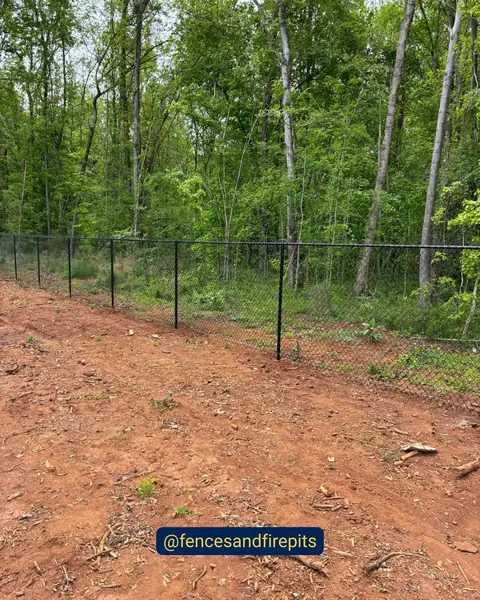
Commercial chain link
Chain link is the workhorse of commercial fencing. It offers strong security at a reasonable cost per foot, it is durable and low maintenance, and it keeps sight lines open so staff and security can see through the fence.
Options
- Galvanized: the most economical, common for industrial and storage sites.
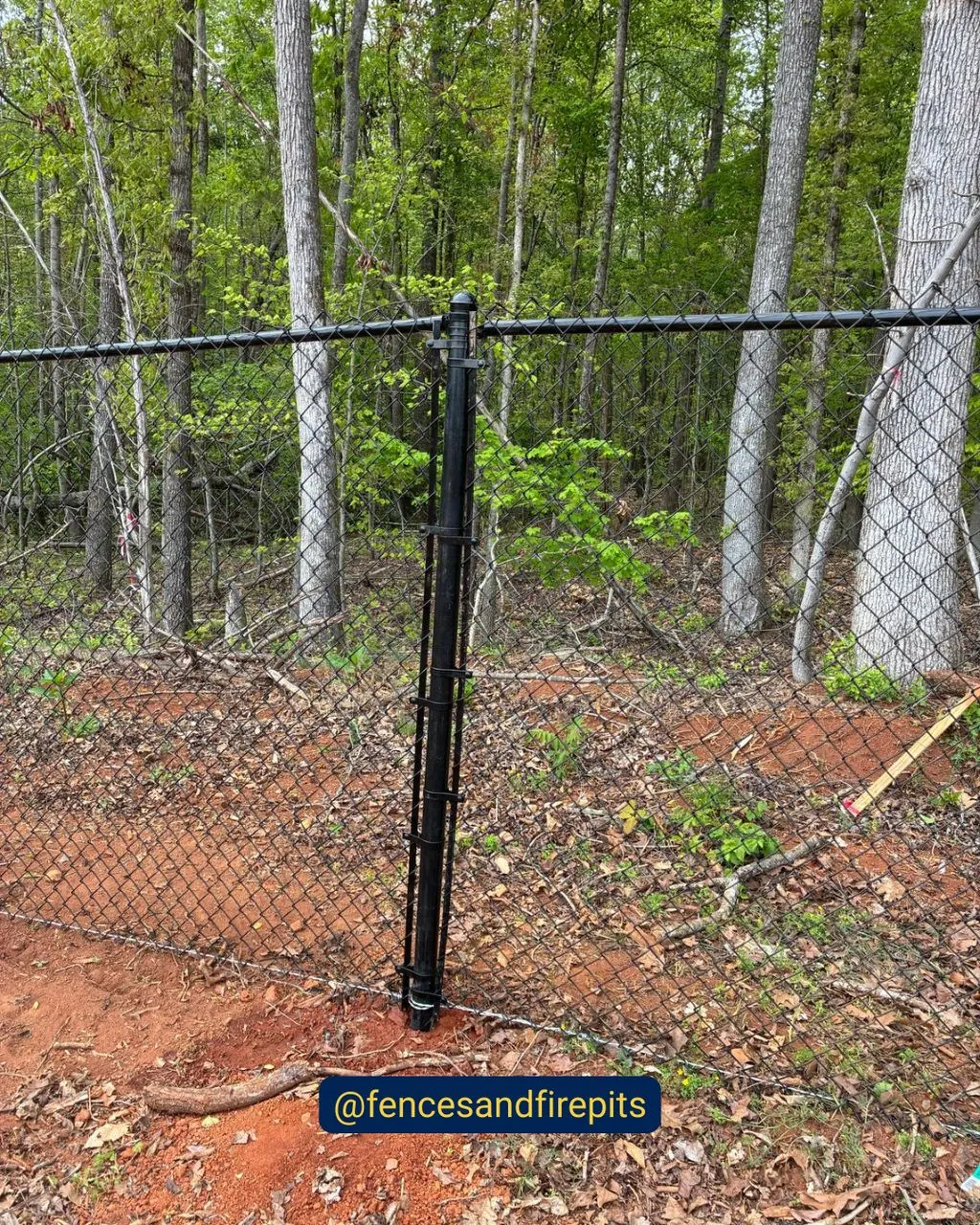
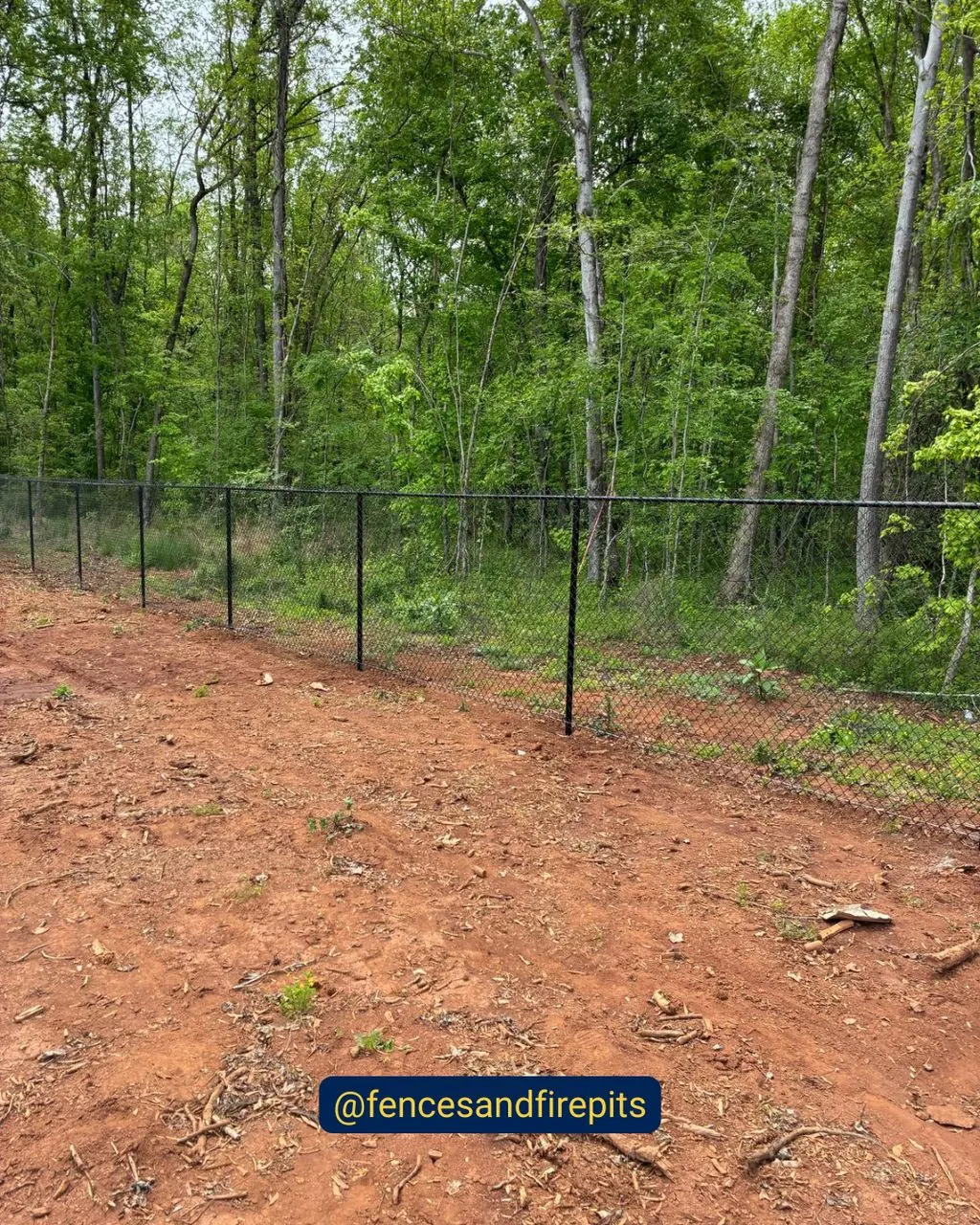
- Black vinyl-coated: a more finished look for customer-facing sites, with an extra protective layer.
- Heights: we install chain link at 4, 5, 6 and 8 ft. Taller heights suit security applications.
- Heavier framework: stronger posts and rails for high-use and security sites.
See black vs. galvanized chain link and our chain link fencing page.
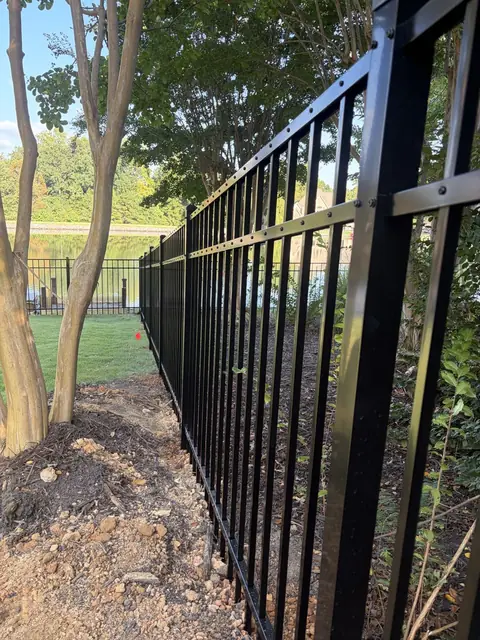
Commercial aluminum
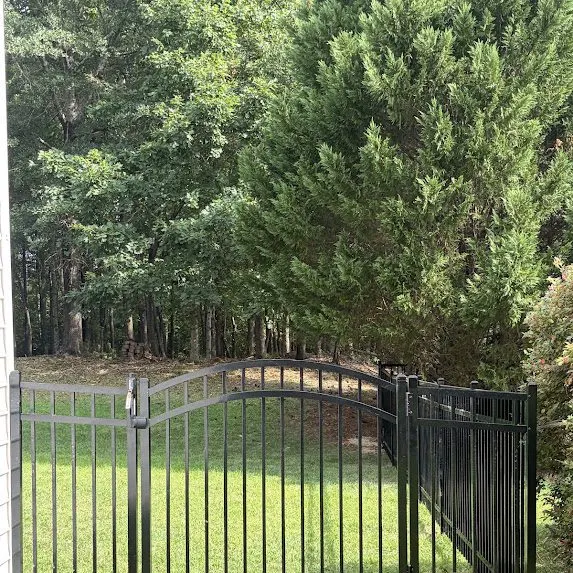
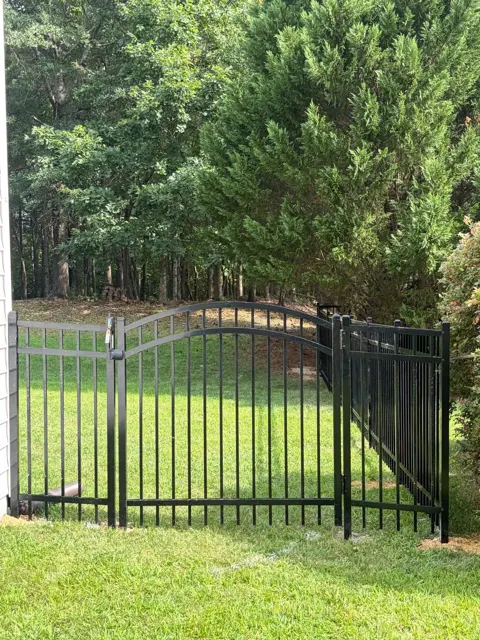
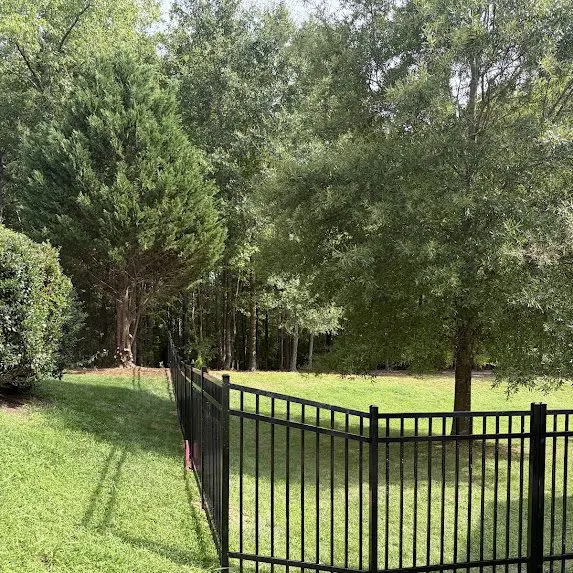
Aluminum gives commercial properties an upscale, professional look. It is popular at office parks, retail centers, apartment communities, churches and pool areas. It resists rust, needs almost no maintenance and keeps views open while clearly defining the property.
- Styles: flat-top, spear-top and three-rail.
- Colors: black and bronze.
- Heights: 3 to 6 ft.
See our aluminum styles guide and aluminum fencing page.
Boundary fencing
For large properties, boundary fencing defines property lines and discourages trespassing without necessarily enclosing every inch. Chain link and split rail are common choices depending on the setting.
Commercial gates
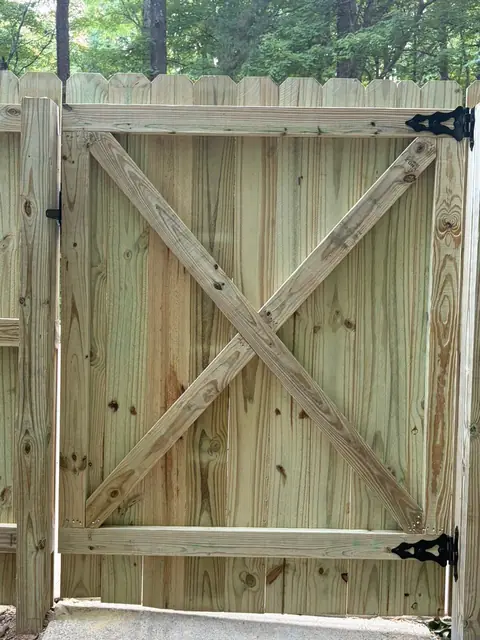
Gates are the most important part of a commercial fence because they control daily operations. We build commercial gates in widths up to 16 ft for vehicle access, plus walk gates for pedestrians. Consider:
- Vehicle sizes: trucks, trailers, delivery vans and equipment need room to pass and turn.
- Traffic flow: separate entry and exit points or separate truck and pedestrian gates can reduce congestion.
- Frequency: gates opened many times a day need heavy-duty hardware and posts.
- Swing space: make sure gates can open fully without blocking traffic or parking.
- Locking: lockable latches secure the site after hours.
- Emergency access: fire departments and emergency services may need access. Check local requirements.
See our custom gates page and driveway gate guide.
Security considerations
- Height: taller fences are harder to climb.
- Visibility: chain link and aluminum let staff, security and passersby see activity on the property.
- Gaps: minimize gaps at the bottom of the fence and around gates.
- Strong terminal posts: corners, ends and gates must be solid.
- Lighting: pairing fencing with good lighting improves security.
- Lockable gates: secure every entry point after hours.
Codes, permits and property rules
Commercial fences may be subject to zoning rules on height, placement and materials, as well as permit requirements and building codes. Retail centers, office parks and industrial parks may have owners' association or landlord requirements. Check with your local planning or zoning office and your property owner or association before planning. See our fence height guide for general background.
Property lines and surveys
Commercial properties often have complex boundaries, easements and shared access drives. A current survey is highly recommended before installing a commercial fence. Utility easements, drainage areas and access agreements may restrict where the fence can go. See our property line guide.
Scheduling around operations
Commercial fence installation needs to work around your business. We plan the installation sequence to keep entrances usable, coordinate around deliveries and peak hours and keep the site safe during the work. Ron discusses scheduling and phasing during the estimate. Our crew works Monday through Saturday, 7 AM to 7 PM.
Soil, slopes and drainage
Commercial sites around Charlotte often have graded pads, slopes down to retention ponds and compacted fill. Posts must be set for the soil, and the fence must follow the grade without leaving gaps. Drainage paths should stay open. Read our red clay post guide and sloped yard guide.
Appearance matters
For customer-facing businesses, the fence is part of your brand. Black aluminum or black vinyl-coated chain link looks cleaner than bare galvanized. A well-maintained fence signals a well-run business, and consistent colors and heights across the property make it look planned rather than pieced together. A sagging, rusted or damaged fence sends the opposite message.
Dumpster and utility enclosures
Many properties need to screen dumpsters, compactors, generators and utility equipment. Enclosures need gates wide enough for service trucks to access dumpsters, clearance around equipment for airflow and service and durable hardware for frequent use. Check local requirements for screening.
Maintenance
- Walk the fence line regularly and look for damage, especially after storms.
- Check gate hinges, latches and locks frequently on high-use gates.
- Keep vegetation from growing through or over the fence.
- Repair damage promptly to maintain security.
Commercial fences get hit by vehicles, equipment and storms. Damaged sections can often be repaired. See our storm-damaged fence guide.
Choosing between chain link and aluminum
Many commercial projects come down to a choice between chain link and aluminum, or a combination of both.
| Factor | Chain link | Aluminum |
|---|---|---|
| Look | Practical, utilitarian (black is more finished) | Upscale, ornamental |
| Relative cost | Lower | Higher |
| Security | Strong, especially at taller heights | Good boundary and deterrent |
| Maintenance | Very low | Very low |
| Best for | Storage yards, industrial sites, large perimeters | Office, retail, apartments, pools, churches |
A common approach is aluminum along the street-facing frontage, where customers and visitors see it, and chain link along the sides and back where security and budget matter more. Matching black finishes help the two materials look intentional together. Compare in chain link vs. aluminum.
Phased projects
Large commercial properties do not always need to be fenced all at once. Some owners start with the highest-priority area, such as an equipment yard or the street frontage, and add sections over time as budgets allow. Planning the full layout up front, even if it is built in phases, keeps materials, heights and gate locations consistent. Ron can map out a phased plan during the site visit.
Working with general contractors and developers
On new construction and renovation projects, fencing often comes near the end of the schedule, after grading, paving and utilities. Coordinating early helps avoid conflicts with curbs, light poles, irrigation and landscaping. We are happy to review site plans in advance and coordinate timing with your project schedule.
Why businesses choose Fences & Firepits
- Licensed and insured
- In-house crew: every installer is on our own payroll. We do not use subcontractors, so the crew on your site is trained by us and accountable to us.
- Owner-led estimates: Ron personally walks every site.
- 2-year workmanship warranty: see our warranty page.
- Flexible payment: Apple Pay, cash, check, credit card and Zelle.
Signs your commercial fence needs attention
- Gates that drag, sag or will not lock reliably
- Leaning posts or loose fabric on chain link
- Sections damaged by vehicles or equipment
- Rust or failing coatings on older galvanized fences
- Gaps under the fence from erosion or digging
- Vegetation overgrowing the fence line, which can hide damage and weaken the fabric
Addressing small issues quickly keeps the site secure and avoids larger repairs later. If an old fence is beyond repair, a planned replacement lets you upgrade height, material or gate layout to match how the property is used today. See our repair or replace guide.
Planning checklist for commercial fencing
- Define the primary goal: security, access, safety, boundary or appearance.
- Get a current survey and identify easements.
- Check zoning, permits and owner or association rules.
- Map vehicle and pedestrian traffic patterns.
- Decide on gate locations, widths and locking.
- Choose material, height and color.
- Plan installation around operations.
Property managers and HOA common areas
Property managers often oversee fencing for apartment communities, townhome associations and shared amenities like pools, playgrounds and dog parks. These projects usually involve board approval, budget cycles and coordination with residents. A clear written estimate, drawings and material details make board presentations easier. Aluminum is a common choice for pool and amenity areas because it looks finished and keeps sight lines open, while black vinyl-coated chain link is popular for dog parks and maintenance areas. Pool barriers have specific requirements, so confirm local rules. See our pool fence requirements guide and pool fence installation page.
Budgeting for a commercial fence
Commercial fence cost depends on the total footage, material, height, framework, number and size of gates and site conditions like slopes, rock and old fence removal. Security-focused sites with taller fences and heavier framework cost more per foot than simple boundary fencing. We do not publish commercial pricing without seeing the site, because conditions vary so much. Ron provides a written estimate after walking the property. For general residential reference, see published starting rates on the pricing page.
Questions to ask any commercial fence contractor
- Are you licensed and insured, and can you provide proof?
- Will your own employees do the work, or subcontractors?
- How will you keep our site operating during installation?
- How are gate posts and terminal posts built for heavy use?
- What does your warranty cover?
- How do you handle damage repairs after installation?
Get a commercial fence estimate
Ron serves businesses throughout Mecklenburg, Union and Cabarrus counties and Fort Mill, Rock Hill and Tega Cay, SC. Call (980) 339-2182 or request an estimate online to schedule a site visit. See our service areas for the full list of communities we cover.
Frequently asked questions
What commercial fencing do you install?
We install commercial chain link, aluminum, boundary fencing and commercial gates for businesses, facilities and property managers.
How tall can commercial chain link be?
We install chain link at 4, 5, 6 and 8 ft. Local zoning may limit height, so check before planning.
Can you work around our business hours?
Yes. We plan installation to keep entrances usable and work around deliveries and operations. Ron discusses scheduling during the estimate.
Do you use subcontractors on commercial jobs?
No. Every installer is on our own payroll, on commercial and residential projects alike.
How wide can commercial gates be?
We build gates up to 16 ft wide for vehicle access, plus walk gates for pedestrians.
Do you provide commercial pricing online?
No. Commercial projects vary too much by footage, height, framework, gates and site conditions. Ron provides a written estimate after walking the property.
Can a commercial fence be installed in phases?
Yes. Many owners start with the highest-priority area and add sections later. Planning the full layout up front keeps materials, heights and gates consistent.

About the author
Fences & Firepits team, reviewed by Ron Memallaj, owner of Fences & Firepits LLC. We're a licensed and insured fence company in Charlotte, NC, serving the city and surrounding communities since 2022. Every fence we build is installed by our own in-house crew. We don't hire subcontractors.