
Key takeaways
- Posts are the foundation of every fence. Most leaning, sagging fences start with a post problem.
- Charlotte's red clay is dense, swells when wet and shrinks when dry, and drains slowly.
- We set posts in concrete at a depth matched to the fence height and soil.
- Gate, corner and end posts carry the most load and need the most attention.
Ask anyone who has gardened in Charlotte about the soil, and you will hear about the red clay. It stains shoes, clogs shovels and turns to something like brick in a dry August. It is also what every fence post in the Piedmont has to stand in.
Homeowners naturally focus on the visible parts of a fence: the boards, the panels, the color and the style. But the posts are what keep it all standing straight. When a fence leans, sags or a gate stops latching, the cause is usually underground. This guide explains how Charlotte's clay affects fence posts and what goes into setting them right.
What makes Charlotte's soil different?
Much of the Charlotte region sits in the Piedmont, where weathered rock has broken down over a very long time into clay-rich soil. The red color comes from iron oxides. A few properties of this clay matter for fences:
- Density: clay packs tightly, which can actually hold posts firmly once they are set properly.
- Slow drainage: water soaks into clay slowly and drains out slowly. Post holes can hold water like a cup.
- Swelling and shrinking: clay expands when it is wet and contracts when it dries. Through wet springs and dry summers, the soil moves.
- Hard digging: dry clay is hard to dig, and some areas have rock, gravel or old construction fill mixed in.
- Variable layers: topsoil depth varies widely, and newer neighborhoods may have compacted fill from grading.
Soil also varies across the region. Lots in Union County, Cabarrus County and York County can differ from those in Mecklenburg, and even neighboring yards can be very different depending on how the land was graded.
Why posts fail
When a fence starts leaning or a gate starts dragging, the post is usually to blame. Common causes include:
- Shallow posts: posts that are not deep enough for the fence height do not have the leverage to resist wind and weight.
- Undersized footings: a footing that is too small does not spread the load into the surrounding soil.
- Water at the base: water that collects around wood posts speeds decay.
- Soil movement: repeated swelling and shrinking can gradually loosen a poorly set post.
- Gate loads: a heavy gate levers against its hinge post every time it swings.
- Wind on solid fences: privacy fences catch wind like a sail, putting extra force on posts.
Good post setting addresses all of these.
How we set posts
Our in-house crew sets posts in concrete at a depth matched to the fence height and the soil on your property. A few principles guide the work:
Depth for the height
Taller fences need deeper posts. A common rule of thumb in fencing is to bury a meaningful portion of the post's length, with more depth for taller and heavier fences. Gate posts and posts on solid privacy fences get extra attention because of the loads they carry.
Footing width
The hole needs to be wide enough to surround the post with concrete on all sides, creating a footing that spreads the load into the soil and resists leaning.
Concrete set properly
Concrete locks the post in position and keeps it plumb. We shape the top of the footing so water runs away from the post rather than pooling against it.
Plumb and in line
Each post is checked for plumb and alignment so the fence runs straight and panels fit correctly. On slopes, posts are set for stepped or racked sections.
Consistent spacing
Posts are spaced evenly to fit the rail or panel length. Where roots or obstacles require it, we adjust spacing carefully so the fence still looks and performs right. See our guide to fencing around trees.
The posts that matter most
Not all posts carry the same load:
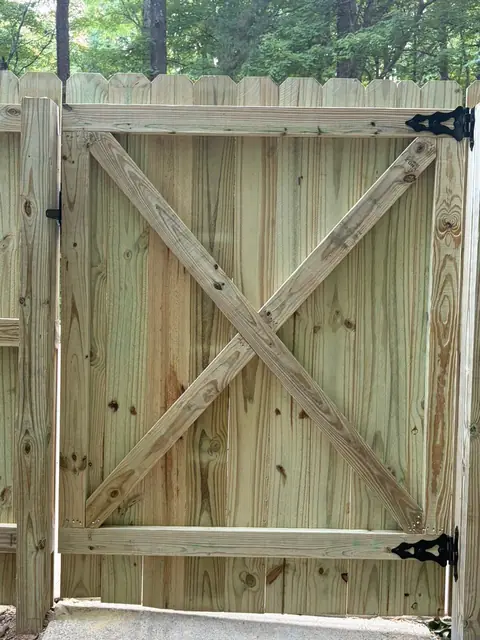
- Gate posts carry the weight of the gate and the forces of opening and closing. These are the most critical posts in the fence. A weak gate post leads to sagging and latch problems.
- Corner posts resist forces from two directions.
- End posts anchor the end of a run.
- Terminal posts on chain link carry the tension of the stretched fabric.
These posts get extra care in sizing, depth and footing. Our driveway gate guide explains why wide gates especially need solid posts.
Post materials
Wood posts
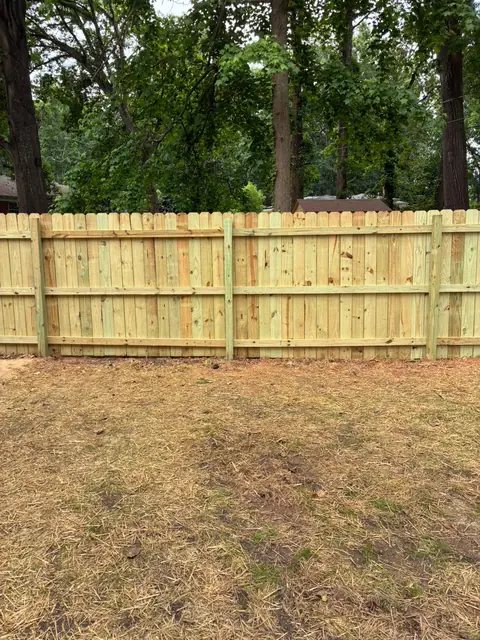
Wood fences typically use pressure-treated posts rated for ground contact, even when the boards are cedar, because the post is the part in contact with the soil. Keeping water from pooling around the base helps them last. See cedar vs. pressure-treated pine.
Vinyl posts
Vinyl fences use hollow vinyl posts set in concrete. Some installations add internal reinforcement at gates for extra strength.
Aluminum posts
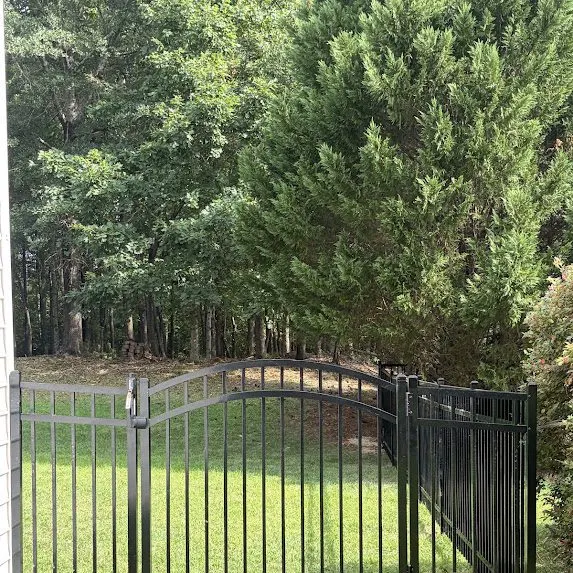
Aluminum posts are set in concrete and fit the matching panels. Gate posts may be heavier gauge.
Chain link posts
Chain link uses steel posts. Terminal posts are larger than line posts because they carry fabric tension.
Drainage around posts
Because clay drains slowly, water management matters, especially for wood posts:
- Shape the footing so water sheds away from the post.
- Keep soil and mulch from piling up against wood posts and boards.
- Avoid sprinkler spray hitting the base of the fence.
- Direct downspouts away from the fence line.
- Leave a gap under privacy boards so they do not sit in wet soil.
Digging in hard clay and rock
Dry summer clay can be very hard, and some properties have buried rock, old concrete or construction debris. Our crew is equipped to dig in tough conditions. If we hit an obstruction, we may shift a post slightly or work through it, depending on what we find. Occasionally, unusual conditions add time to a job. Ron will let you know if he expects difficult digging based on what he sees during the estimate.
Utilities and underground lines
Before any post hole is dug, public utilities are marked through 811. We arrange locates before installation. Private lines such as irrigation, landscape lighting, invisible dog fences and lines to detached buildings are not marked, so tell us about them. Our prep guide covers this.
Signs your posts need attention
- A section of fence leans noticeably
- A post wobbles when you push it
- A gate drags or will not latch
- Soft, dark or crumbling wood at the base of a post
- Gaps opening between panels or boards
- Concrete footings visibly heaved or cracked
Individual posts can often be reset or replaced without rebuilding the whole fence. If many posts are failing, replacement may make more sense. See our repair or replace guide.
Weather and post setting
Charlotte's weather affects post work. Very wet conditions can make holes fill with water and soften the surrounding soil, while very dry conditions make clay hard to dig. We plan around heavy rain when needed to make sure posts are set in good conditions. Our best time to install guide covers seasonal planning.
Slopes and grading
On sloped lots, posts must be set so sections step or rack correctly with the grade. Posts on the downhill side of a slope may be taller above ground, and erosion can expose footings over time. Ron explains how each section will be handled during your estimate. See our sloped yard guide.
New construction and fill soil
Many newer neighborhoods around Huntersville, Indian Trail, Harrisburg and Fort Mill were graded during construction, with soil moved and compacted to shape lots. Fill soil can behave differently than undisturbed clay, and settling can continue for a while. We adjust our approach for the conditions we find, and we will point out any concerns, like soft areas or drainage swales, during the estimate.
Questions to ask any fence contractor about posts
- How deep will the posts be set for my fence height?
- Will posts be set in concrete?
- How do you handle gate posts?
- What do you do if you hit rock or roots?
- How will the posts handle my slope?
- Who actually does the digging, your own crew or subcontractors?
- What does your workmanship warranty cover?
Our guide to choosing a fence contractor has more questions.
Post spacing and fence style
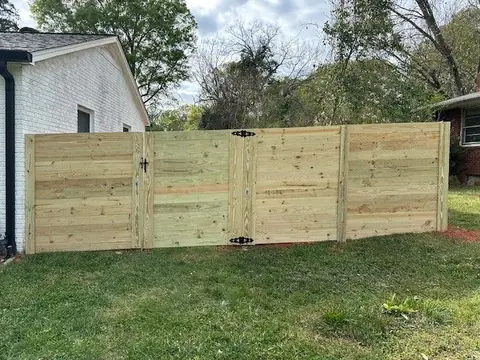
Post spacing depends on the material. Vinyl and aluminum panels come in set widths, so posts must be placed precisely to fit them. Wood fences offer more flexibility, but rails need support at regular intervals so they do not sag over time. Chain link line posts are spaced to keep the fabric taut between terminals. On wooded lots or around obstacles, a section may need to be shortened, which is easy with wood and chain link and requires cutting panels down with vinyl and aluminum. Ron accounts for all of this when he lays out your fence.
Why an in-house crew matters for posts
Post setting is the least visible and most important part of fence installation. It is also the easiest place to cut corners, because shallow holes and skimpy footings are hidden as soon as the concrete is poured. At Fences & Firepits, every installer is on our own payroll. We do not use subcontractors, so the same trained crew sets posts on every job, held to the same standards. Ron personally does every estimate, and our work is backed by a 2-year workmanship warranty. We are licensed and insured.
How long do posts last?
Post lifespan depends on the material, the soil, drainage and how well the post was set. Aluminum, vinyl and steel posts do not rot, so their lifespan is mostly about the footing staying solid. Wood posts are the part of a wood fence most exposed to moisture, and in Charlotte's clay they usually wear out before the boards do if water is allowed to sit at the base. Good drainage, ground-contact rated lumber and concrete shaped to shed water all help. On older wood fences, it is common to replace a few posts at a time as they weaken rather than rebuild everything at once.
A quick word on soil and storms
Summer thunderstorms often arrive after long dry stretches, when clay has shrunk and pulled away slightly from footings. The sudden combination of saturated soil and strong wind is when weak posts most often fail. Solid, properly sized footings make a big difference in how a fence handles that stress. If a storm leaves a section leaning, see our storm-damaged fence guide.
Build on a solid foundation
A fence is only as good as its posts. If you are planning a new fence, call Ron at (980) 339-2182 for a free on-site estimate. He will look at your soil, slope, trees and gates and explain exactly how your fence will be built. You can also check starting rates on the pricing page or plan your layout in the Fence Design Studio.
Frequently asked questions
Are your fence posts set in concrete?
Yes. Our in-house crew sets posts in concrete at a depth matched to the fence height and soil on your property.
Why do fences lean in Charlotte?
Most leaning fences have shallow or undersized post footings, water damage at the base of wood posts or heavy gate and wind loads on posts that were not set for them.
Does red clay make fence installation harder?
Dry clay is hard to dig and wet clay drains slowly, but properly set posts in clay can be very stable. Our crew is equipped for Piedmont soils.
Can a single leaning post be fixed?
Often, yes. Individual posts can usually be reset or replaced without rebuilding the whole fence.
Which fence posts are most important?
Gate posts carry the most load, followed by corner and end posts. These get extra attention in sizing and footing.
Do you reuse old fence posts?
Sometimes. If existing posts are solid, plumb and in the right place, Ron may discuss reusing them. In most replacements, new posts set in fresh concrete give the best long-term result.

About the author
Fences & Firepits team, reviewed by Ron Memallaj, owner of Fences & Firepits LLC. We're a licensed and insured fence company in Charlotte, NC, serving the city and surrounding communities since 2022. Every fence we build is installed by our own in-house crew. We don't hire subcontractors.