
Key takeaways
- We build driveway gates at 12, 14 and 16 ft wide to match wood, vinyl, aluminum and chain link fences.
- Measure your driveway and think about the largest vehicle or trailer that needs to pass through.
- Swing direction, slope and clearance matter as much as width.
- Gate posts carry heavy loads, so footings and framing are critical.
A driveway gate is the biggest moving part of any fence. It needs to swing smoothly, latch securely and stay square for years, all while carrying far more weight than a walk gate. It is also one of the first things people see when they pull up to your home, so it matters for curb appeal too.
Whether you are fencing a large lot in Waxhaw or Mint Hill, securing a backyard with driveway access in Concord or adding a gate to an existing fence in Charlotte, this guide walks through the decisions that go into a driveway gate that works well and lasts.
Why add a driveway gate?
- Security: close off the driveway to discourage casual entry and keep vehicles, equipment and trailers protected.
- Pets and kids: a closed driveway gate completes the enclosure so dogs and children stay safe inside.
- Privacy: a solid gate blocks views into the side yard or backyard.
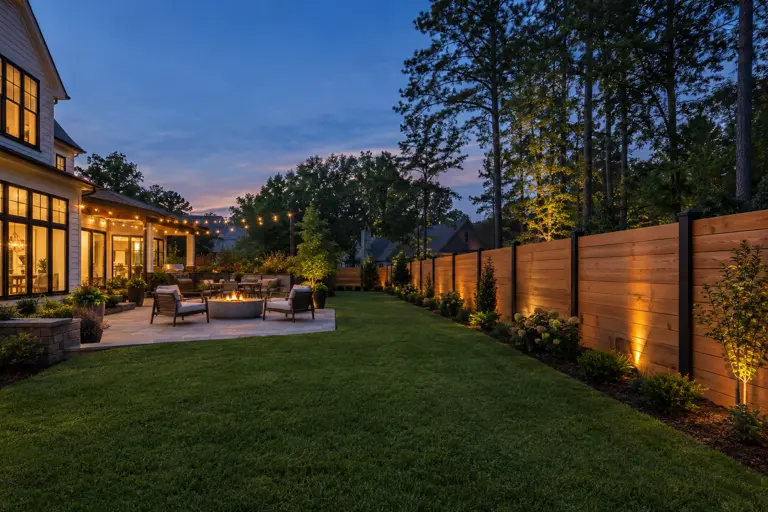
- Curb appeal: a well-built gate gives the property a finished, upscale look.
- Vehicle access: lets boats, campers, trailers and work vehicles reach the backyard or a parking pad.
Choosing the right width
We build driveway gates at 12, 14 and 16 ft wide. The right width depends on your driveway and what needs to pass through it.
| Width | Typical use |
|---|---|
| 12 ft | Standard single-lane driveways and most cars, SUVs and pickups |
| 14 ft | Extra room for wider trucks, easier turning in, small trailers |
| 16 ft | Boats, campers, larger trailers, equipment and angled approaches |
For walk access and smaller equipment, we also build single gates at 4 and 5 ft and double gates at 8, 10 and 12 ft. Many properties pair a driveway gate with a separate walk gate so people do not have to open the big gate every time.
How to measure
- Measure the width of the driveway where the gate will sit.
- Think about the widest vehicle, trailer or piece of equipment that will ever need to pass through, including mirrors.
- Consider the approach angle. If vehicles turn into the gate rather than drive straight through, a wider gate makes it much easier.
- Add room for comfort. A gate that is just barely wide enough leads to scraped mirrors and clipped posts.
Single swing vs. double swing
Driveway gates can be built as one large leaf that swings open or as a pair of leaves that meet in the middle.
Single swing
- One wide leaf hinged on one post
- Needs a lot of clear space to swing open
- Carries a heavier load on one set of hinges
Double swing
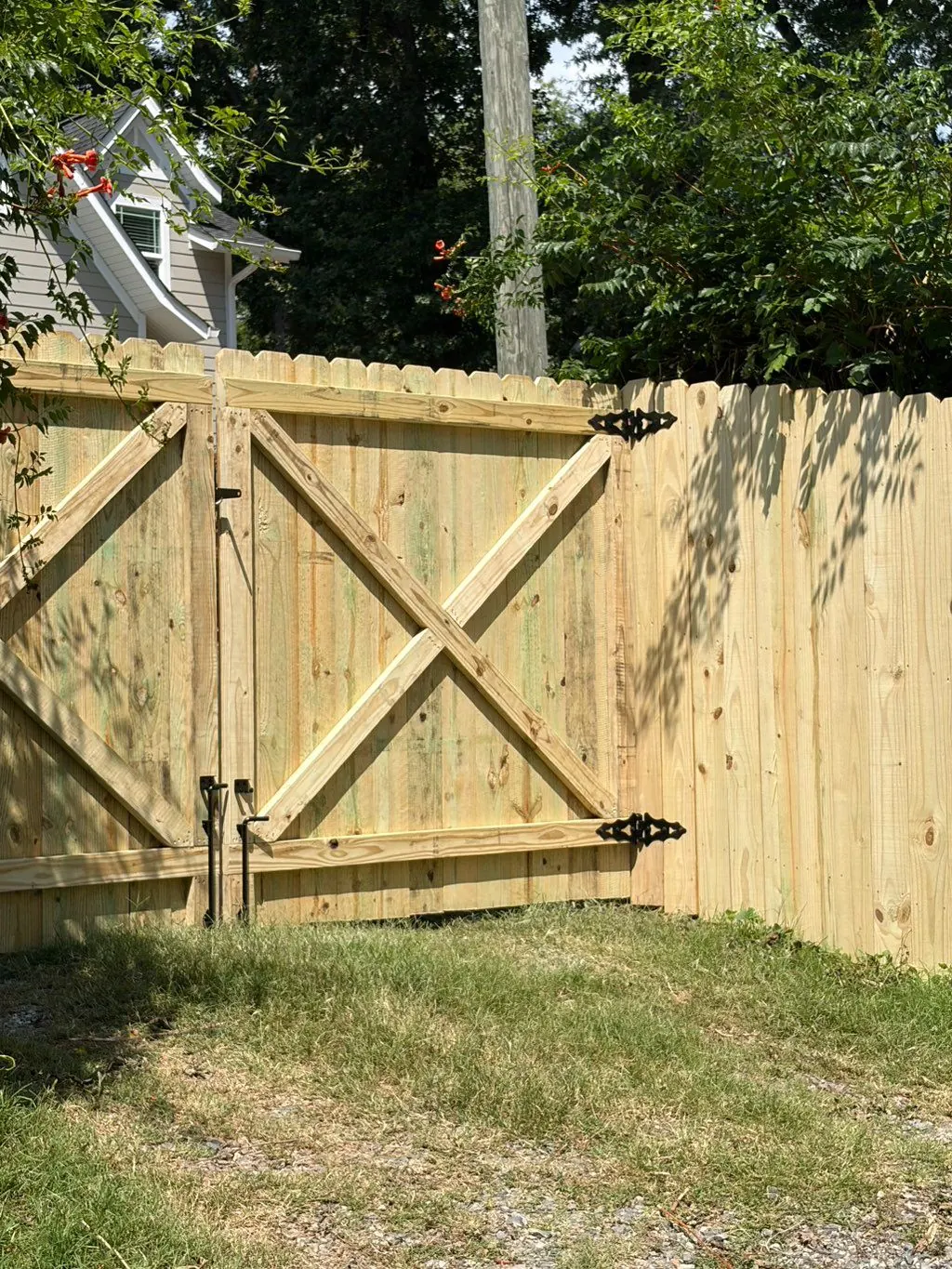
- Two leaves, each half the width, hinged on opposite posts
- Each leaf needs less swing space
- Lighter leaves are less prone to sagging
- A drop rod or center stop holds one leaf in place while the other latches to it
Wide driveway gates are most often built as doubles for these reasons, but the best choice depends on your space. Ron recommends a layout during the estimate based on your driveway, slope and fence material.
Swing direction and clearance
Swing direction is one of the most overlooked parts of gate planning:
- Inward swing: most common. The gate opens into your property, so it does not block the street or sidewalk.
- Outward swing: sometimes needed when the driveway rises steeply behind the gate, but it can block sidewalks or the street.
- Swing path: the gate needs a clear arc the full width of the leaf. Planters, cars, landscaping and raised edges can block it.
Make sure there is room for the gate to open fully without hitting anything, and room to park inside without blocking the swing.
Slopes and uneven driveways
Charlotte-area driveways often slope toward the street or across the width. A gate that swings inward on a driveway rising behind it may drag on the pavement. Solutions include:
- Building the gate with extra ground clearance
- Choosing a double gate so each leaf swings through a shorter arc
- Adjusting the gate location to a flatter spot
- Swinging the gate outward if space allows
Ron checks the grade during your estimate and explains how the gate will clear the ground. See our sloped yard guide for more on grades.
Driveway gates by material
Wood
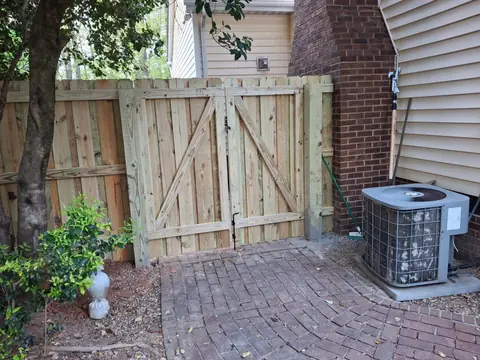
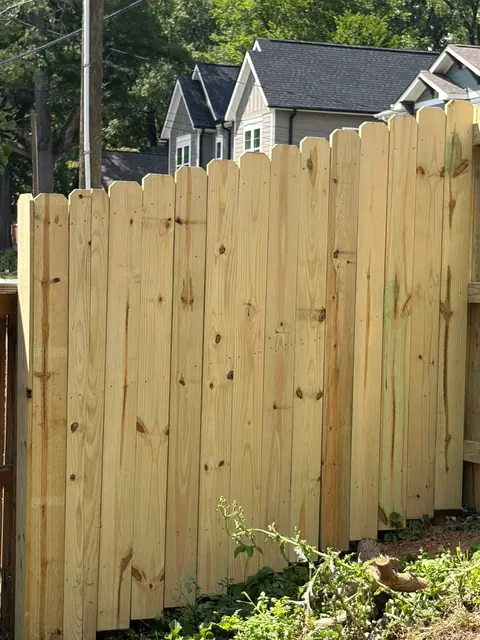
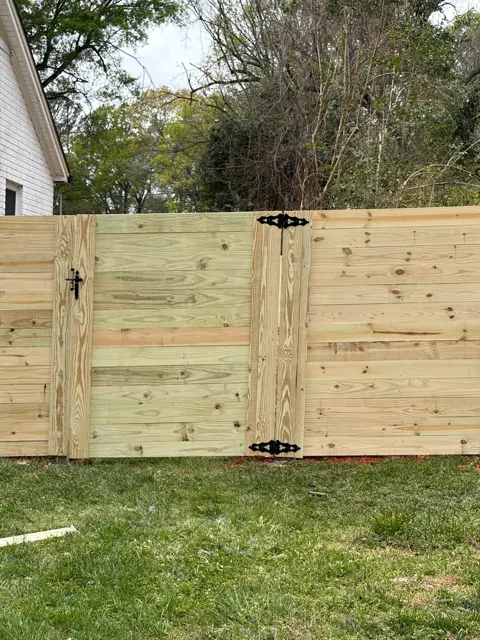
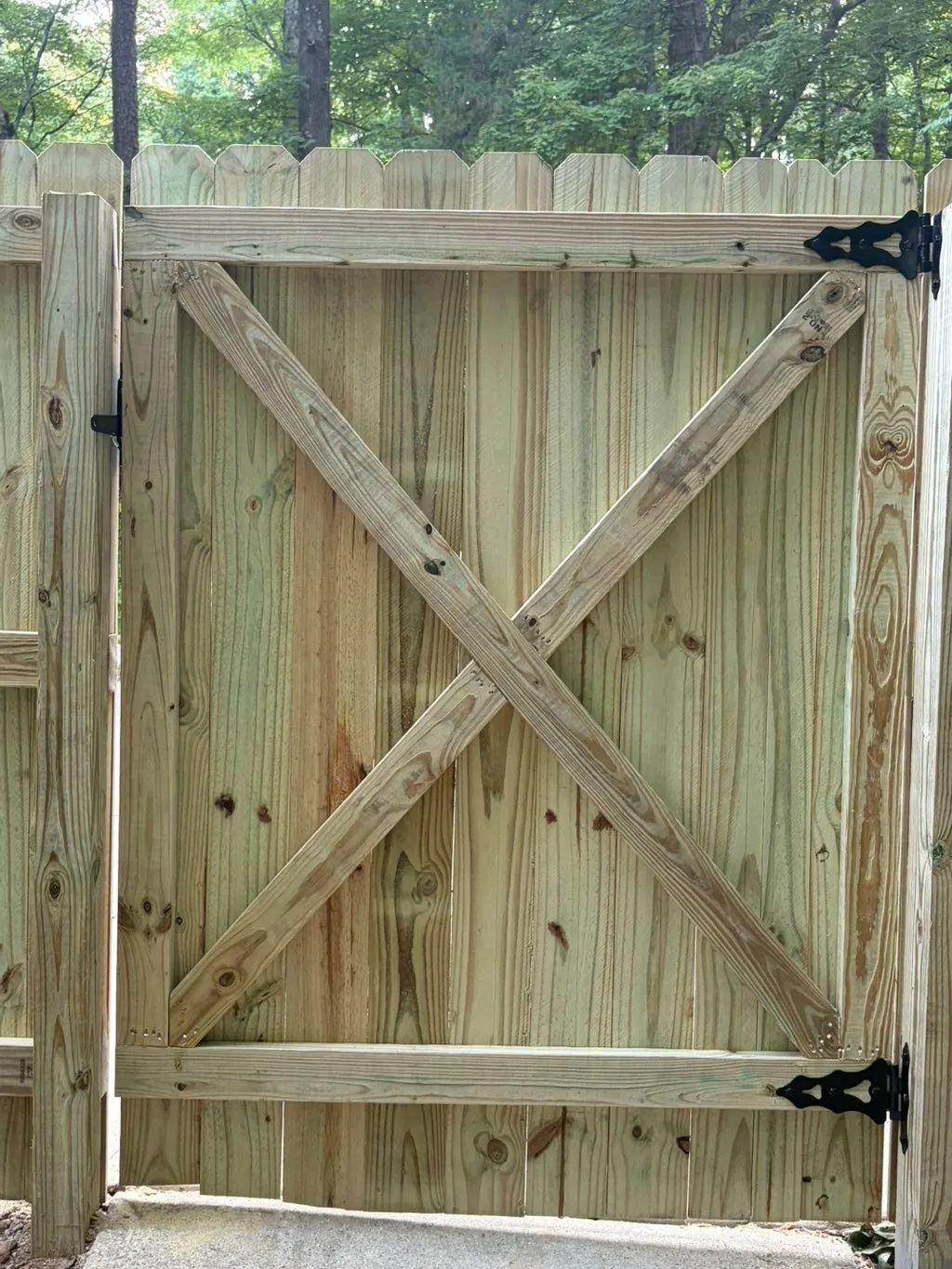
Wood driveway gates match wood privacy fences and give a warm, solid look with full privacy. Because wood is heavy, wide wood gates need sturdy framing and bracing to stay square. Cedar is lighter than pine. Wood gates need periodic staining like the rest of the fence.
Vinyl
Vinyl driveway gates match vinyl fences in white, tan or gray. Wider vinyl gates usually use an internal metal frame for strength. They never need painting.
Aluminum
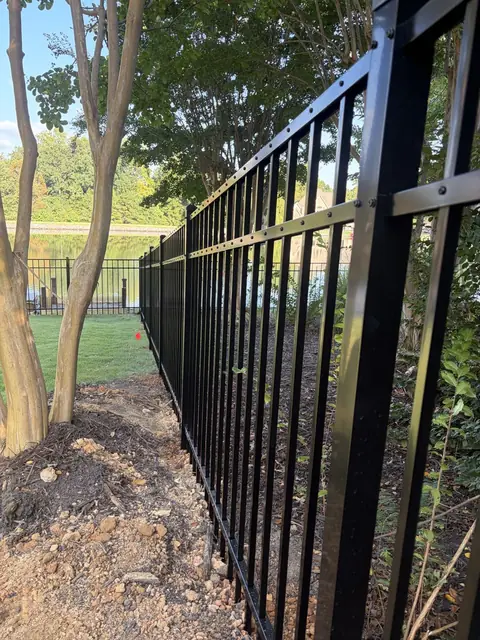
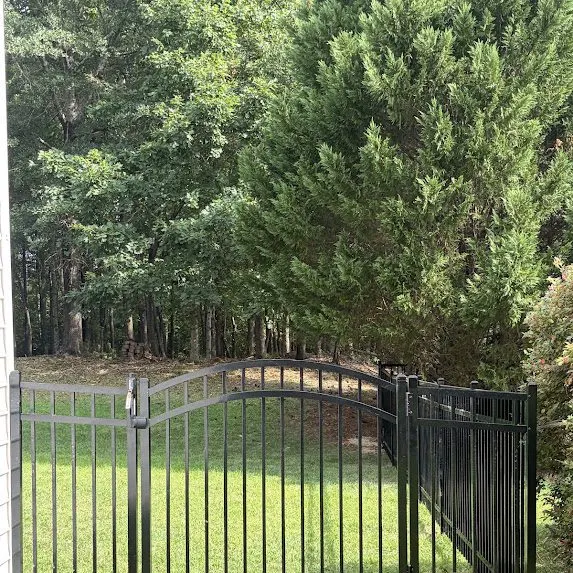
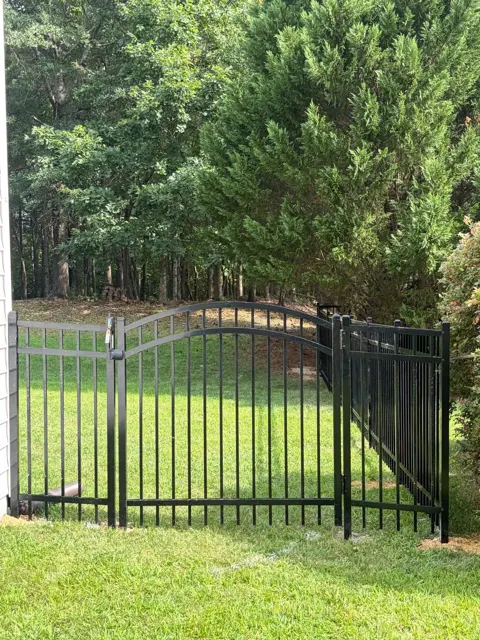
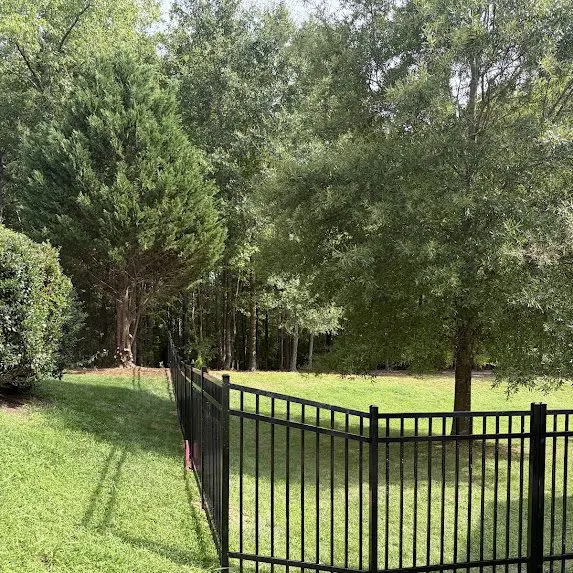
Aluminum driveway gates are light, strong and elegant, and they keep views open. They match aluminum fences in black or bronze, and arched designs add a decorative touch at entries.
Chain link
Chain link driveway gates are the most budget-friendly and practical, in galvanized or black vinyl-coated. They are common on large lots, farms and commercial sites. See chain link fencing.
Why gate posts matter so much
A driveway gate puts a huge load on its hinge post. Every time it swings, the weight of the leaf levers against the post. Over time, a weak post leans, the gate sags and the latch stops lining up. That is the most common driveway gate problem we see on older fences.
To prevent it, driveway gate posts need:
- Deeper and wider footings than standard line posts
- Concrete set properly for the soil, especially in Charlotte's dense red clay
- Heavier posts where needed
- Correct hinge placement and hardware rated for the gate's weight
Our in-house crew sets gate posts for the specific load and soil conditions. Read more in our red clay fence post guide.
Latches and hardware
We offer several latch options:
- Gravity latches: simple and reliable, they catch automatically when the gate closes.
- Lockable latches: add a padlock or keyed lock for security.
- Self-closing pool latches: required for gates that are part of a pool barrier.
Double driveway gates also use a drop rod or cane bolt to pin one leaf to the ground while the other latches to it. A center stop helps the leaves meet evenly.
Keeping a driveway gate from sagging
Even a well-built gate benefits from a little care:
- Do not let kids swing on the gate.
- Do not leave it standing open in strong wind, where gusts can slam it.
- Check hinges and latches seasonally and tighten loose hardware.
- Watch for the latch not lining up, which is an early sign of sag.
- On wood gates, keep up with staining so the frame stays sound.
If an older gate is already sagging, it may be repairable. See our repair or replace guide.
Driveway gates and HOAs
Many HOAs have rules about driveway gates: whether they are allowed, how far back from the street they must be, the style and height. Gates near the front of the property may also fall under front yard height rules. Check your covenants and local rules, and include the gate in your architectural request with a site plan. We help prepare paperwork, but approval is always up to your HOA. See our HOA approval checklist and fence height guide.
Where to place the gate
Placement matters as much as width:
- Set back from the street: placing the gate far enough back lets you pull a vehicle completely off the road while you open it.
- On flat ground: if possible, place the gate where the driveway is flattest.
- Clear of obstructions: avoid utility boxes, drainage culverts, trees and landscaping in the swing path.
- Near a walk gate: a separate walk gate nearby saves opening the big gate for foot traffic.
Driveway gates for businesses
Commercial properties often need wide gates for trucks, deliveries and equipment. Chain link is the most common choice for storage yards, lots and perimeters, with taller heights for security. See our commercial fencing page and commercial fence guide.
Custom and arched gates
For a signature entry, we build custom and arched gates. Arched tops add elegance on aluminum and wood gates. Matching walk gates and coordinated post caps tie everything together. Visit our custom gates page or see our split rail fence with arched gates in Ballantyne.
Privacy vs. open driveway gates
A solid driveway gate in wood or vinyl blocks the view into your backyard completely, which is great for privacy and for keeping dogs calm. But solid gates also act like sails in the wind, which puts extra strain on hinges and posts, and they hide who is on the other side when you pull up. Open gates in aluminum or chain link let wind pass through, weigh less and let you see the driveway and street. Many homeowners choose a gate that matches the fence for a consistent look, but if wind exposure or visibility is a concern, it is worth discussing a lighter, more open design.
Driveway gate planning checklist
- Measure driveway width and the widest vehicle or trailer.
- Choose 12, 14 or 16 ft.
- Decide on single or double swing.
- Plan the swing direction and check clearance.
- Check the slope.
- Choose material and style to match the fence.
- Choose latches and locks.
- Plan a nearby walk gate.
- Confirm HOA and local rules.
Living with a driveway gate day to day
Before committing, think about how often the gate will be opened. If you plan to park inside the gate and leave daily, you will be opening and closing it at least twice a day, in rain and summer heat. Some homeowners choose to park outside the gate and use it only for occasional access to the backyard, a trailer or a boat. Others prefer the security of parking inside. Either is fine, but the answer may influence where you place the gate, which way it swings and whether you choose a lighter material like aluminum that is easier to move.
Also think about deliveries and guests. A separate walk gate next to the driveway gate, with a simple latch, lets visitors and delivery drivers reach your door without wrestling a 14 ft gate. If dogs are in the yard, make sure every gate has a reliable latch and that everyone in the household knows to close them.
Ready to plan your driveway gate?
Ron measures your driveway, checks the slope and recommends a gate layout during a free on-site estimate. Fences & Firepits is licensed and insured, our crew is all in-house with no subcontractors, and our installations are backed by a 2-year workmanship warranty. See starting rates on the pricing page, try designs in the Fence Design Studio or call Ron at (980) 339-2182.
Frequently asked questions
How wide should a driveway gate be?
Most single-lane driveways use a 12 ft gate. Choose 14 ft for wider trucks or angled approaches and 16 ft for boats, campers and larger trailers.
Is a single or double driveway gate better?
Double gates need less swing space and each leaf is lighter, which reduces sagging. Single gates can work where there is plenty of room. Ron recommends a layout during the estimate.
Why do driveway gates sag?
Most sagging comes from a weak or leaning hinge post, undersized hardware or a frame that has racked out of square. Proper footings and framing prevent it.
Can a driveway gate swing uphill?
If the driveway rises behind the gate, the leaf may drag. Extra ground clearance, a double gate or a different location usually solves it.
What materials can driveway gates be made from?
We build driveway gates in wood, vinyl, aluminum and chain link to match your fence.

About the author
Fences & Firepits team, reviewed by Ron Memallaj, owner of Fences & Firepits LLC. We're a licensed and insured fence company in Charlotte, NC, serving the city and surrounding communities since 2022. Every fence we build is installed by our own in-house crew. We don't hire subcontractors.