
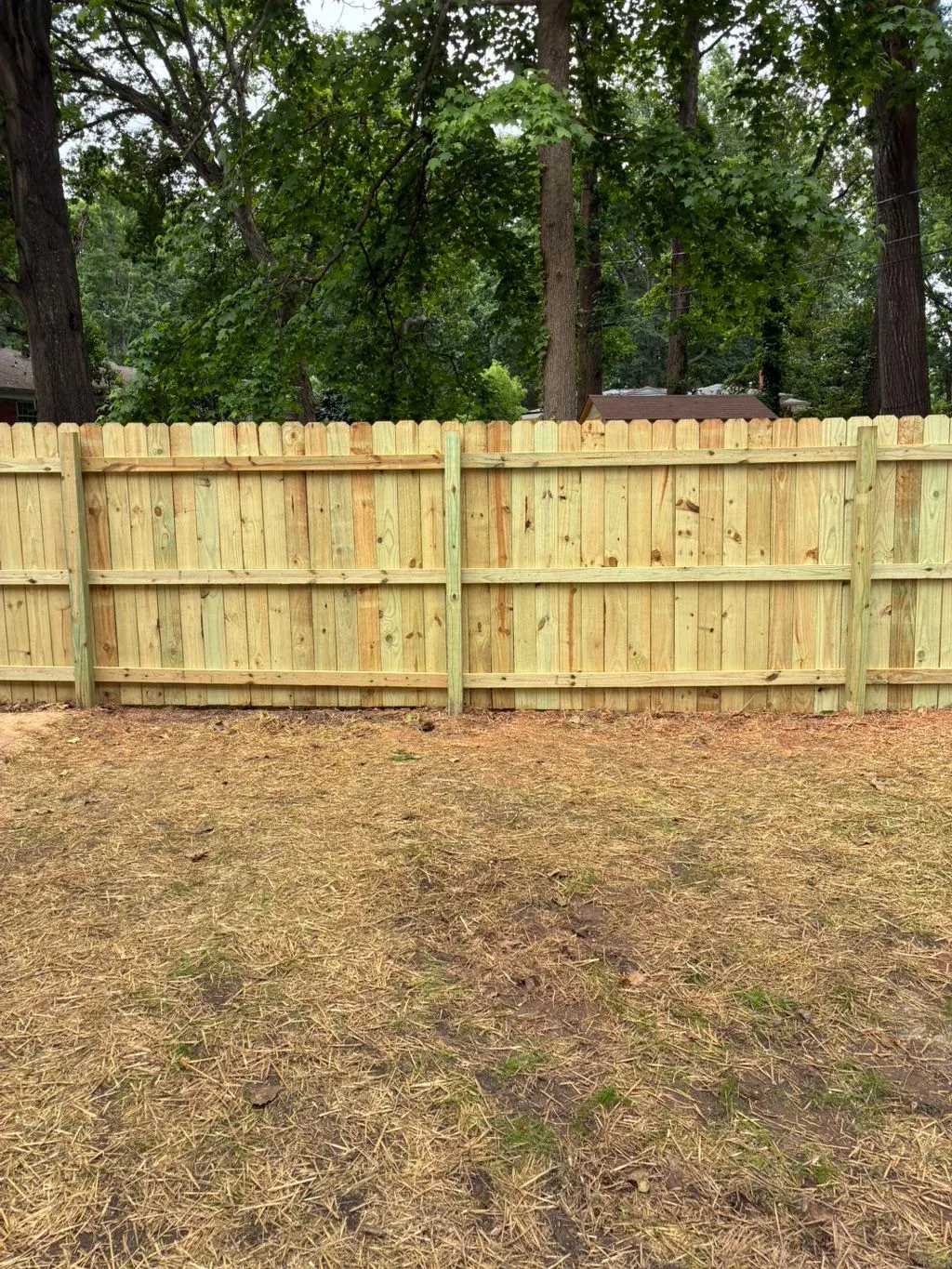
Key takeaways
- Posts decide everything. If most posts are solid, a repair usually makes sense. If many posts are loose or rotted at the ground, replacement is usually the better value.
- Isolated damage from a fallen limb, a car or a storm is a classic repair job.
- Widespread rot, heavy leaning, repeated repairs and fences that no longer meet your needs or HOA rules point toward replacement.
- An honest on-site look is the fastest way to know. Ron will tell you if a repair is all you need.
Every fence eventually shows its age. A gate starts dragging, a few boards split, a section leans after a summer storm, and suddenly you are wondering whether you are looking at a quick fix or a whole new fence. It is one of the most common questions we hear from homeowners in Charlotte, Matthews, Mint Hill, Indian Trail and the rest of the communities we serve.
The good news is that the answer is usually clear once you know what to look for. This guide walks through the warning signs, explains which problems are easy to repair and which ones point toward replacement, and gives you a simple checklist you can use on your own fence this weekend.
Start with the posts, not the boards
Boards and panels get all the attention because they are what you see. But the posts are the skeleton of the fence. If the posts are sound, almost anything above them can be repaired. If the posts are failing, new boards will not fix the real problem.
Walk the fence line and push firmly on each post at about chest height. A healthy post feels solid. A failing post wobbles, shifts in the ground or flexes near the base. On wood fences, also look closely where the post meets the soil. That ground line is where moisture sits longest and where rot usually starts.
- Solid posts with damaged boards: almost always a repair.
- A few loose or rotted posts in one area: usually a repair that replaces those posts and the sections they carry.
- Many loose or rotted posts along the whole line: usually a replacement, because the rest of the posts are likely close behind.
Problems that are usually worth repairing
Many fence problems look worse than they are. These are the situations where a repair is often the smart, economical choice.
Storm or impact damage in one area
A fallen limb, a car backing into a corner or a strong gust that pushes over a single section is a classic repair. If the damage is limited to a few sections and the rest of the fence is in good shape, we can replace the broken posts, rails and boards and blend them into the existing line.
A sagging or dragging gate
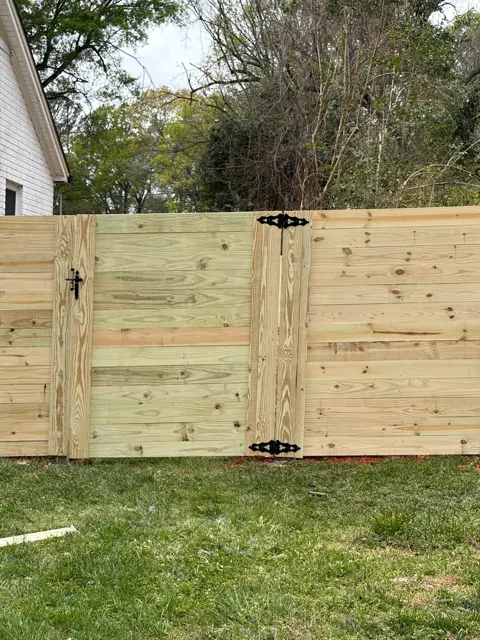
Gates take more abuse than any other part of a fence. They swing every day, carry their own weight on hinges and catch the wind. A gate that sags, drags on the ground or will not latch usually needs adjusted or upgraded hinges, a stronger gate post or a reinforced frame, not a new fence. We cover gate planning in depth in how many gates does a fence need.
A handful of cracked, split or missing boards
Wood moves as it dries and gets wet again. A few boards that crack, split or pull loose are normal over time and easy to replace one at a time. Vinyl pickets and panels can usually be swapped out too.
Loose rails or hardware
Rails that pull away from posts, rusted fasteners and loose brackets can often be re-secured or replaced without touching the rest of the fence.
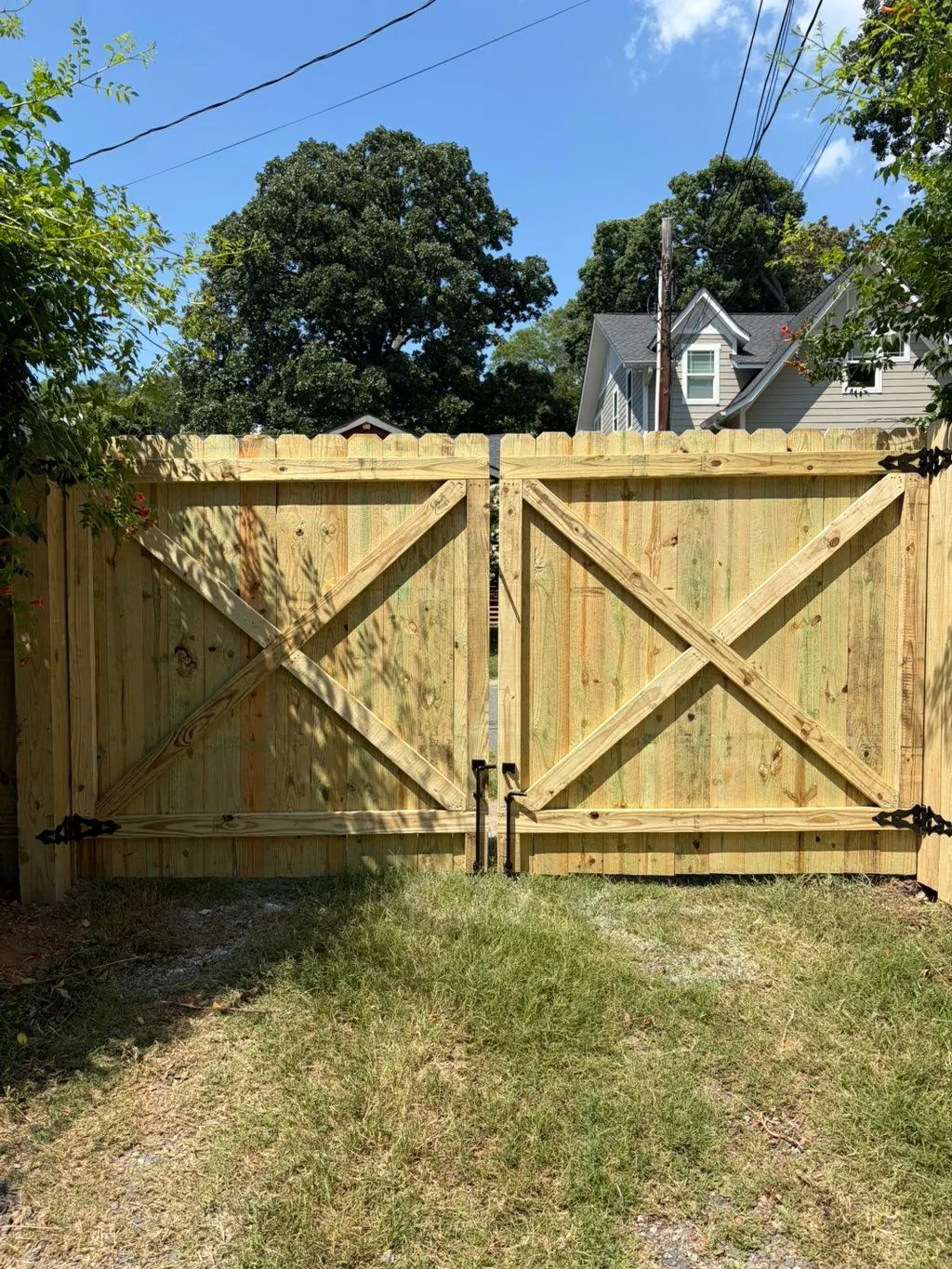
Signs it is time to replace your fence
Sometimes repairs only delay the inevitable and end up costing more than a new fence would. These are the signs that point toward replacement.
Widespread rot or insect damage
If rot shows up at the base of many posts, along the bottom of most boards or inside rails across the whole fence, the wood has reached the end of its life. Replacing it piece by piece rarely makes sense at that point.
Long stretches that lean
One leaning section can be fixed. A fence that leans along most of its length usually has a post problem everywhere, often because the posts were set too shallow, without concrete or with wood that was not rated for ground contact.
You keep paying for repairs
If you have repaired the same fence two or three times in the past few years and it keeps coming back, the repairs are buying time, not solving the problem. Add up what you have spent and compare it with a replacement estimate.
The fence no longer does its job
Maybe you got a dog that can jump a 4 ft fence, you put in a pool, you want more privacy than an old picket gives you, or your HOA updated its rules. When the fence no longer fits how you use your yard, replacement is an upgrade, not just a repair.
Mixed, patched sections that look tired
Years of patching can leave a fence with mismatched boards, different stain colors and uneven heights. If curb appeal or resale matters, a new fence can make a bigger difference than another patch.
Material-by-material: what to watch for
Wood fences
Wood is the most repairable fence material. Boards, pickets, rails and even posts can be replaced individually. The main things to watch for are rot at the ground line, boards that cup or twist badly, and gray, dry wood that has gone years without stain or sealer. Our fence maintenance guide explains how to slow these problems down.
Vinyl fences
Vinyl does not rot, but panels can crack from impact or very cold snaps, and posts can loosen if the footing shifts. Individual panels and pickets can usually be replaced, but matching an older color can be tricky because vinyl can fade slightly over time.
Aluminum fences
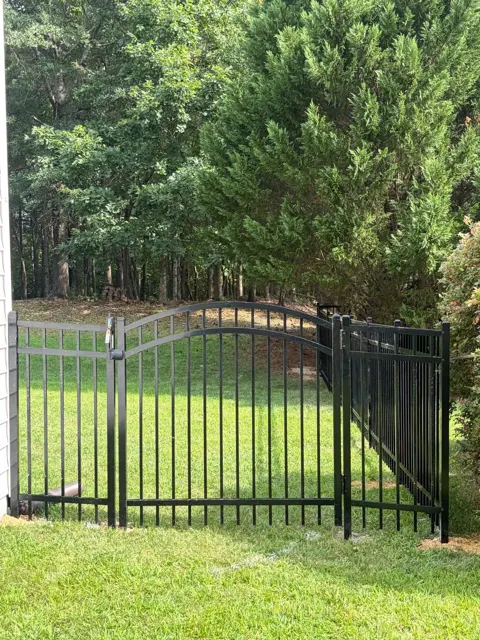
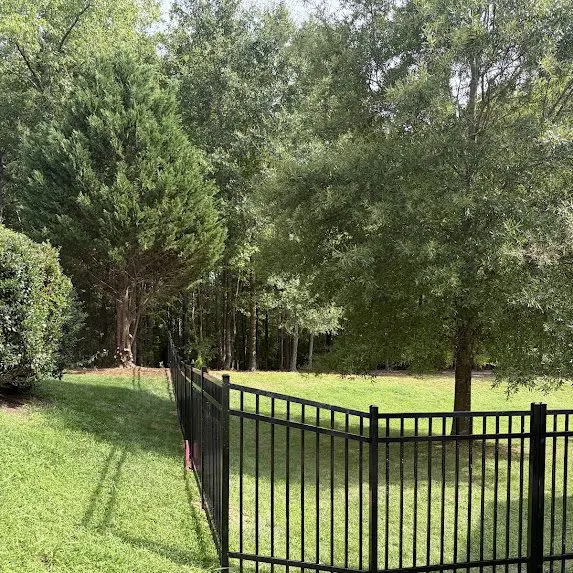
Aluminum rarely needs replacing for age alone. Common repairs include re-setting a post that shifted, replacing a bent picket or panel after an impact, and adjusting gate hinges and latches. Powder-coat scratches can be touched up.
Chain link fences
Chain link repairs often involve replacing a stretch of fabric, a bent top rail or a loose tension bar. If the fabric is rusting through in many places, or you want to upgrade from galvanized to black vinyl-coated, replacement may be the better choice.
A simple repair-or-replace checklist
Use this list as you walk your fence. If most of your answers fall in the left column, a repair is likely. If most fall in the right column, start thinking about replacement.
| Question | Points to repair | Points to replace |
|---|---|---|
| How do the posts feel? | Solid, with a few exceptions | Many wobble or show rot |
| Where is the damage? | One or two areas | Spread along the whole fence |
| What caused it? | A storm, limb or impact | Age, rot or poor original construction |
| Repair history? | Little or none | Repeated repairs in recent years |
| Does it still meet your needs? | Yes | No: pets, pool, privacy or HOA changed |
| How does it look overall? | Good apart from the damage | Patched, faded or uneven |
Partial replacement: the middle ground
You do not always have to choose between a small repair and an entirely new fence. If one side of the yard has failed but the other sides are still solid, replacing just that run can make sense. This is common when one fence line gets more shade, more sprinkler spray or more runoff than the rest.
A partial replacement works best when the new section can match the old in height, style and material. With wood, the new boards will look brighter at first and weather toward the color of the old fence over time, or you can stain the whole fence together for a uniform look. With vinyl, color matching depends on the age and brand of the original fence.
Should you repair now or wait?
It is tempting to put off a fence repair, especially if the damage is small. But fence problems tend to grow. A single leaning post puts extra load on the posts next to it. A broken board leaves a gap a dog can work at until it becomes a hole. A gate that drags wears its hinges faster and eventually pulls its post out of line.
As a general rule, fix anything that affects safety or containment right away: gates that will not latch around a pool, gaps a pet can squeeze through and sections that could fall. Cosmetic issues, such as a few gray boards or a slightly uneven top line, can wait until it is convenient, and they are often easier to handle alongside staining or other yard projects.
Timing also matters for scheduling. Spring and early summer are busy for fence companies across the Charlotte area, so if you know replacement is coming, getting an estimate in late fall or winter often gives you more flexibility. Our article on the best time of year to install a fence covers this in more detail.
What about my HOA?
Repairs that keep your fence the same usually do not need HOA approval, but replacing a fence, or changing its height, style, material or color, often does. If your neighborhood has an architectural review committee, check your covenants before work starts. We help homeowners prepare HOA paperwork with a site plan and product details, but approval is always the association's decision. Our HOA fence approval guide walks through the process.
How a repair or replacement estimate works with us
When you call (980) 339-2182 or request an estimate online, Ron comes out to look at the fence himself. He checks the posts, the damage and the fence line, talks through what you want the fence to do and tells you honestly whether a repair is enough. If it is, he will say so. If replacement makes more sense, you will get a clear written estimate that lists footage, materials, gates and old fence removal so you can compare options.
Every repair and installation is done by our own in-house crew. We do not hire subcontractors. Fences & Firepits is licensed and insured, and new installations are backed by our 2-year limited workmanship warranty.
How to make your next fence last longer
If you do replace, a few choices make a big difference in how long the new fence lasts:
- Posts set in concrete at a depth matched to the fence height and soil, which matters in Charlotte's red clay.
- Ground-contact rated lumber for wood posts.
- Galvanized or coated fasteners that resist rust and staining.
- Gate posts sized for the gate so it keeps latching cleanly.
- Sprinklers adjusted so they do not soak the fence every day.
- Soil and mulch kept off the boards so wood can dry out.
- Regular stain or sealer on wood. See when to stain a new wood fence.
If you are leaning toward replacement, it is also a good moment to rethink the material. Our material comparisons and fence style quiz can help, and the cost calculator gives you a preliminary range in about a minute.
Frequently asked questions
How do I know if my fence posts are rotten?
Push firmly on each post. If it wobbles or flexes near the ground, or a screwdriver sinks easily into the wood at the soil line, the post likely has rot.
Can you replace just one section of my fence?
Often, yes. If the posts around the damaged section can be replaced and the rest of the fence is solid, we can rebuild just that part and match it as closely as possible.
Do you repair fences you did not install?
Yes. We take on standalone fence repairs and fence post replacement. Call Ron or request an estimate and describe the damage, and he will come out to look at it.
Will new boards match my old fence?
New wood is brighter at first and weathers toward the color of older boards over time. Staining the whole fence together gives the most uniform look.
Does replacing my fence need HOA approval?
Often it does, especially if height, style, material or color changes. Check your covenants. We help prepare paperwork, but approval is up to your HOA.

About the author
Fences & Firepits team, reviewed by Ron Memallaj, owner of Fences & Firepits LLC. We're a licensed and insured fence company in Charlotte, NC, serving the city and surrounding communities since 2022. Every fence we build is installed by our own in-house crew. We don't hire subcontractors.