
Key takeaways
- We install vinyl in five main styles: full privacy, semi-privacy, lattice-top privacy, picket and ranch rail.
- Vinyl comes in white, tan and gray, in heights from 3 to 6 ft depending on style and local rules.
- Vinyl never needs painting or staining. An occasional wash keeps it looking new.
- Check HOA rules on color and style before you choose. Many communities specify one or the other.
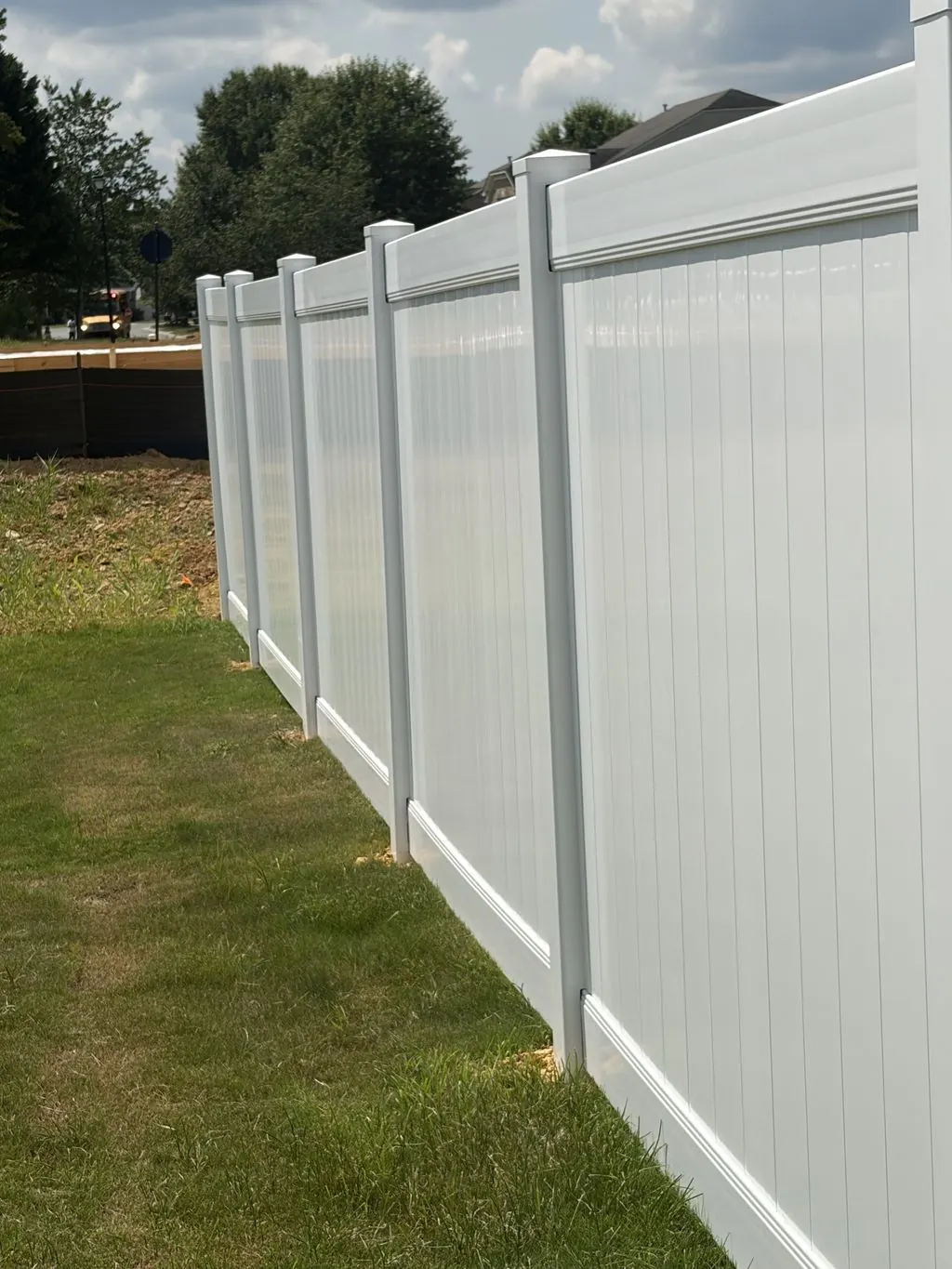
Vinyl fencing has become one of the most popular choices for homeowners across Charlotte, Matthews, Huntersville, Concord and the rest of the region, and it is easy to see why. It gives a bright, finished look that never needs paint or stain, it does not rot or splinter, and it looks the same on both sides, which neighbors appreciate.
But "vinyl fence" covers a lot of ground. A tall white privacy fence around a backyard, a tan semi-privacy fence along a patio and a classic white picket fence out front are all vinyl, and they create completely different feelings. This guide walks through every vinyl style and color we install, where each one works best and what to think about before you decide.
Why homeowners choose vinyl
Before we get to styles, it helps to understand what vinyl does well, because that shapes which style makes sense for you.
- Low maintenance: no painting, staining or sealing. A wash once or twice a year is usually enough.
- No rot or insects: vinyl does not absorb water the way wood does, which matters in our humid summers.
- Finished on both sides: there is no "bad side" facing the neighbors.
- Clean, consistent look: panels are uniform, so the fence looks crisp and even.
- Repairable: damaged panels or pickets can usually be replaced without rebuilding the whole fence.
The tradeoffs are a higher starting cost than wood and fewer custom style options. You can read the full comparison in wood vs. vinyl fencing.
Style 1: Full privacy vinyl
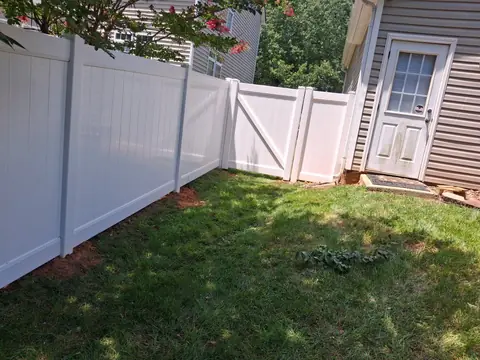
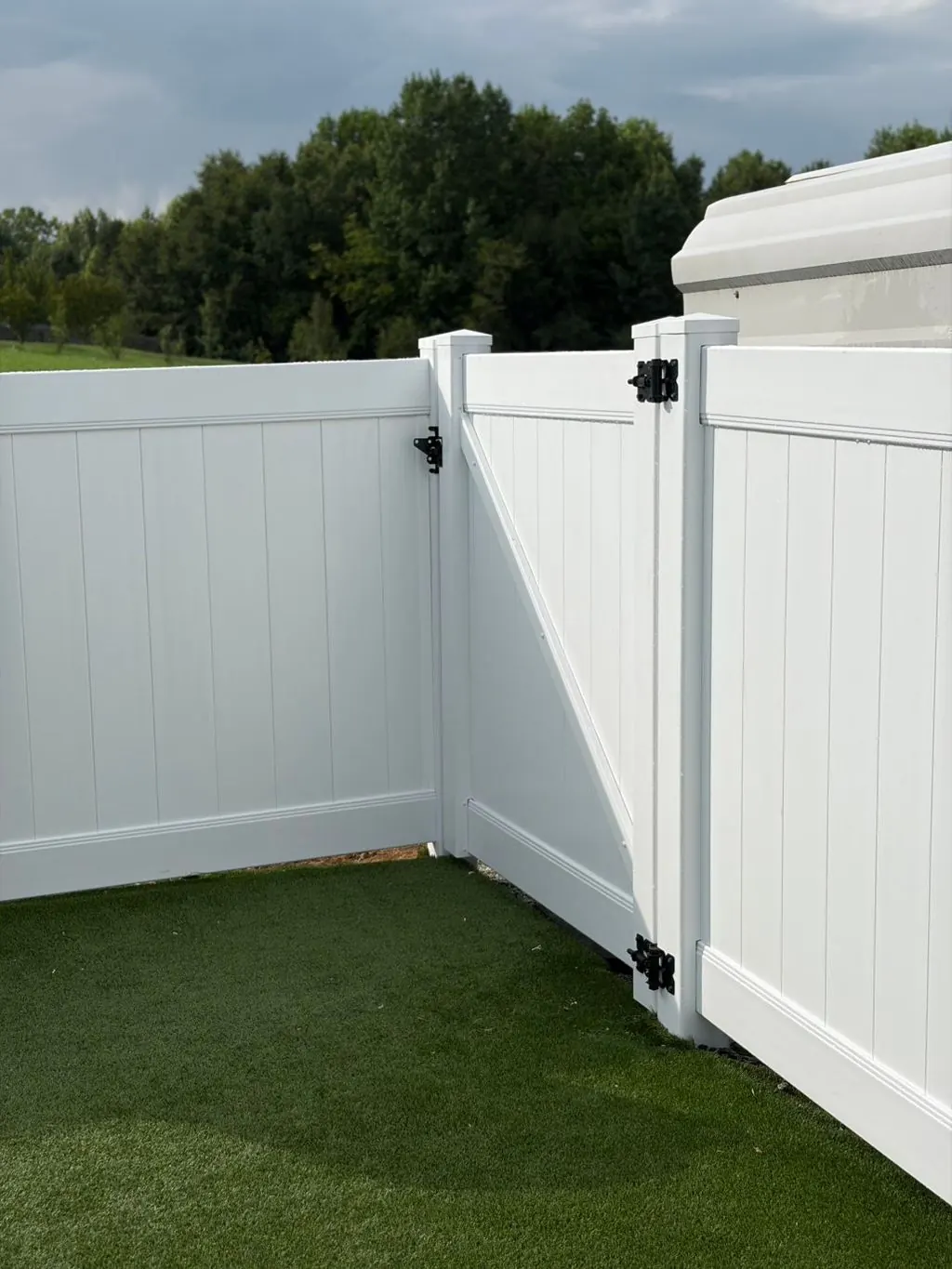
Full privacy vinyl uses solid tongue-and-groove panels with no gaps. It is the most popular vinyl style we install, and the go-to choice for families who want a private backyard for kids, pets and entertaining without weekend maintenance.
Where it works best
- Backyards that need complete privacy from neighbors or a busy street
- Dogs that react to what they see on the other side
- Around patios, hot tubs and outdoor living areas
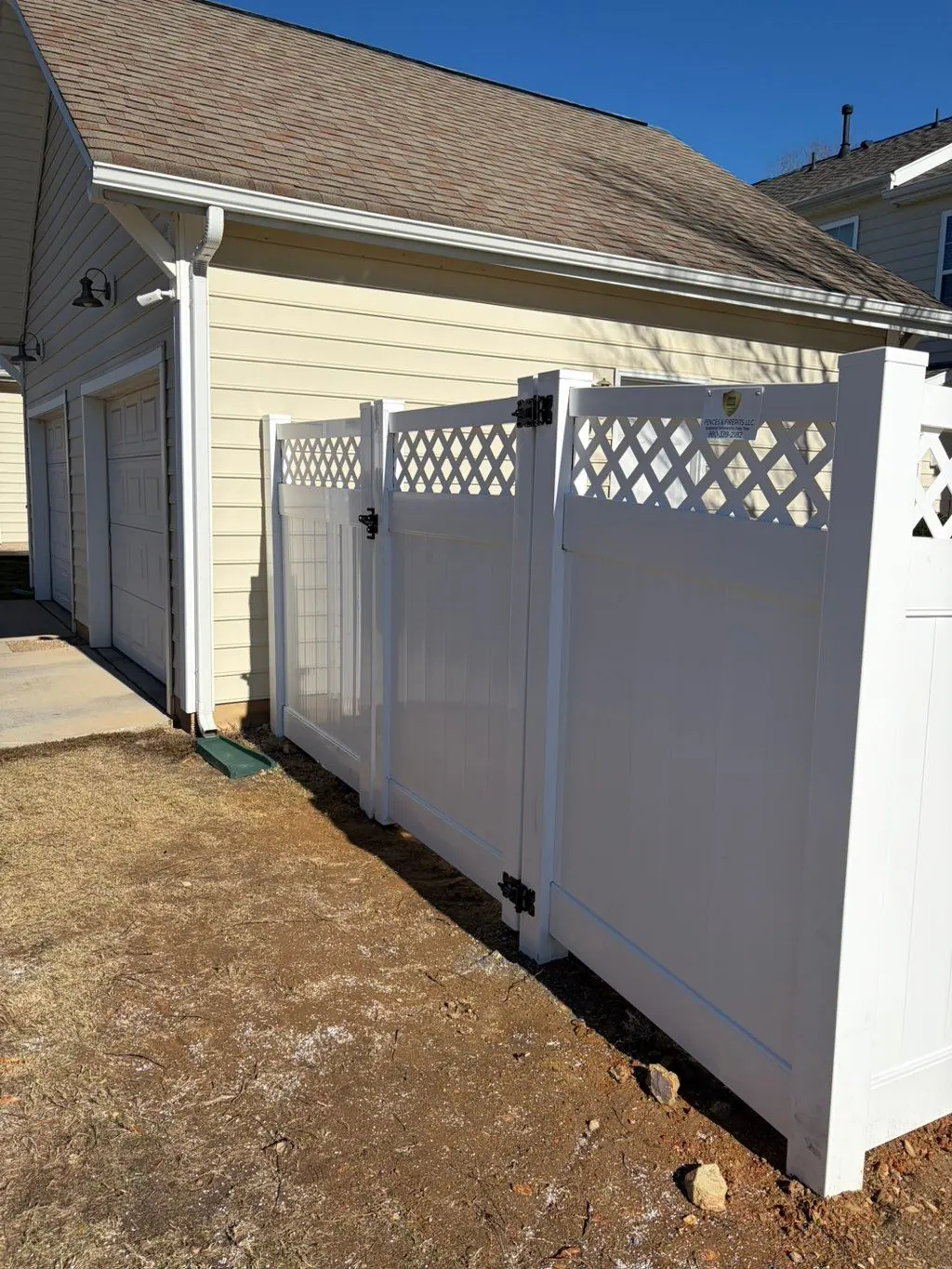
- Hiding AC units, trash cans or utility areas
Things to consider
Solid panels catch the wind, so post setting and spacing matter, especially on open lots. On slopes, panels are usually stepped, which can leave small triangular gaps under the low side of each section. We plan for that during your estimate. We see full privacy vinyl most often at 6 ft, though your town and HOA set the limits.
Style 2: Semi-privacy vinyl
Semi-privacy vinyl uses boards or pickets with small spaces between them. You get a defined, mostly screened boundary that still lets light and air through. It feels less closed in than full privacy while still blocking most direct views.
Where it works best
- Yards where you want some screening but not a solid wall
- Windy or exposed lots, since gaps reduce wind load
- Gardens and side yards where airflow helps plants
- Neighborhoods where a fully solid fence feels too heavy
Style 3: Lattice-top privacy vinyl
Lattice-top vinyl combines a solid privacy panel with a decorative lattice band across the top. It softens the look of a tall fence, adds a custom finished detail and is a favorite in HOA neighborhoods because it looks polished from both the street and the neighbor's yard. You can see a similar approach in wood on our lattice-top privacy fence project in Charlotte.
Where it works best
- Backyards that border a neighbor's patio or deck
- HOA communities that favor decorative tops
- Homes with traditional or cottage styling
- Anywhere you want privacy without a plain, flat top line
Style 4: Vinyl picket
The classic picket fence, in a material that never needs repainting. Vinyl picket fences are usually 3 to 4 ft tall and are built to define a space and add curb appeal rather than block views.
Where it works best
- Front yards, where local rules often limit height
- Garden borders and play areas
- Cottage, farmhouse and traditional homes
- Containing small, calm dogs
Picket spacing, top style and post caps all change the look. Pointed, flat and scalloped tops each give a different feel. Our front yard fence ideas post has more inspiration.
Style 5: Vinyl ranch rail
Ranch rail, sometimes called post-and-rail, uses two, three or four horizontal rails between posts. It is an open fence that marks a boundary with a clean, country look. It is common on larger lots, along driveways and around pastures.
Where it works best
- Large or rural lots in places like Waxhaw, Monroe, Harrisburg and Mount Pleasant
- Marking property lines without blocking views
- Lining driveways and entrances
Ranch rail on its own will not hold most dogs. If pets are part of the plan, ask about adding wire mesh, or consider aluminum with puppy pickets instead. For a rustic wood alternative, see our split rail fence guide.
Choosing a vinyl color: white, tan or gray
We install vinyl in three colors. Each one changes how the fence sits with your home and landscaping.
White
White is the classic vinyl look: bright, crisp and clean. It pairs beautifully with traditional homes, white trim, brick and green lawns. It does show dirt, pollen and mildew more readily than darker colors, so plan on an occasional wash, especially on shady sides of the yard. Spring pollen season in Charlotte can turn any white surface yellow for a few weeks, and a hose rinse takes care of it.
Tan
Tan is warmer and softer than white. It blends well with beige, brown and earth-tone siding and stone, and it hides dirt and pollen better than white. Many homeowners choose tan when they want vinyl's low maintenance with a less stark look.
Gray
Gray is a modern, understated option that pairs well with gray, charcoal and white homes and with contemporary landscaping. It reads as more muted than white and blends into the yard.
Heights: what is typical for each style
We install vinyl in heights from 3 to 6 ft. As a general guide:
| Style | Typical use | Common heights |
|---|---|---|
| Full privacy | Backyard privacy | 6 ft |
| Semi-privacy | Screening with airflow | 4 to 6 ft |
| Lattice-top privacy | Decorative privacy | 6 ft overall |
| Picket | Front yards, gardens | 3 to 4 ft |
| Ranch rail | Large lots, boundaries | 3 to 5 ft |
Local zoning and HOA rules may limit height, especially in front yards. We confirm allowable heights during your on-site estimate. Our fence height guide explains what usually drives those limits.
Mixing vinyl styles on one property
Many homes use more than one vinyl style. A common combination is full privacy along the back and sides, with a lower picket or semi-privacy section near the front corners of the house where local rules often limit height. Keeping the same color across styles ties everything together. Another popular approach is vinyl privacy in back with black aluminum around a pool, which keeps sightlines open where safety matters.
Vinyl gates
Vinyl gates are built to match the fence style and color. Walk gates are usually 4 or 5 ft wide. Double gates from 8 to 12 ft give room for mowers, trailers and equipment. Wider vinyl gates often use an internal metal frame to stay square and prevent sagging. If you have a pool, self-closing, self-latching hardware is a must. See how many gates a fence needs for planning tips.
Caring for a vinyl fence
Vinyl care is simple, but a little attention keeps it looking new:
- Rinse off pollen and dust in spring and early summer.
- Wash once or twice a year with mild soap and water and a soft brush. Avoid harsh abrasives that scratch the surface.
- Treat mildew on shady sides with a gentle cleaner made for vinyl.
- Keep sprinklers off the fence to reduce hard-water spots and mildew.
- Trim vines and shrubs so they do not hold moisture against the panels.
- Check gates each season for smooth swinging and secure latching.
HOA approval for vinyl fences
Vinyl is widely accepted in Charlotte-area HOAs, but many communities specify color, style or height. Some require white only, some require a particular style and some limit privacy fences to backyards. Read your covenants and include the style, color and height in your architectural request with a site plan. We help prepare paperwork, but approval is always up to your HOA. See our HOA approval checklist and HOA approval guide.
Cost: what affects the price of vinyl
Vinyl has a higher starting rate than wood, and the style you choose affects price. Full privacy and lattice-top panels use more material than picket or ranch rail. Height, total footage, gates and site conditions such as slopes and old fence removal also matter. See published starting rates on the fence pricing page and get a preliminary range in the cost calculator.
Matching vinyl to your home's architecture
The best fence looks like it was always part of the house. A few patterns we see work well across the Charlotte area:
- Traditional brick homes in neighborhoods like Ballantyne, Weddington and Marvin often look best with white or tan lattice-top privacy in back and white picket in front. The lattice echoes classic trim details.
- Craftsman and farmhouse homes pair naturally with picket and ranch rail, especially in white. A semi-privacy panel works well where a little screening is needed.
- Newer transitional homes with gray or white siding and black windows often look sharp with gray full privacy vinyl or white privacy paired with black aluminum.
- Earth-tone homes with beige, brown or stone exteriors usually suit tan better than bright white, which can look stark beside warm colors.
Look at the lines of your house, too. Homes with lots of horizontal siding and trim can handle a solid privacy panel well, while homes with columns, porches and decorative trim often look better with the added detail of lattice or picket tops.
Common mistakes when choosing vinyl
- Choosing a color before checking HOA rules. Some communities allow only one color, and finding out after the order is placed is frustrating.
- Picking ranch rail for a dog. It is beautiful on a big lot but too open to contain most pets on its own.
- Forgetting about gate widths. If you will ever need a mower, trailer or small equipment in the backyard, plan a double gate from the start.
- Ignoring the slope. Stepped panels on a steep yard leave gaps that small pets can use. Talk through grade changes during the estimate.
- Running the fence right against shrubs. Leave a little room so you can wash the fence and plants are not pressed against the panels.
How to choose your vinyl style
- Need full backyard privacy? Full privacy vinyl.
- Want screening with light and air? Semi-privacy.
- Want privacy with a decorative touch? Lattice-top privacy.
- Defining a front yard or garden? Picket.
- Marking a large property? Ranch rail.
Try different styles and colors in the Fence Design Studio, see real work on our white vinyl privacy fence project, or call Ron at (980) 339-2182 to talk it through. Fences & Firepits is licensed and insured, every installer is on our own payroll with no subcontractors, and installation is backed by our 2-year workmanship warranty.
Frequently asked questions
What colors does vinyl fencing come in?
We install vinyl in white, tan and gray.
Does white vinyl get dirty?
White shows pollen, dust and mildew more than tan or gray. A rinse in spring and a wash once or twice a year keeps it bright.
Is vinyl fencing good for dogs?
Full privacy vinyl is a great choice for most dogs because it blocks views and has no gaps. Ranch rail on its own is too open to contain most dogs.
Can vinyl fencing be installed on a slope?
Yes. Vinyl panels are usually stepped down a slope. We plan how to handle the small gaps under each step during your estimate.
How tall can a vinyl privacy fence be?
We install vinyl up to 6 ft. Your town and HOA may set lower limits, especially in front yards.

About the author
Fences & Firepits team, reviewed by Ron Memallaj, owner of Fences & Firepits LLC. We're a licensed and insured fence company in Charlotte, NC, serving the city and surrounding communities since 2022. Every fence we build is installed by our own in-house crew. We don't hire subcontractors.