
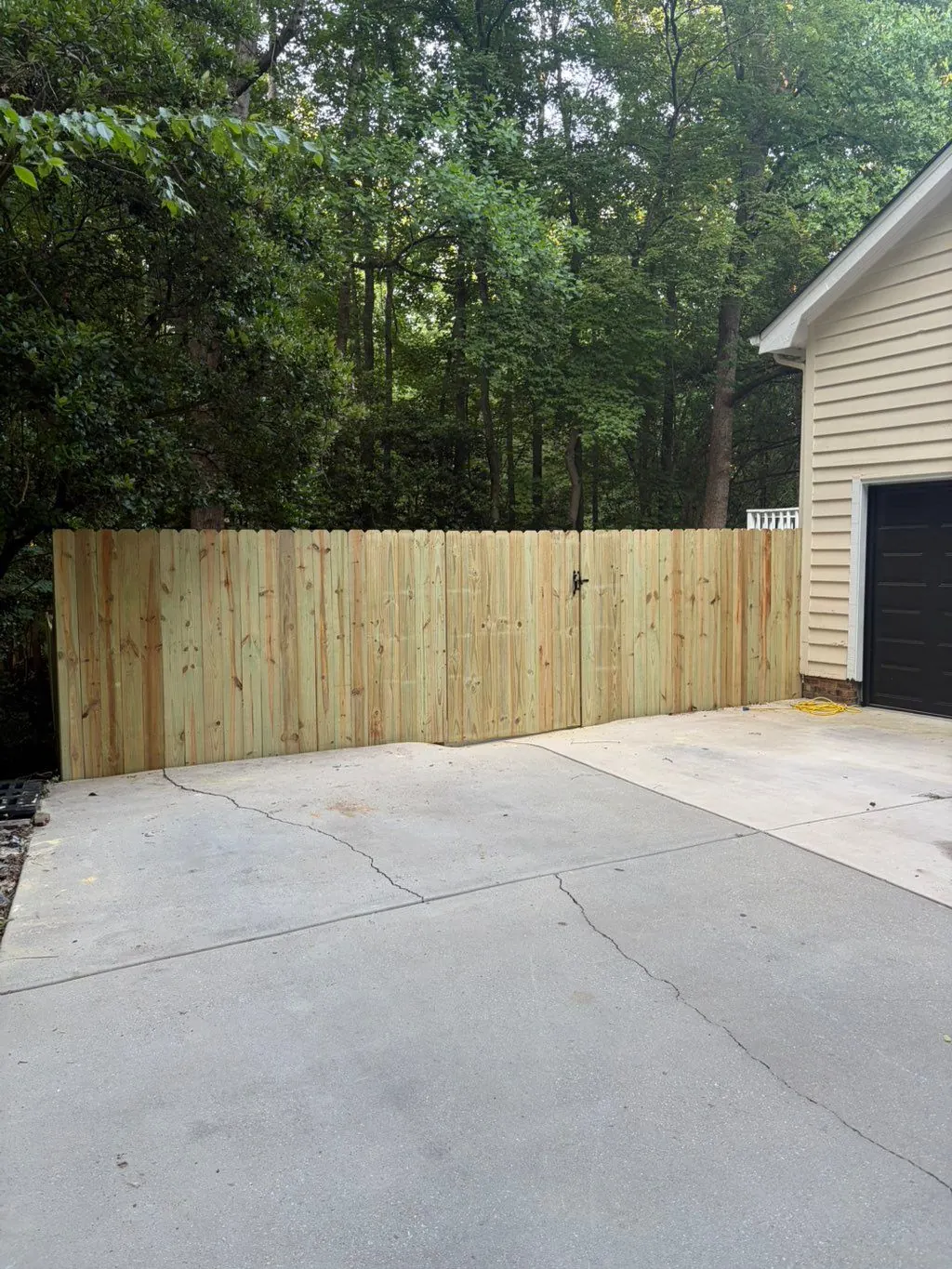
Key takeaways
- Know exactly where your property line is before you build. A plat, survey or pinned corners are the best guides.
- Many homeowners set the fence slightly inside their line to avoid disputes and allow maintenance.
- Talk with neighbors early about the fence style, height and which side faces them.
- This is general information, not legal advice. For boundary disputes, talk with a licensed surveyor or attorney.
A new fence should make you happier with your home, not start a feud with the family next door. Yet the property line is where most fence problems begin. A fence that crosses onto a neighbor's land, blocks a drainage path or surprises someone who was not consulted can lead to frustration, removal costs and strained relationships.
The good news is that these problems are almost always avoidable with a little planning. This guide covers how to find your property line, how to approach neighbors, what to know about shared fences and how we help plan a fence line that works. It is general information for homeowners in the Charlotte, NC and Fort Mill, Rock Hill and Tega Cay, SC areas, not legal advice. For specific boundary questions, talk with a licensed surveyor or a real estate attorney.
Step 1: Find your property line
You cannot plan a fence well until you know where your property ends. Do not rely on where the lawn changes, where a previous owner's fence sat or where the neighbor mows. These are often off by a few feet or more.
Your plat or survey
When you bought your home, you likely received a plat or survey in your closing documents. It shows the dimensions of your lot, the boundary lines and often easements. A survey done for your purchase is a great starting point, but keep in mind it reflects the property at that time.
County property records and GIS maps
Mecklenburg, Union, Cabarrus and York counties all have online GIS mapping tools that show parcel lines. These are helpful for a general picture, but they are not precise enough to locate a fence line. Lines on GIS maps can be off by several feet.
Property pins
Surveyors mark lot corners with metal pins or monuments, usually set in the ground. They can be buried under grass, mulch or soil. If you can find the pins at each corner, they give a much more accurate picture of the line than a GIS map.
A new survey
If your pins are missing, your documents are unclear or a neighbor disagrees about the line, hiring a licensed surveyor to mark the boundary is the most reliable way to know for sure. It costs money up front, but it is far cheaper than moving a fence later.
Step 2: Check for easements
Easements give someone else, often a utility or the HOA, the right to use part of your property for a specific purpose. Common examples include utility easements along the back or side of a lot and drainage easements where stormwater flows. Your plat usually shows them.
Fences in easements may be restricted or may need to be removed if a utility needs access. Drainage easements matter in particular because a fence that blocks water flow can cause flooding on your property or a neighbor's. If your fence needs to cross an easement, find out what is allowed before you build. Your HOA and the easement holder are the places to ask.
Step 3: Decide how far inside the line to build
Many homeowners choose to build the fence slightly inside their property line rather than exactly on it. There are good reasons for this:
- It removes doubt. If the fence is clearly on your property, there is little to dispute.
- It allows maintenance. A small gap lets you stain, wash or repair your side without stepping onto the neighbor's land, though you will still need their cooperation for the outside face.
- It accounts for footings. Concrete footings are wider than the posts. Setting the fence a bit inside keeps footings on your side too.
The tradeoff is that the strip of land outside the fence is still yours, and you are responsible for it. Some homeowners set the fence just inside the line. Others leave more room. Your HOA or town may also have setback rules. Ron talks through options during the estimate.
Step 4: Talk with your neighbors
You may not be legally required to ask a neighbor before building on your own property, but a friendly conversation goes a long way. Most neighbor complaints are about surprise, not the fence itself.
What to share
- Where the fence will go and how you determined the line
- The material, style and height
- Which side will face them
- The rough timing of installation
- Whether any shrubs, trees or existing fences near the line will be affected
Why it helps
- Neighbors may know where pins are or have their own survey.
- They may want to share the cost of a shared fence.
- They may have a dog, a garden or drainage concerns you were not aware of.
- It builds goodwill that matters for years.
If a neighbor disagrees about the line, pause and get a survey rather than building and hoping for the best.
Which side faces the neighbor?
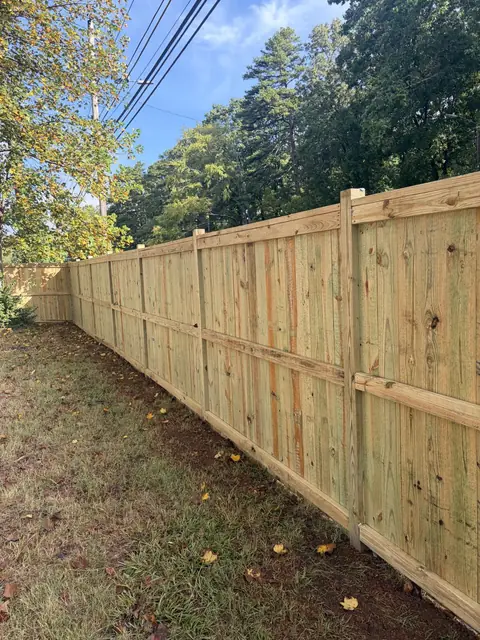
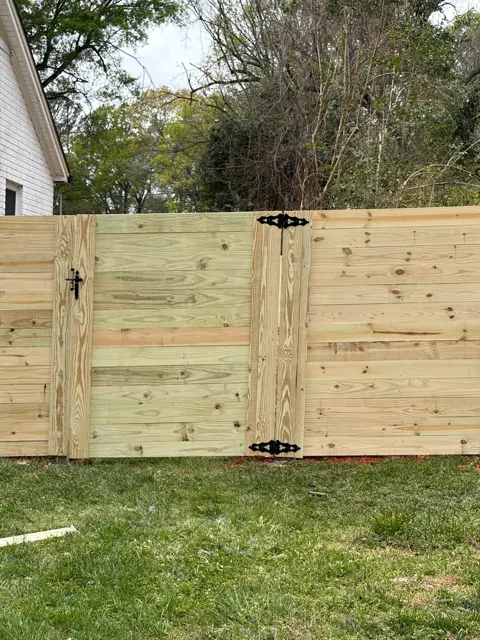
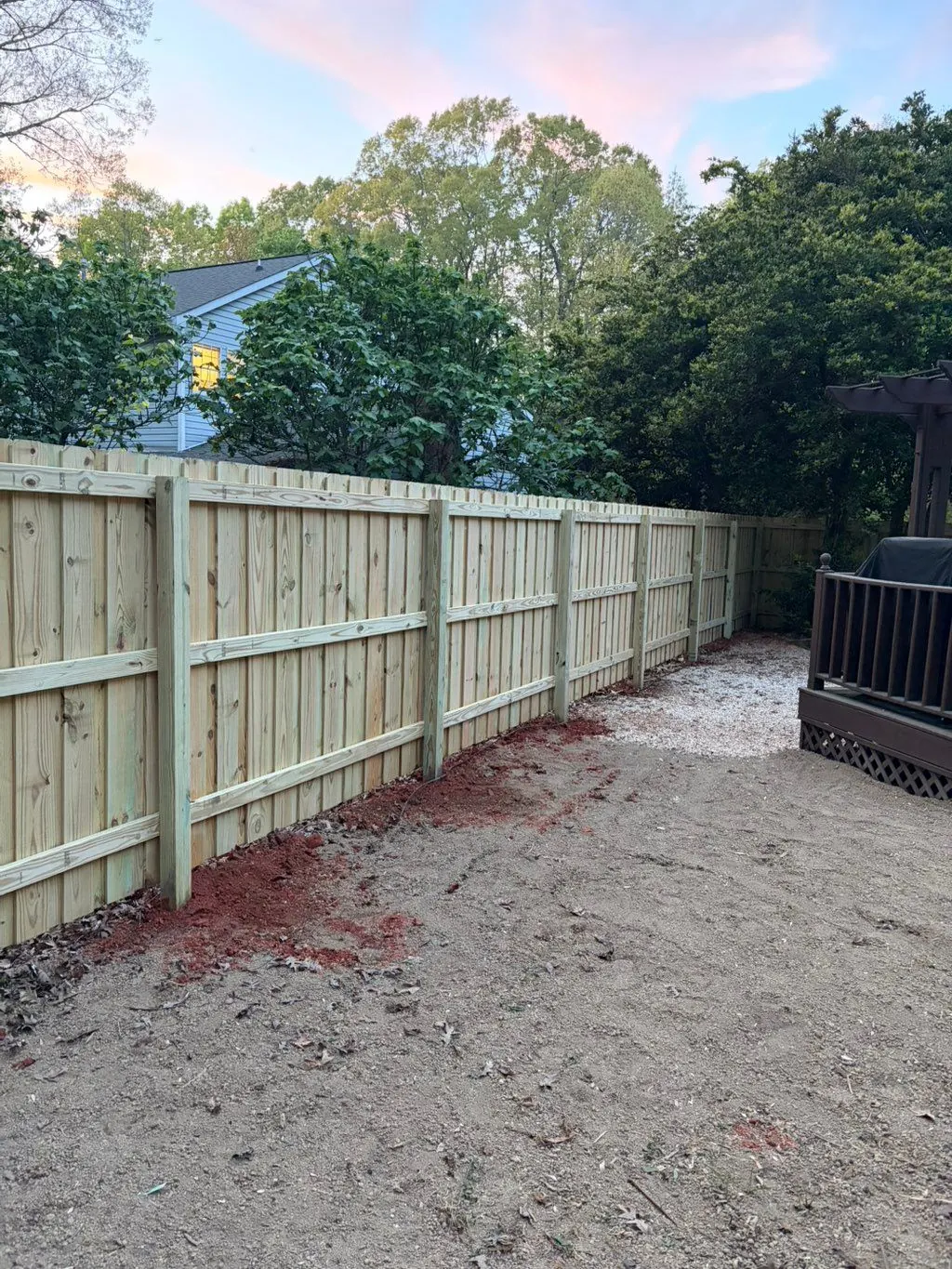
Many wood privacy fences have a finished side, with the boards, and a structural side, with the posts and rails. It is common courtesy, and sometimes an HOA or town rule, for the finished side to face outward toward neighbors and the street. Check your covenants.
If you want both sides to look finished, consider styles that look good from both sides:
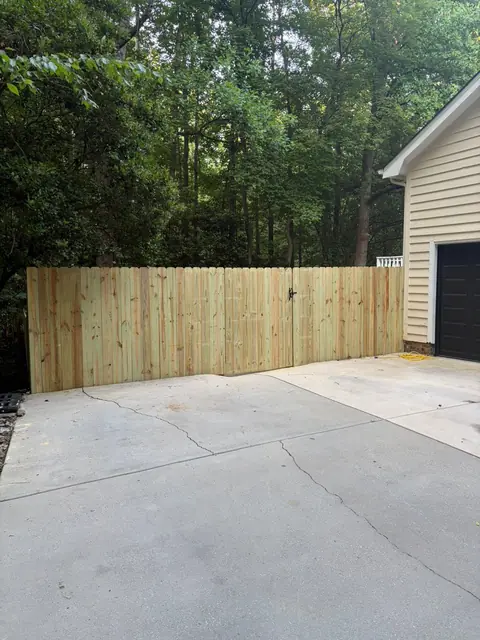
- Shadowbox and board-on-board wood show boards on both faces.
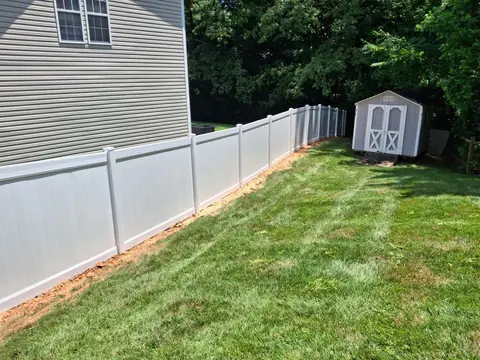
- Vinyl privacy looks the same on both sides.
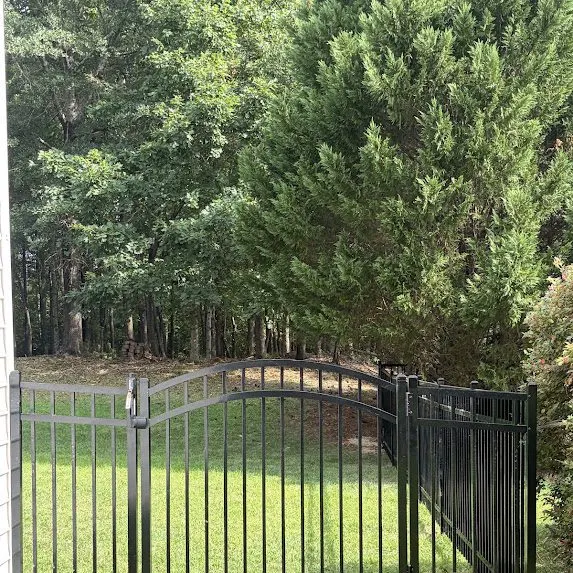
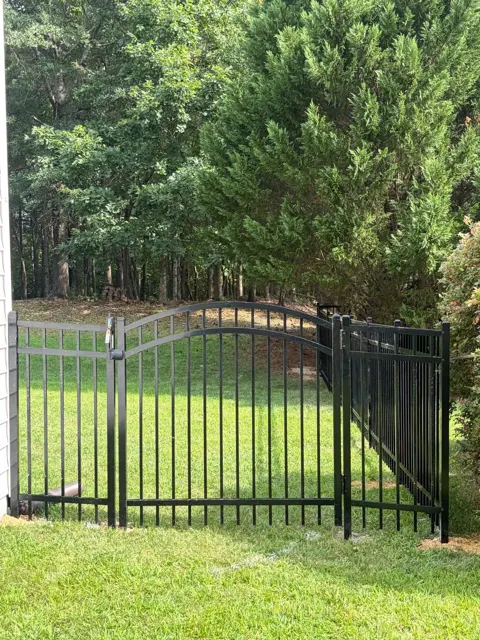
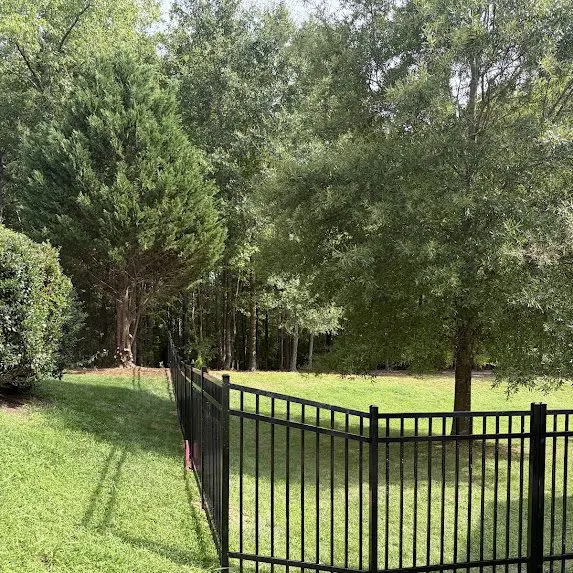
- Aluminum and chain link are see-through and look similar from either side.
See board-on-board vs. standard privacy and our privacy fence guide for more.
Shared fences and cost splitting
Sometimes neighbors agree to build one fence on the shared line and split the cost. This can be a great arrangement, but it needs clear agreement up front:
- Where exactly the fence will go
- The material, style, height and which side faces whom
- How the cost will be divided
- Who is responsible for maintenance and repairs
- What happens if one owner sells or wants to replace it
Put the agreement in writing. For anything complex, a real estate attorney can help. Some homeowners skip shared arrangements entirely and build fully on their own property to keep things simple.
Connecting to an existing neighbor fence
If a neighbor already has a fence, you may be tempted to tie into it rather than build a parallel line. That can save money, but only with the neighbor's permission, since their fence is their property. It also means your yard's enclosure depends on their fence's condition. If they remove or replace it, you could have a gap. Discuss it openly, and consider whether a separate fence on your side is the safer long-term choice.
Removing an old fence near the line
If there is an old fence along the line, find out who owns it before removing it. It may be yours, your neighbor's or shared. If it is yours, we can remove and haul away the old fence as part of your project. If it belongs to a neighbor, it is their decision. Our repair or replace guide can help you decide what to do with an aging fence.
Trees, shrubs and roots near the line
Property lines are often lined with trees and shrubs, some of which may belong to your neighbor. Fence posts need to avoid major roots, and the fence line may need to shift around trunks. Talk with your neighbor if their plants are near the line, and see our guide to building fences around trees and roots.
Drainage and grading
Water does not respect property lines. Many Charlotte-area lots drain from one yard to the next, and a fence with a tight bottom gap or a solid base can act like a dam during heavy storms. That can cause pooling on your side or push water toward a neighbor. Leaving an appropriate gap at the bottom of privacy fences, especially across low spots and drainage paths, helps water keep moving. If your yard has known drainage issues, point them out during the estimate.
HOA rules and property lines
HOAs often have rules about fence placement relative to the property line, how fences tie into neighbors' fences, which side faces out and where fences can sit in relation to the front of the house. Some communities with common areas or lakes have rules about fences that border those spaces. Read your covenants before finalizing the fence line, and include a site plan with the fence location in your architectural request. See our HOA approval checklist. We help prepare paperwork, but approval is always up to your HOA.
What if a dispute comes up?
If you and a neighbor disagree about where the line is, stop and get clarity before building:
- Compare your plats and surveys.
- Look for property pins together.
- Hire a licensed surveyor to mark the line if documents do not agree.
- Consider building inside the disputed area while you sort it out.
- For a serious dispute, talk with a real estate attorney.
A short delay is far better than building a fence you might have to move.
Utility lines
Before any digging, underground utilities must be located. North Carolina and South Carolina both use 811 for utility locate requests. We arrange locates before installation, and we work around marked lines. Private lines, such as those for irrigation systems, outdoor lighting or a detached garage, are not marked by 811, so let us know if you have them.
How we help plan your fence line
During your free estimate, Ron walks the property with you and talks through:
- Where you believe the property line is and how you know
- Whether a survey makes sense before installation
- Easements, drainage paths and trees along the line
- How far inside the line to set the fence
- Which side faces neighbors and the street
- Gate locations and sizes
- How the fence ties into the house or existing fences
We then build the fence where you have directed us, with posts set for Charlotte's clay soils by our own in-house crew. Fences & Firepits is licensed and insured, we never use subcontractors and our installations are backed by a 2-year workmanship warranty.
Quick checklist
- Find your plat or survey.
- Locate property pins, or order a survey if needed.
- Check for easements and drainage paths.
- Decide how far inside the line to build.
- Read your HOA rules on placement and orientation.
- Talk with neighbors.
- Submit HOA paperwork and get approval.
- Let us know about private underground lines.
Neighbor etiquette during installation
Installation day goes smoother when neighbors know what to expect. A quick heads-up about the date, the noise of post-hole digging and the possibility of a truck parked nearby keeps everyone comfortable. If our crew may need to step onto the neighbor's side to set panels or finish the outside face, ask your neighbor ahead of time. Most people are happy to help when they are asked first.
After the fence is up, offering the neighbor a look at the finished side and sharing how to reach you if a branch falls on the fence or a board is damaged builds goodwill for years. Fences last a long time, and so do neighbor relationships.
Plan your layout in the Fence Design Studio, read our fence height guide or call Ron at (980) 339-2182 to schedule your free estimate.
Frequently asked questions
Can I build a fence right on the property line?
Rules vary by town and HOA. Many homeowners build slightly inside their line to avoid disputes and keep footings on their own property. Check local rules and your covenants.
Do I need my neighbor's permission to build a fence?
Often not if the fence is fully on your property, but talking with neighbors first prevents most problems. For shared fences or connecting to their fence, you need their agreement.
Which side of the fence faces the neighbor?
It is customary, and sometimes required by HOAs, for the finished side to face outward. Vinyl, shadowbox and board-on-board styles look good on both sides.
Do you survey property lines?
No. We are fence installers, not surveyors. If the line is uncertain, we recommend hiring a licensed surveyor before installation.
Who calls 811 before digging?
We arrange utility locates before installation. Private lines like irrigation or landscape lighting are not marked by 811, so let us know about them.

About the author
Fences & Firepits team, reviewed by Ron Memallaj, owner of Fences & Firepits LLC. We're a licensed and insured fence company in Charlotte, NC, serving the city and surrounding communities since 2022. Every fence we build is installed by our own in-house crew. We don't hire subcontractors.