
Key takeaways
- Route fence lines around trunks, with enough space for the tree to grow.
- Shift post locations to avoid cutting major roots.
- Shaded wood fences need more attention to moisture and mildew.
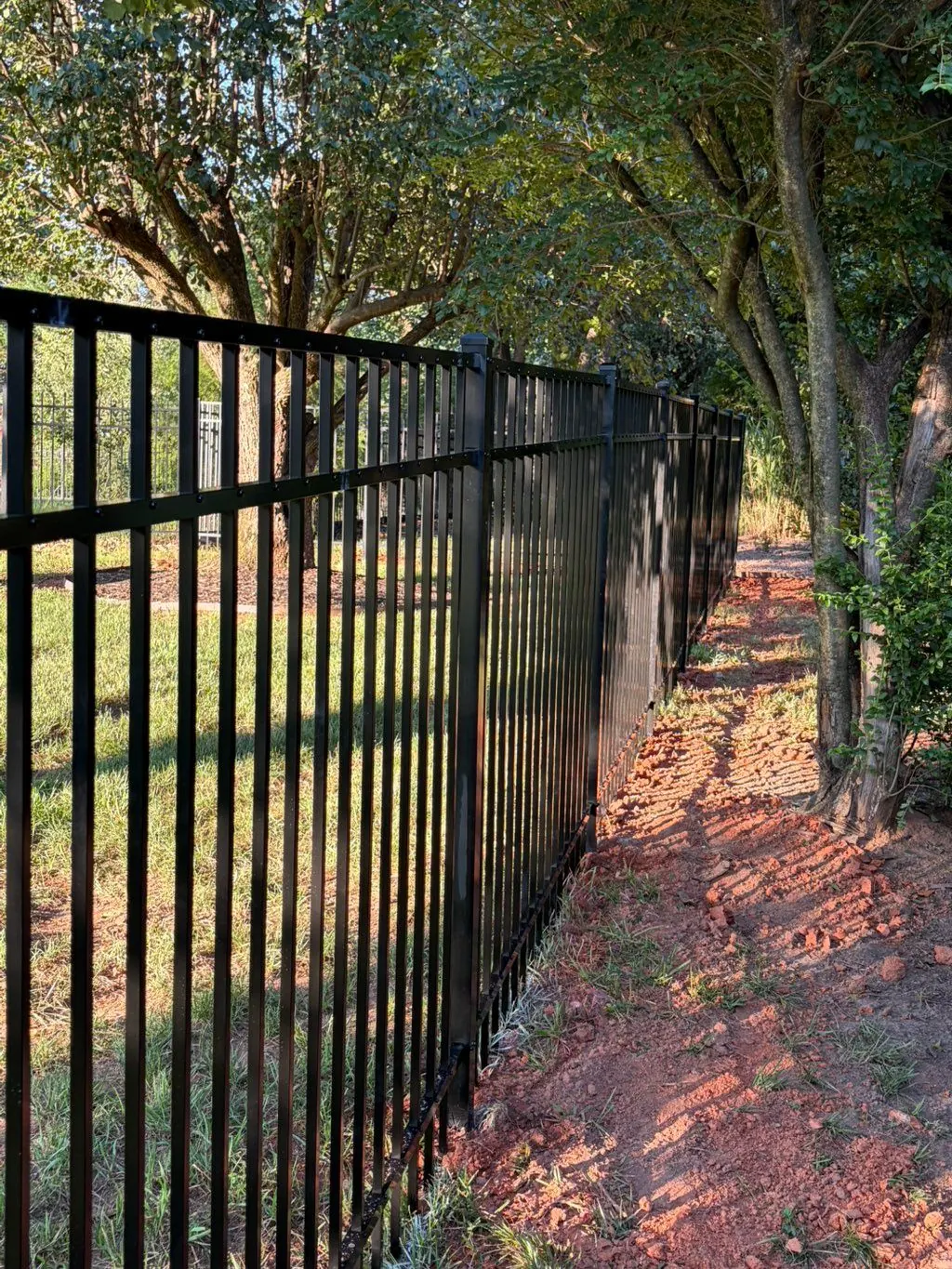
- Open styles like aluminum and split rail work beautifully along tree lines.
Charlotte is known as the City of Trees, and the surrounding towns are no different. Mature oaks, maples, pines, sweetgums and poplars line backyards from Myers Park to Mint Hill, and many newer neighborhoods in Waxhaw, Huntersville and Harrisburg back up to wooded buffers. Trees are a big part of why people love their yards here.
They also complicate fence building. Roots get in the way of post holes, trunks sit right on the fence line, limbs fall in storms and shade keeps wood fences damp. With good planning, you can have a fence and healthy trees. This guide explains how.
Why trees and fences need careful planning
- Roots: digging post holes through major roots can damage or destabilize a tree.
- Trunks: fences built too close to a trunk can be pushed out of line as the tree grows.
- Limbs: falling branches are a common cause of fence damage, especially during summer storms.
- Shade and moisture: wood fences in deep shade stay damp longer, which can lead to mildew and faster wear.
- Leaves and debris: leaves pile up against fences, holding moisture.
Routing the fence line around trees
The simplest solution is often to route the fence around a tree rather than through or against it. Options include:
- Jog the fence line around the tree, with a corner on either side.
- Leave the tree outside the fence by moving the line inward slightly.
- Leave the tree inside the fence by moving the line outward, if you own the land.
- End a section at the tree and start again on the other side, leaving a gap where pets are not a concern.
Leave enough space between the fence and the trunk for the tree to keep growing. Fences built tight against a trunk can be pushed, bent or broken as the trunk expands over the years.
Working around roots
Tree roots spread much farther than most people realize, often well past the outer edge of the branches. Most are in the top foot or two of soil. Post holes need to go deeper than that, so roots are often in the way.
How we handle roots
- Shift post locations. Moving a post a short distance along the line can avoid a major root entirely. Small adjustments to post spacing are common on wooded lots.
- Avoid cutting large roots. Cutting major structural roots can harm the tree and make it less stable in storms.
- Small roots are usually fine. Cutting small feeder roots for a post hole is typically not a problem for a healthy tree.
- Consider the root zone. The area closest to the trunk is the most sensitive. We keep posts farther away whenever possible.
If you have a particularly valuable or stressed tree near the fence line, consider consulting a certified arborist before installation.
Choosing a fence style for wooded lots
Some styles work better along tree lines than others.
Aluminum
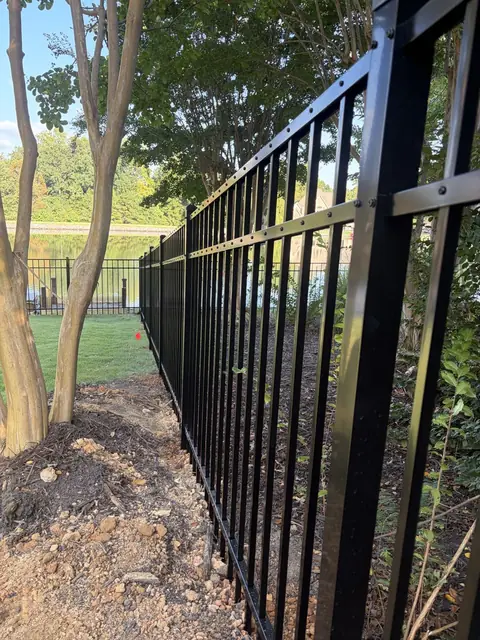
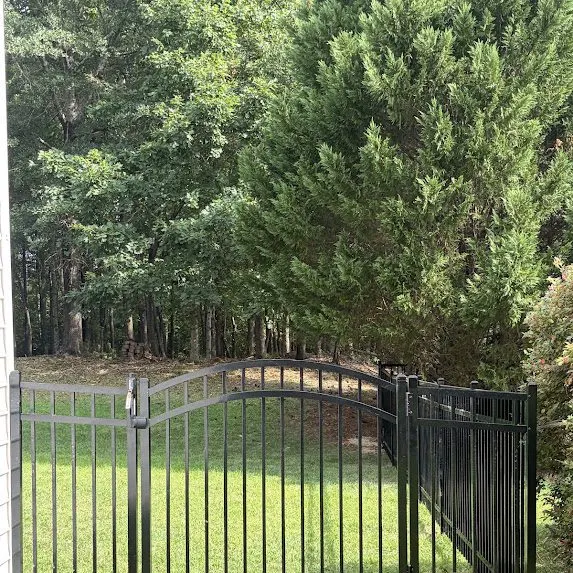
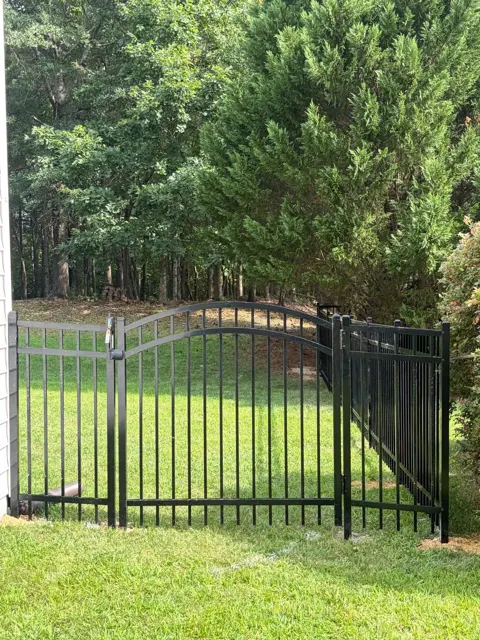
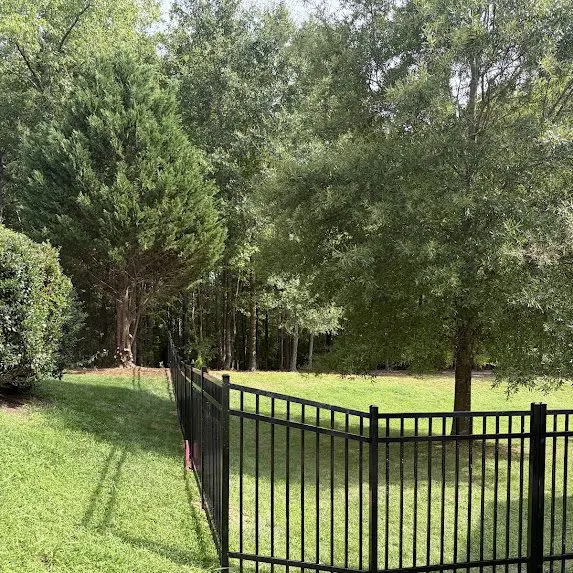
Black aluminum is a favorite for wooded backyards. It defines the yard while keeping views of the trees open, and it does not rot in shade. Panels can often be racked to follow uneven ground. Our three-rail aluminum fence in Waxhaw runs along a wooded edge for exactly this reason. See our aluminum styles guide.
Split rail
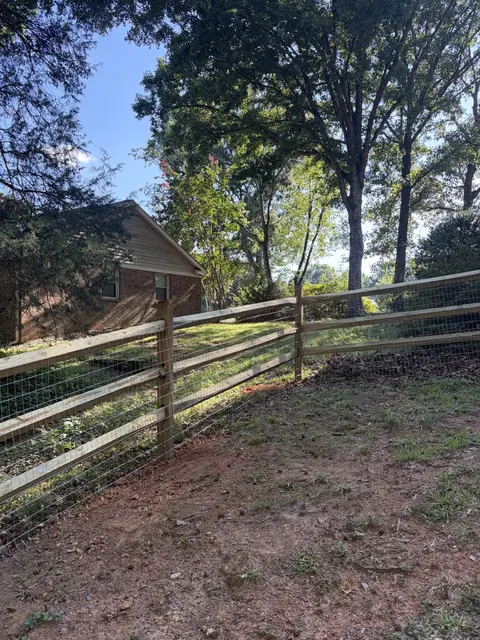
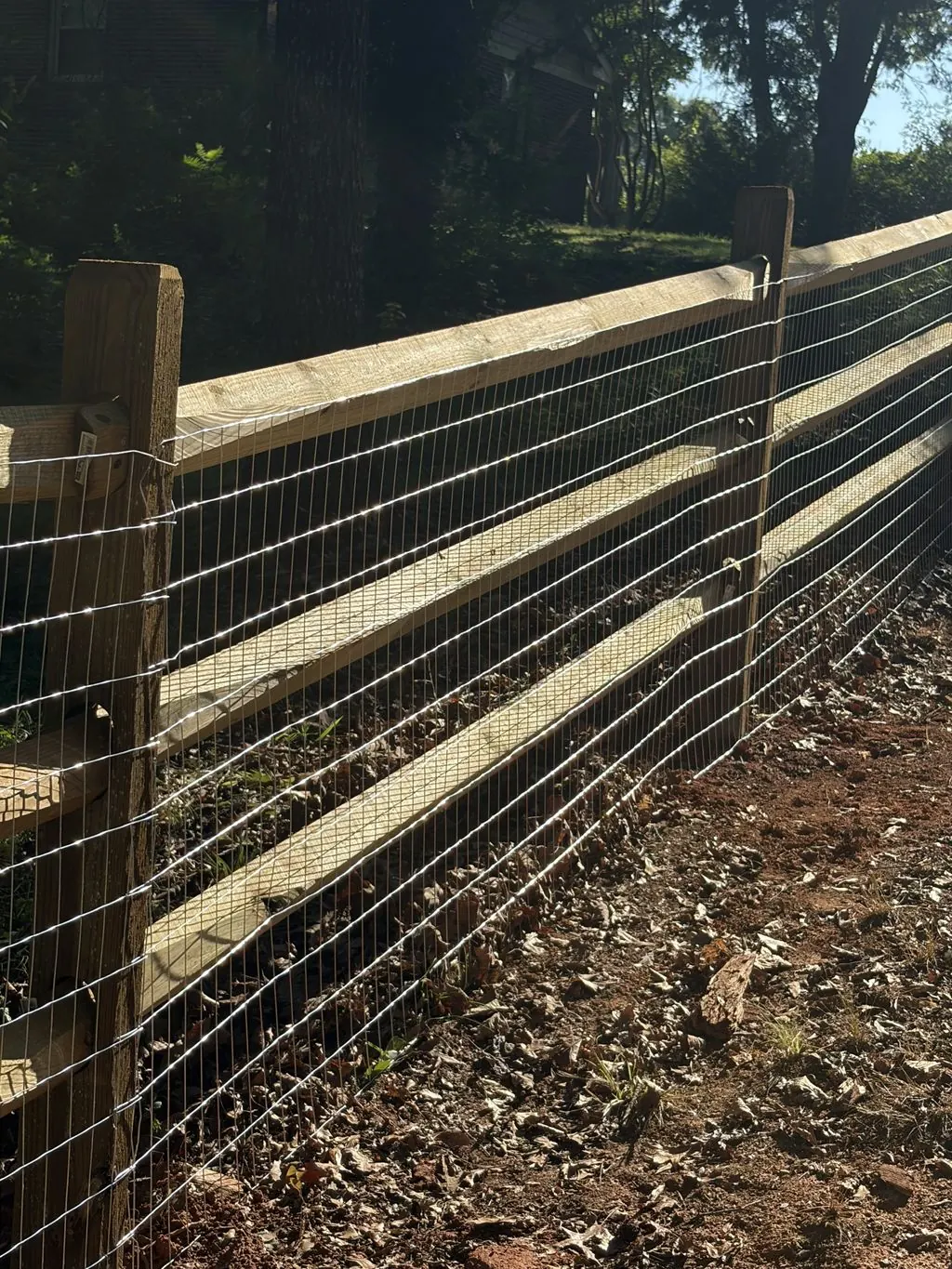
Split rail has a natural, rustic look that blends with trees. Its widely spaced posts make it easier to work around roots, and it does not block views. Add wire mesh if you need to contain pets. See our split rail guide.
Chain link
Black vinyl-coated chain link disappears against a wooded backdrop and follows uneven ground well. It is a practical choice for long runs along a tree line. See black vs. galvanized chain link.
Wood and vinyl privacy
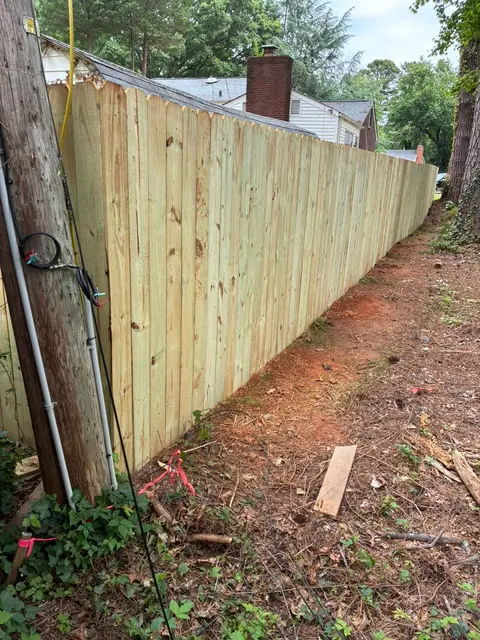
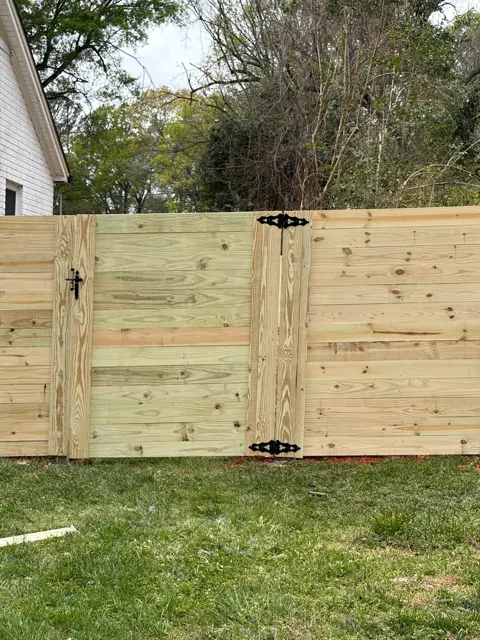
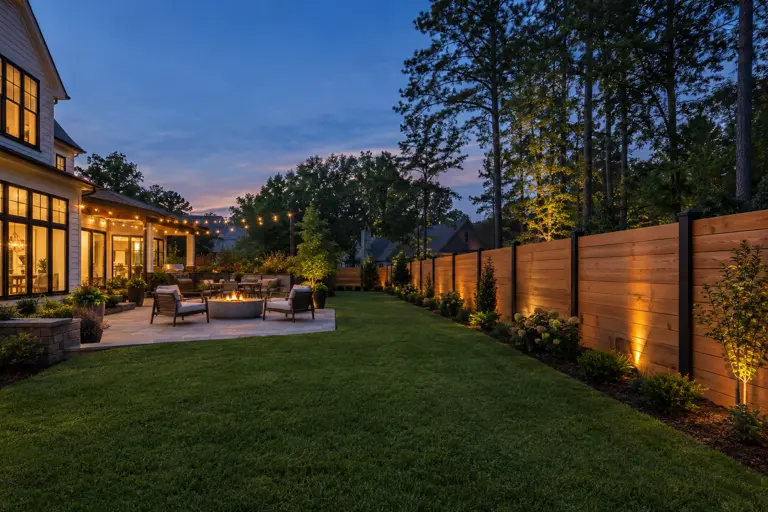
Privacy fences work along trees too, but solid panels catch wind and falling limbs, and shaded wood stays damp longer. If you need privacy near trees, plan for strong posts, good airflow at the bottom and a maintenance routine. Vinyl does not rot but may show mildew in deep shade.
Shade, moisture and wood fences
A wood fence under a heavy canopy may stay damp for days after rain. Over time, that can lead to mildew, algae and faster weathering. To help a shaded wood fence last:
- Leave a gap at the bottom so boards do not sit in wet leaves or soil.
- Stain and seal on schedule to repel water. See when to stain a new wood fence.
- Clear leaves that pile up along the fence in fall.
- Trim low branches that touch the fence and keep it from drying.
- Consider cedar, which naturally resists decay better than untreated wood. See cedar vs. pressure-treated pine.
Falling limbs and storm damage
Falling branches are one of the most common causes of fence damage in the Charlotte area, especially during summer thunderstorms and the occasional ice storm. To reduce the risk:
- Have dead or weak limbs removed before installation, ideally by a tree professional.
- Look up as well as down when planning the fence line. Avoid placing the fence directly under large dead limbs.
- Choose repairable styles. Panel and board fences can usually be repaired section by section.
- Inspect after storms and clear debris quickly.
If a storm does damage your fence, see our storm-damaged fence guide.
Trees on the neighbor's side
Trees along property lines may belong to your neighbor. Talk with them before cutting roots or limbs that come from their tree, and let them know about your fence plans. Our property line guide covers neighbor conversations.
Wooded buffers and HOA rules
Many Charlotte-area neighborhoods have protected tree buffers, common areas or conservation easements behind homes. Fences may not be allowed in these areas, and removing trees there may be prohibited. Check your plat, HOA covenants and local tree ordinances before planning a fence through a wooded area. We help prepare HOA paperwork, but approval is always up to your HOA. See our HOA approval checklist.
Common Charlotte trees and what to expect
Different trees create different challenges along a fence line:
- Oaks: long-lived with wide-spreading roots and heavy limbs. Give them plenty of room and keep an eye on dead branches overhead.
- Pines: tall and straight, but they drop needles and cones and can snap or uproot in high winds. Needles piled against a wood fence hold moisture.
- Sweetgums: known for spiky seed balls and surface roots that can be in the way of post holes.
- Maples: often have dense, shallow roots near the surface that make digging slower.
- Tulip poplars: fast-growing and tall, with branches that can drop in storms.
- Crepe myrtles: smaller ornamental trees that are usually easy to fence around, though they can spread with suckers at the base.
Ron is not an arborist, but he has set posts around all of these, and he will point out anything that looks like it could cause trouble down the road.
What about stumps on the fence line?
Old stumps are common on lots that were cleared for construction. A stump in the fence line can block post holes and may rot over time, leaving a soft spot. Options include shifting post spacing around the stump, routing the fence slightly to avoid it or having it ground out before installation. Stump grinding is not part of fence installation, so if you know there is a stump in the way, arrange it before your install date. Our installation prep guide covers other things to handle before the crew arrives.
Planting new trees near a fence
If you plan to plant trees after installing a fence, think about their mature size. Plant far enough away that the trunk will not reach the fence and the roots will not lift posts. Smaller ornamental trees and shrubs can go closer than large shade trees.
Roots and existing fences
If you already have a fence and a nearby tree is pushing posts out of line, lifting footings or bending panels, the fix may be to reroute that section around the tree rather than rebuilding it in the same spot. See our repair or replace guide.
Our process on wooded lots
During your free estimate, Ron walks the fence line looking at:
- Tree locations and trunk sizes
- Visible roots and likely root zones
- Overhanging limbs and dead wood
- Shade and drainage along the line
- Protected buffers and easements
He then recommends a fence line, style and post layout that works with your trees. On installation day, our in-house crew adjusts post locations as needed to avoid major roots. Fences & Firepits is licensed and insured, uses no subcontractors and backs installation with a 2-year workmanship warranty.
Common mistakes on wooded lots
- Attaching fence sections directly to trees
- Building tight against a trunk with no room to grow
- Cutting large structural roots
- Ignoring dead limbs overhead
- Letting leaves pile up against wood fences
- Fencing through protected buffers without checking
Wildlife and wooded edges
Wooded lots bring wildlife too: deer, rabbits, foxes and the occasional coyote in some parts of the region. A fence along a tree line can help keep pets in and some animals out, but the right style depends on your goals. Aluminum with puppy pickets or chain link keeps small animals from slipping through. Taller privacy fences discourage deer from entering a garden area. Split rail, on its own, mostly marks the boundary. If keeping wildlife out of a garden is a priority, mention it during your estimate so Ron can suggest the right height and spacing.
Seasonal care for fences near trees
- Spring: rinse pollen off vinyl and aluminum, and check for winter limb damage.
- Summer: inspect after thunderstorms and trim branches touching the fence.
- Fall: clear leaves from the base of the fence regularly.
- Winter: watch for ice-laden limbs over the fence line.
See our maintenance guide for material-specific care.
Keep your trees and get the fence you want
With thoughtful planning, trees and fences coexist beautifully. Try layouts in the Fence Design Studio, check starting rates on the pricing page or call Ron at (980) 339-2182 for a free on-site estimate.
Frequently asked questions
Can you build a fence around a tree?
Yes. We route the fence line around trunks with room for growth, or adjust the line so the tree sits inside or outside the fence.
Will digging post holes hurt my tree?
Cutting small feeder roots is usually fine for a healthy tree. We shift post locations to avoid large structural roots and keep posts away from the trunk.
Can I attach my fence to a tree?
No. Attaching a fence to a tree damages the tree and the fence. Always use proper posts.
What is the best fence for a wooded lot?
Black aluminum, split rail and black vinyl-coated chain link work beautifully along tree lines because they keep views open and handle uneven ground.
How do I protect a wood fence in heavy shade?
Leave a gap at the bottom, stain on schedule, clear leaves and trim branches that touch the fence. Cedar also resists decay well.
What if there is a stump on my fence line?
We can often shift post spacing or route the fence slightly around it. If the stump sits right where the fence needs to go, have it ground out before installation day.
Should I talk to an arborist before building a fence near trees?
For valuable, large or stressed trees close to the fence line, a certified arborist can advise on root zones and limb hazards before installation. For most healthy trees, careful post placement is enough.

About the author
Fences & Firepits team, reviewed by Ron Memallaj, owner of Fences & Firepits LLC. We're a licensed and insured fence company in Charlotte, NC, serving the city and surrounding communities since 2022. Every fence we build is installed by our own in-house crew. We don't hire subcontractors.